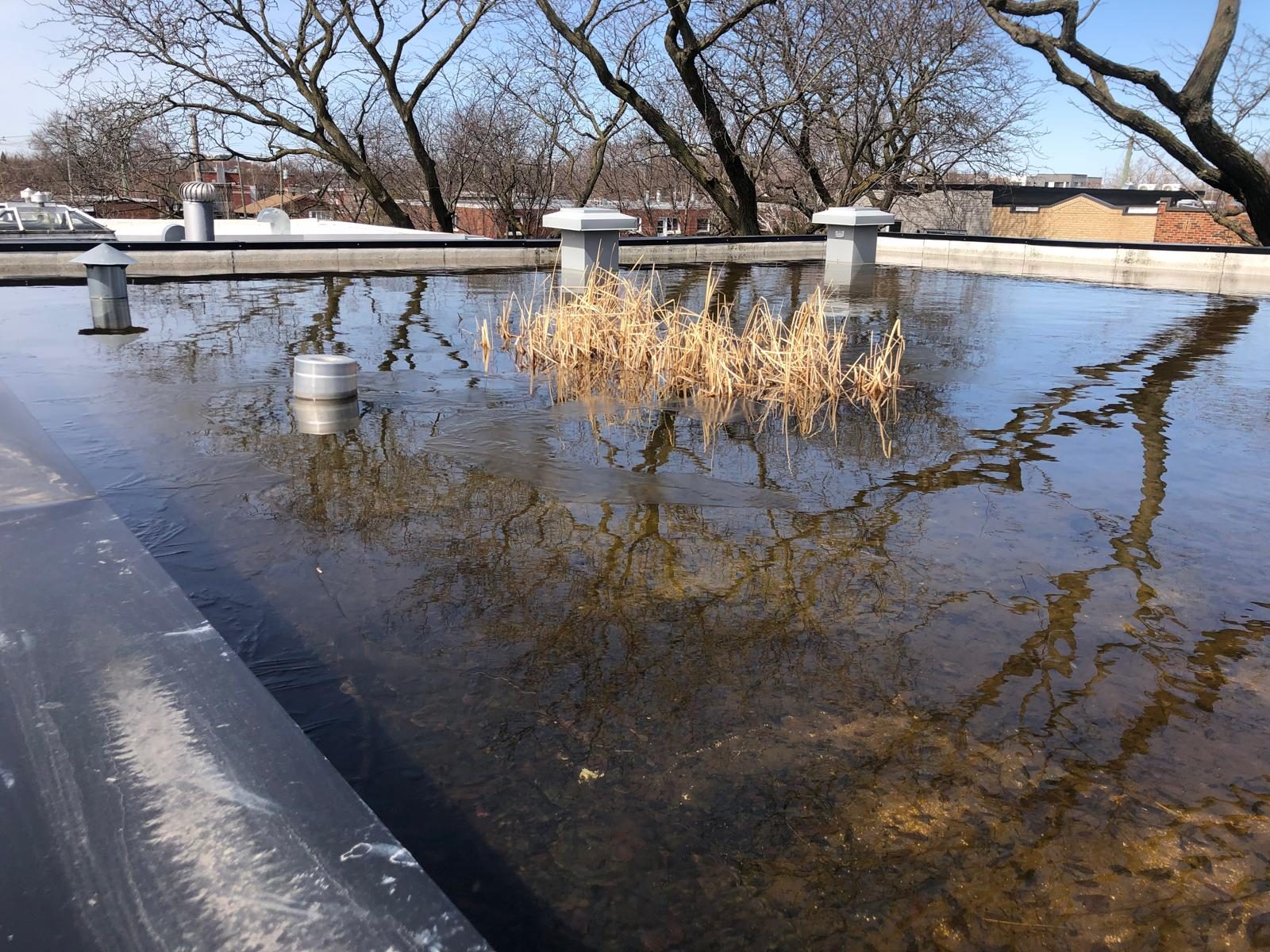
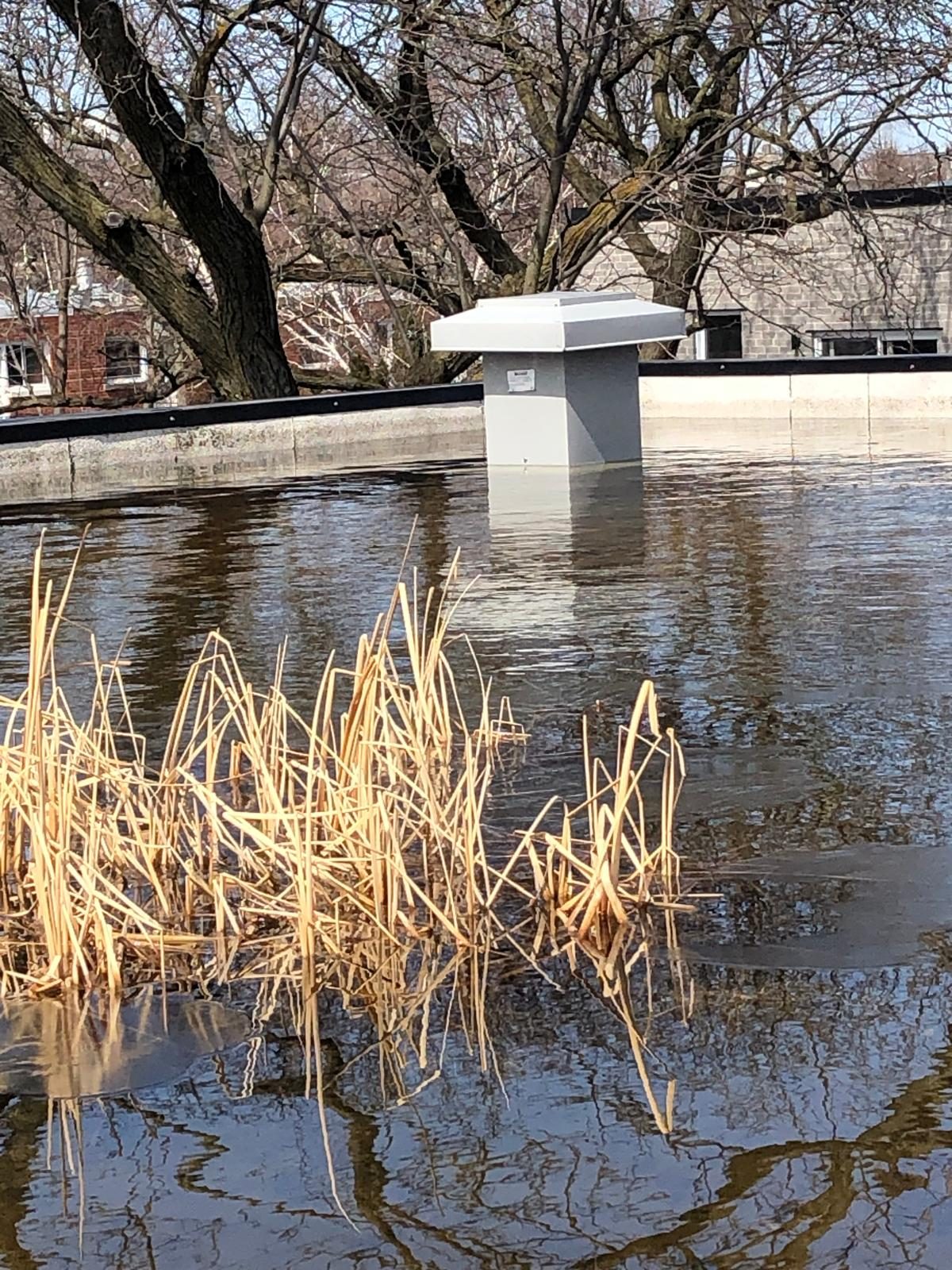
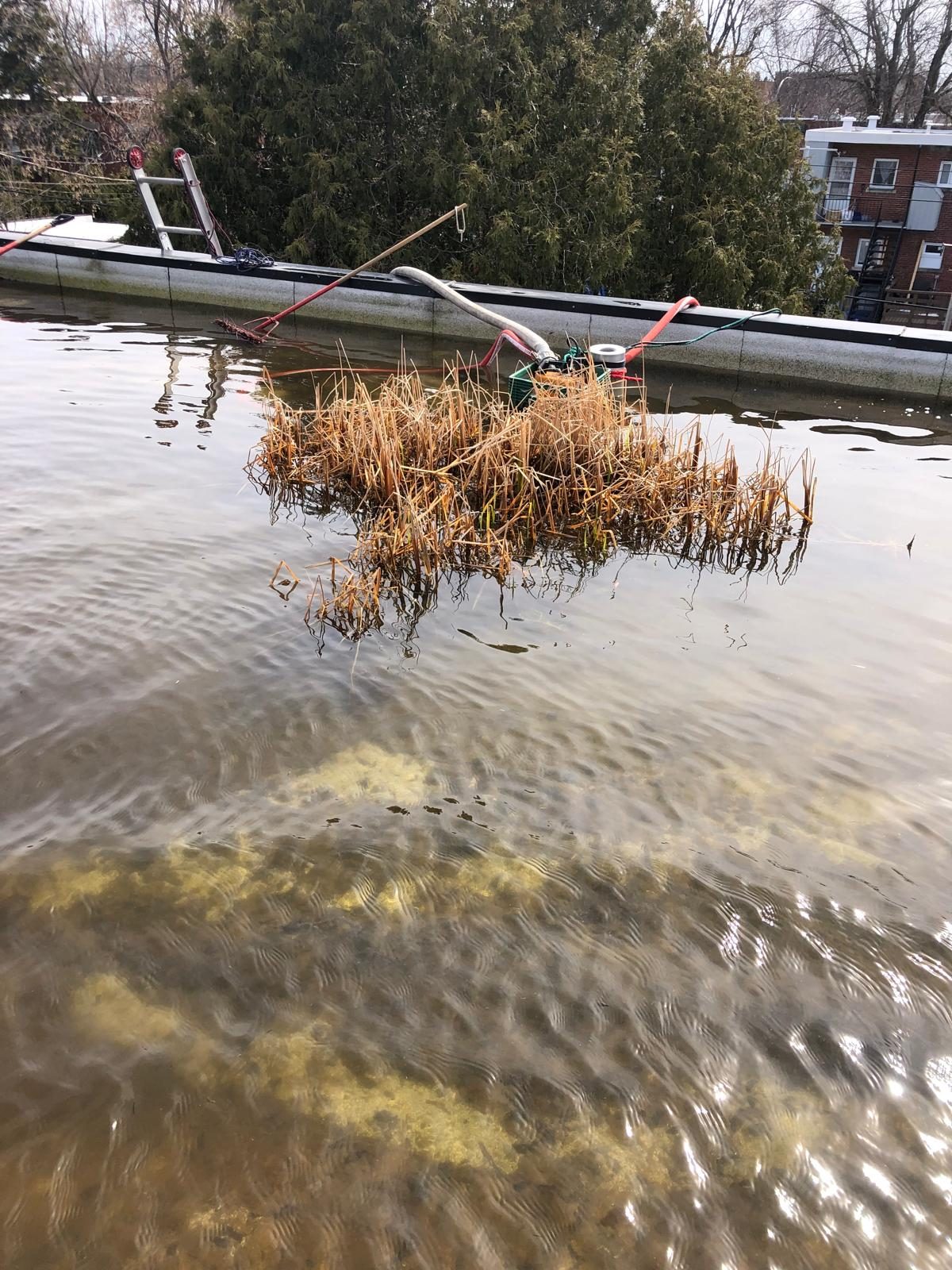
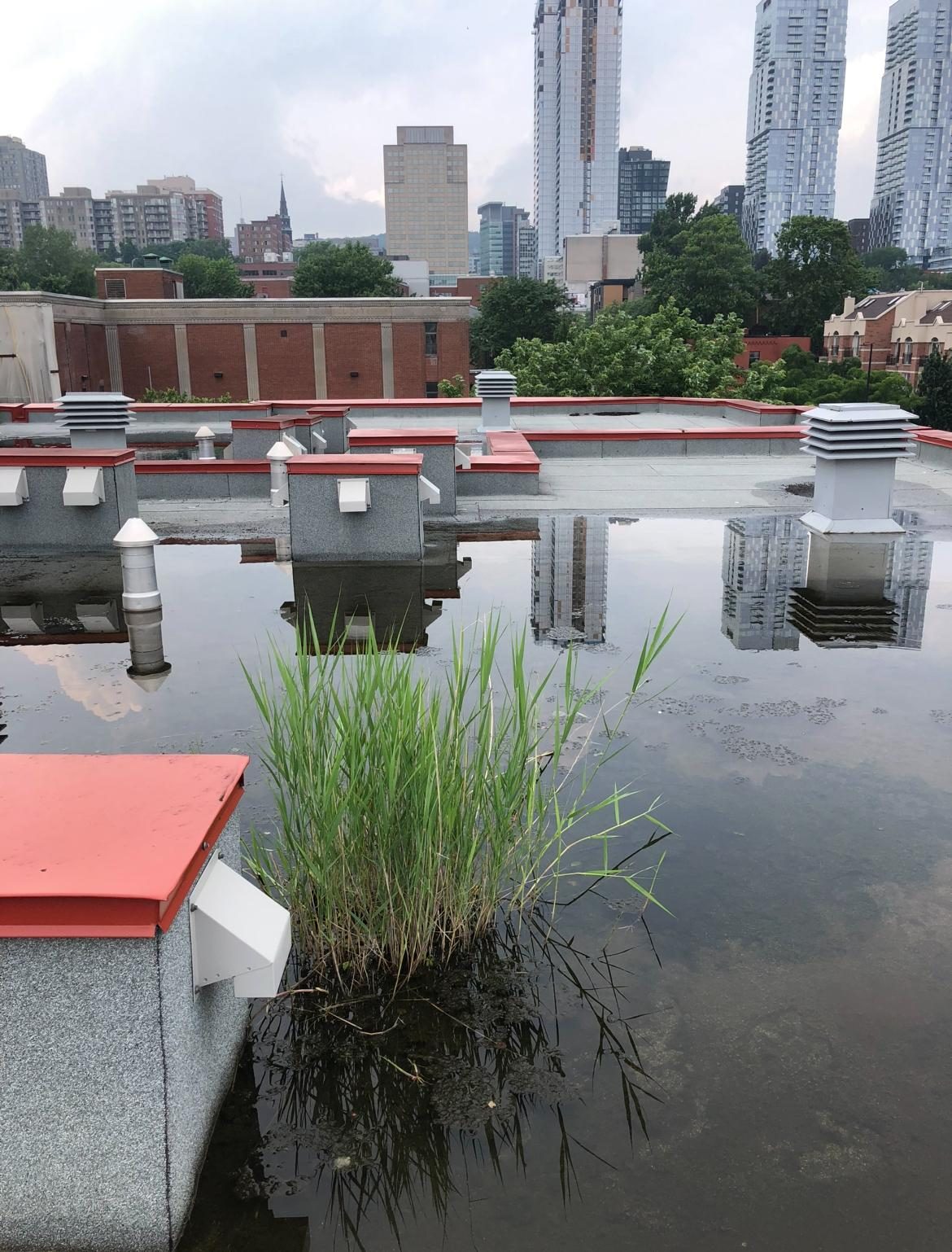
These are real photos taken on our clients’ roofs: flooded flat roofs, water accumulation, leaves on the roof, clogged drains and water pumping. Each photo tells one step of our work.
Flooded flat roofs
When the drain stops letting water through, a flat roof turns into a pool within hours. Here are roofs the way we find them when we arrive.
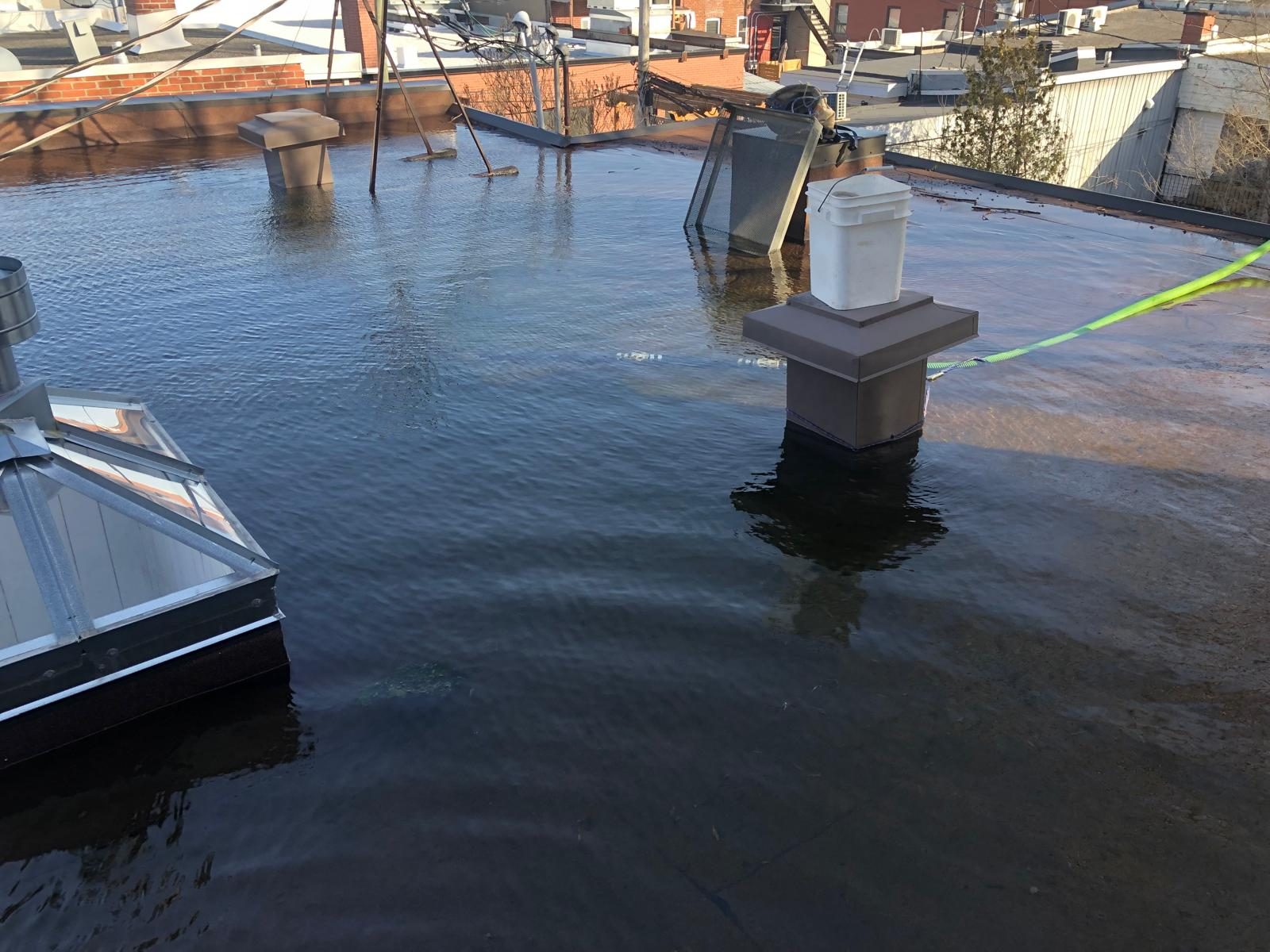
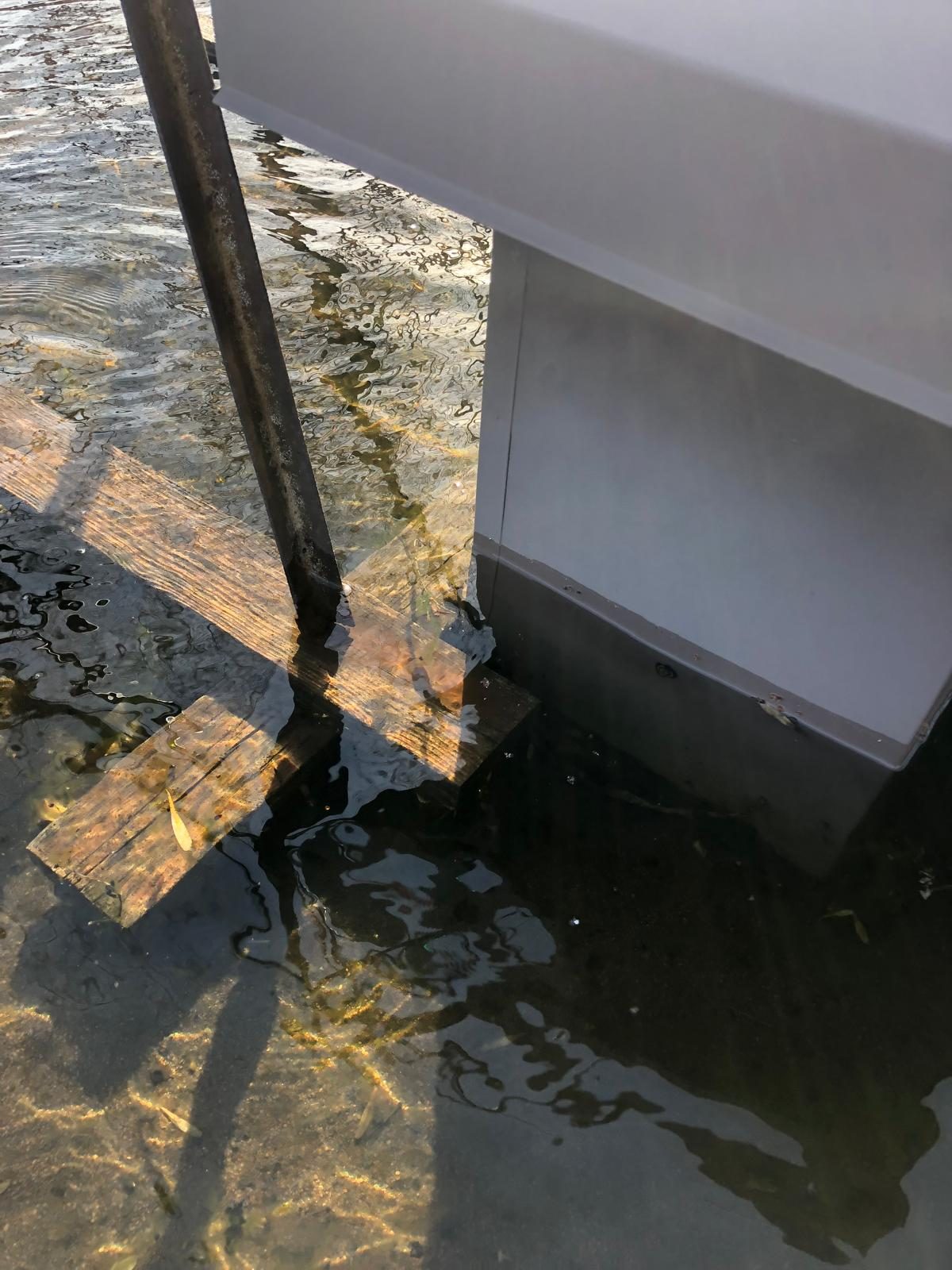
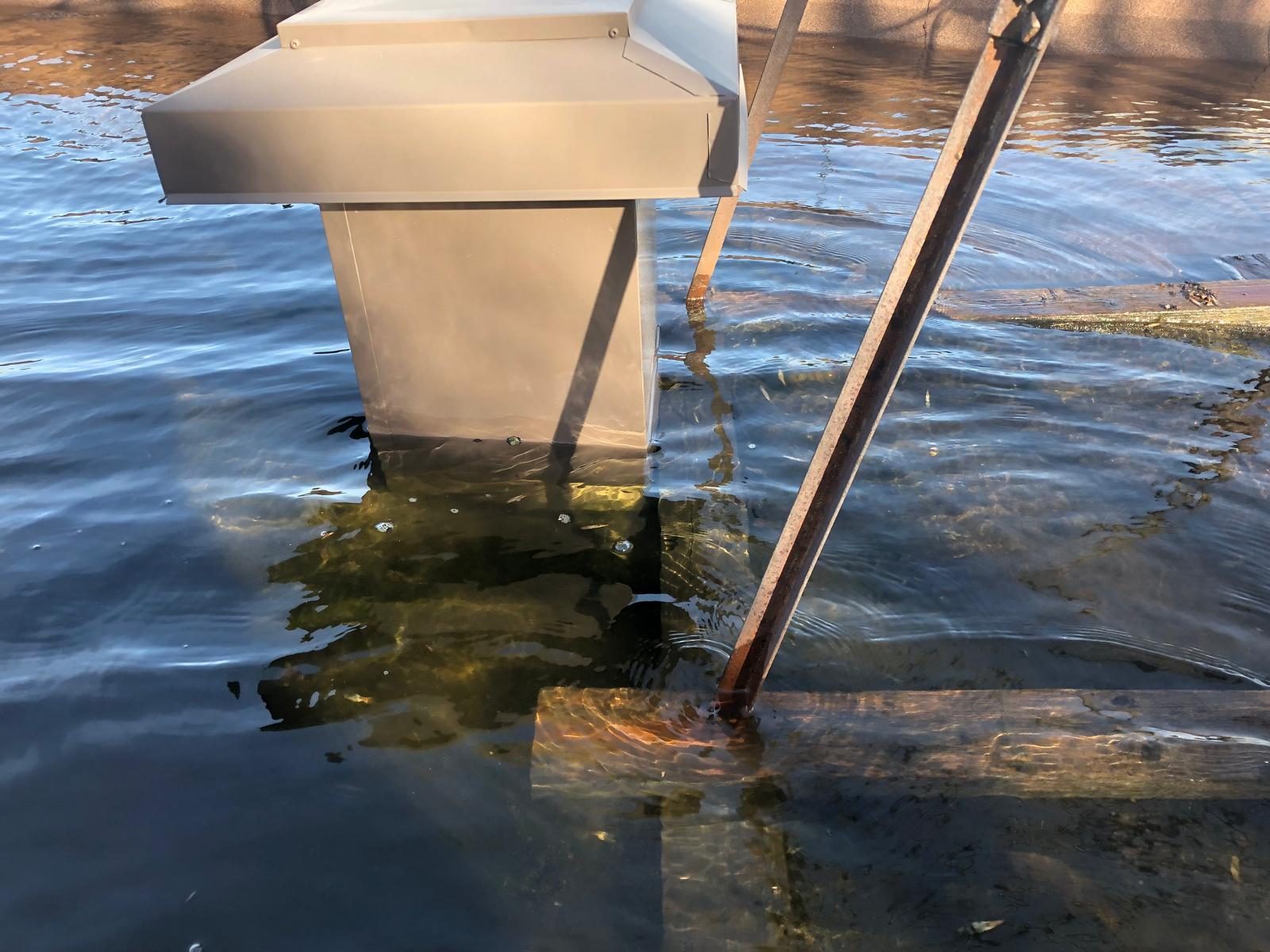
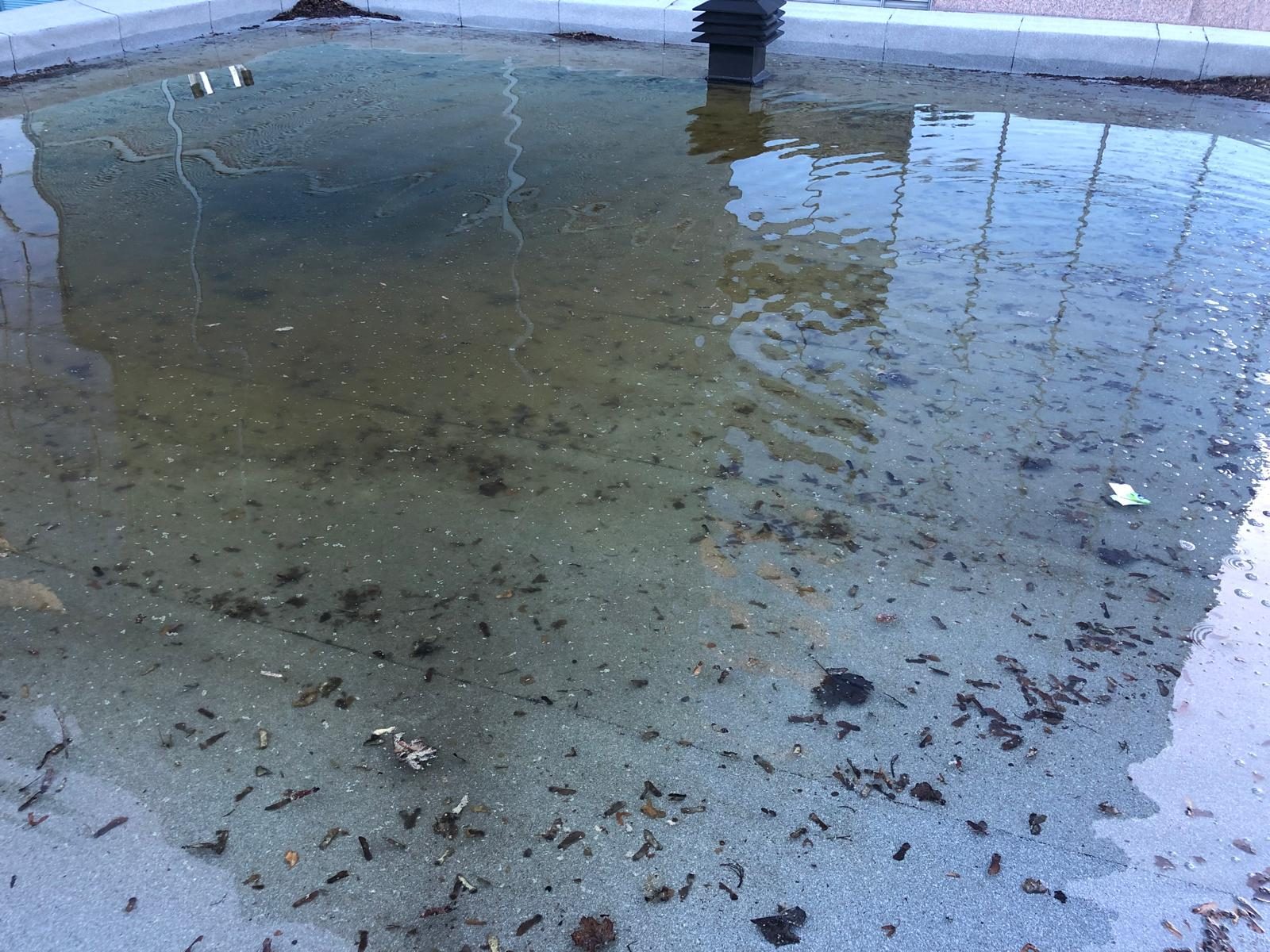
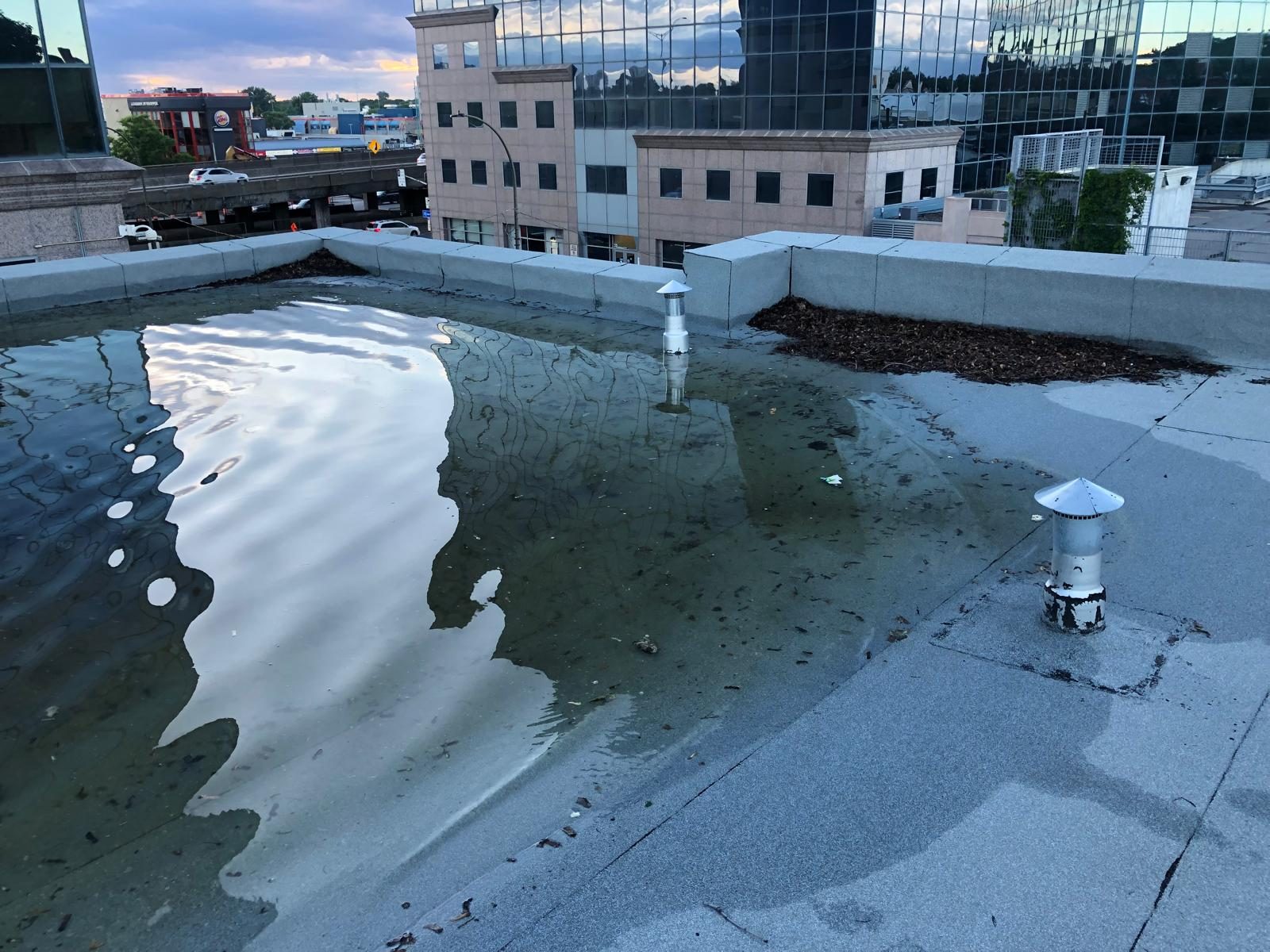
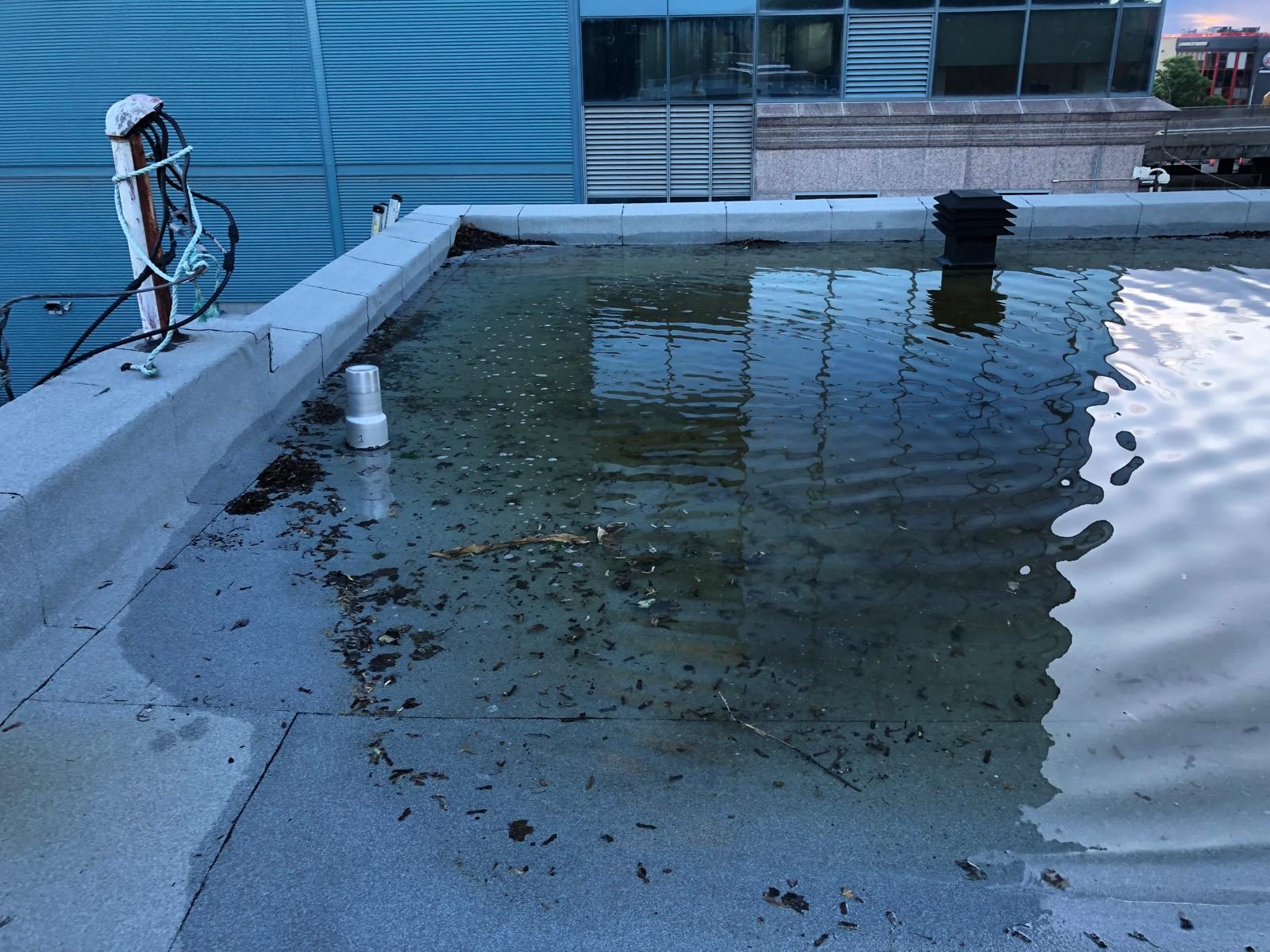
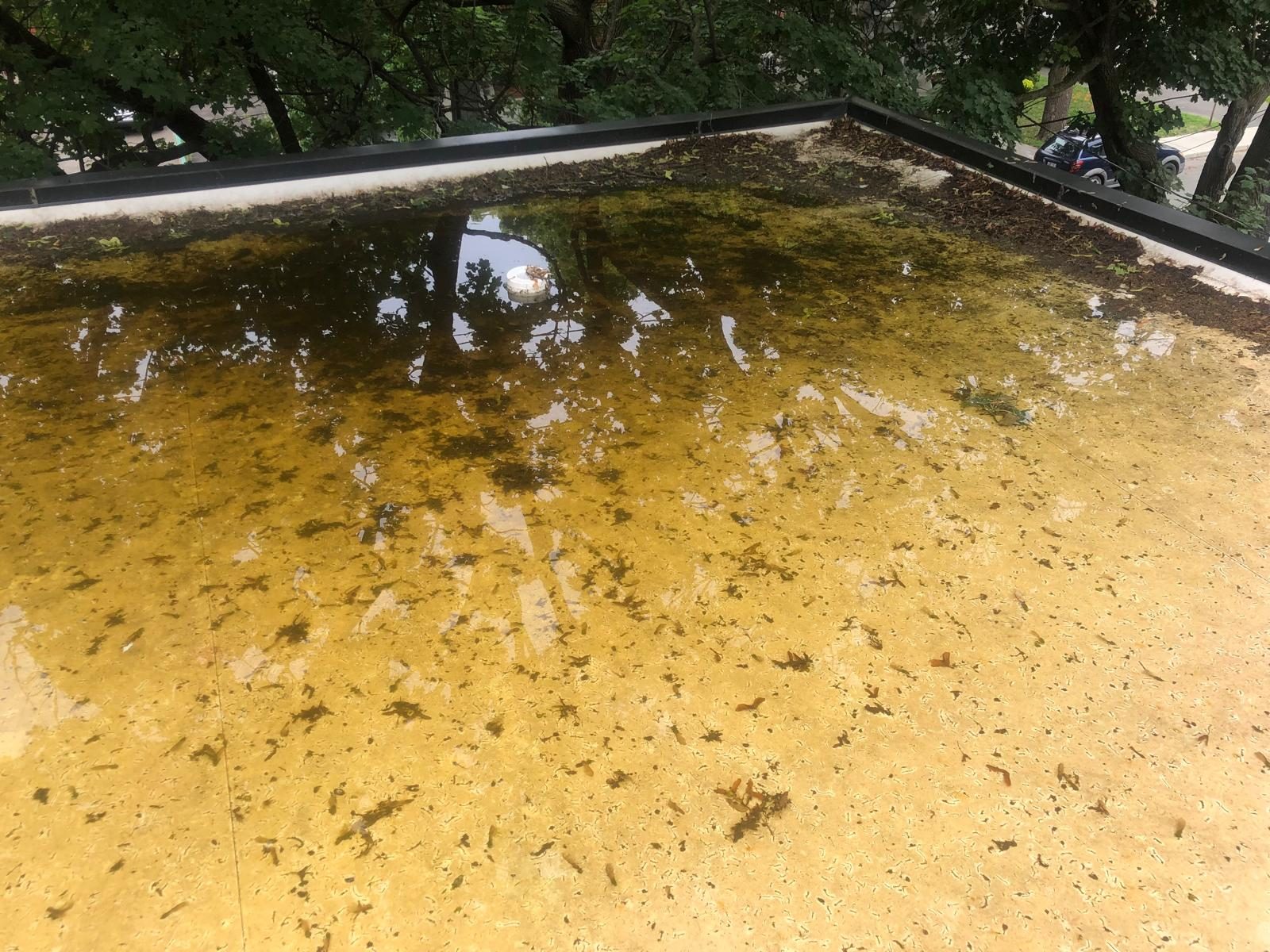
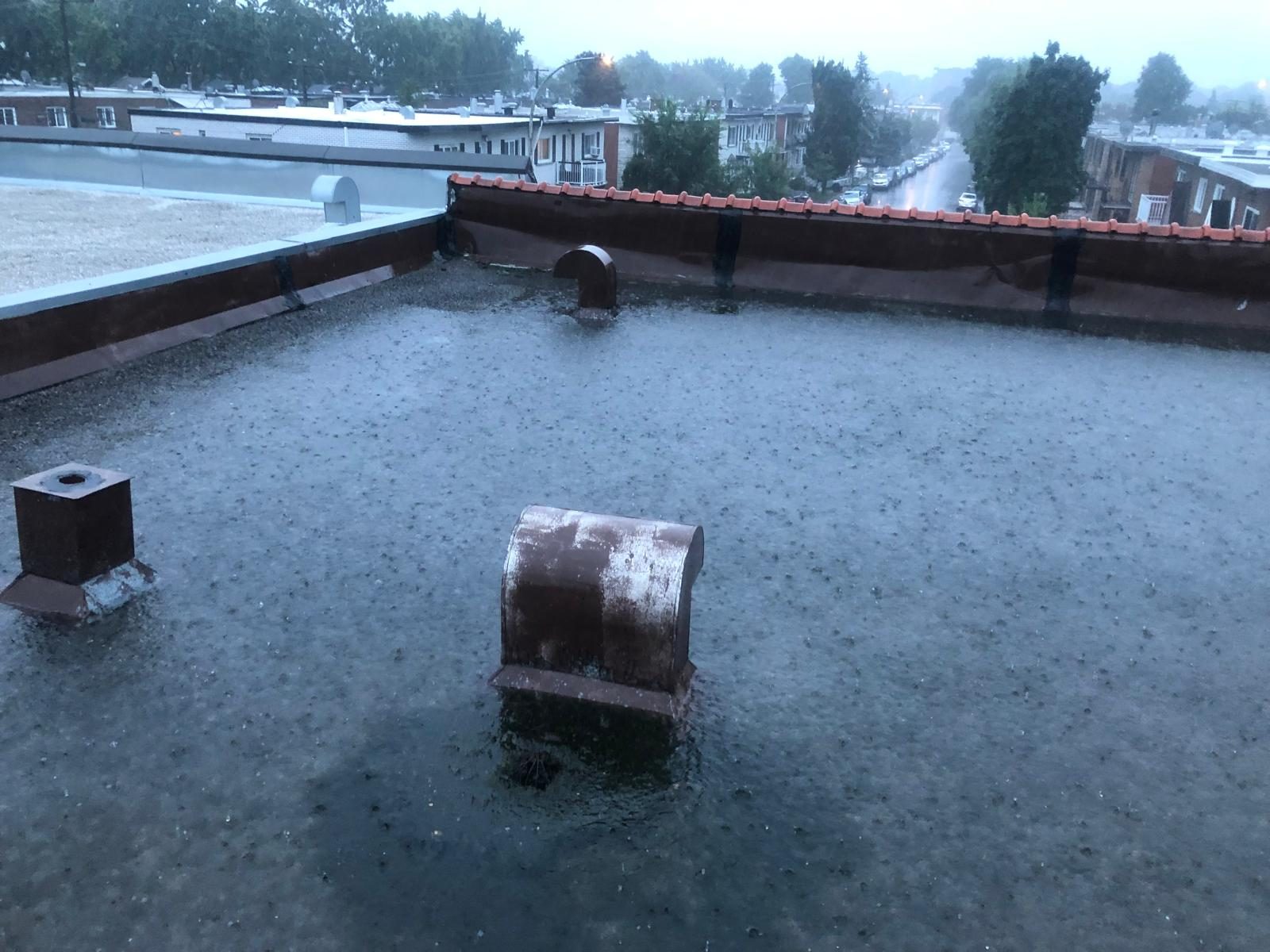
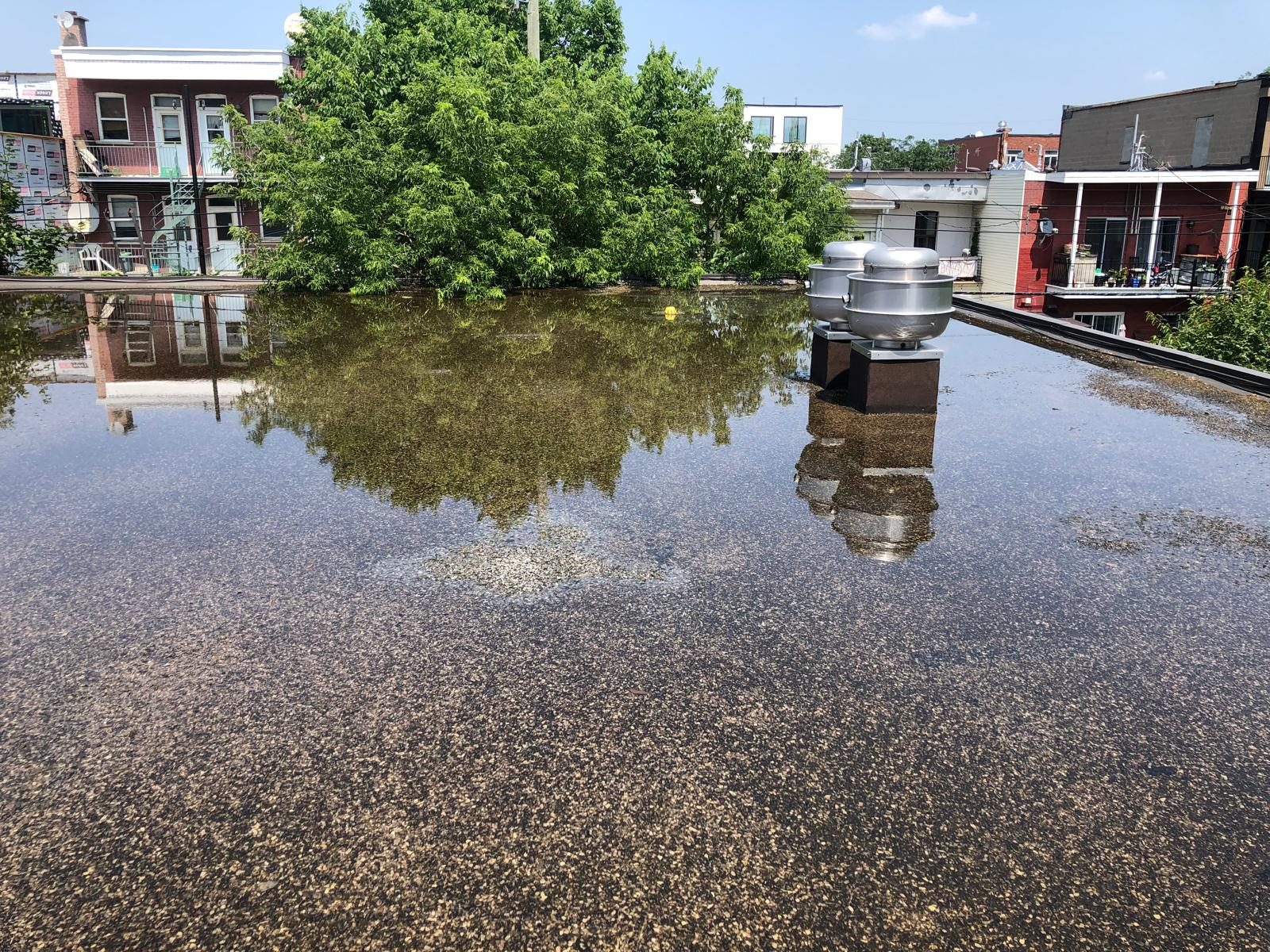
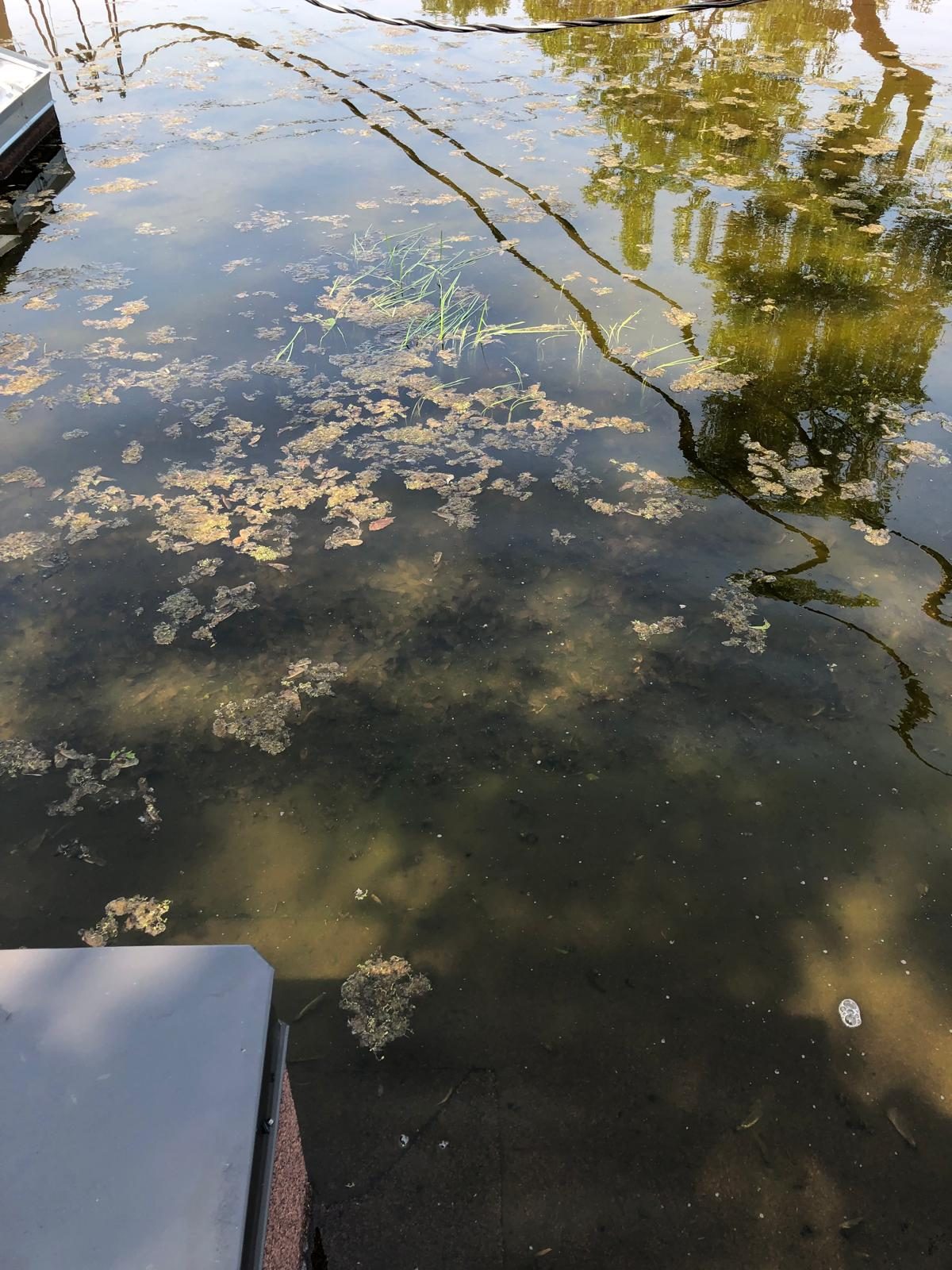
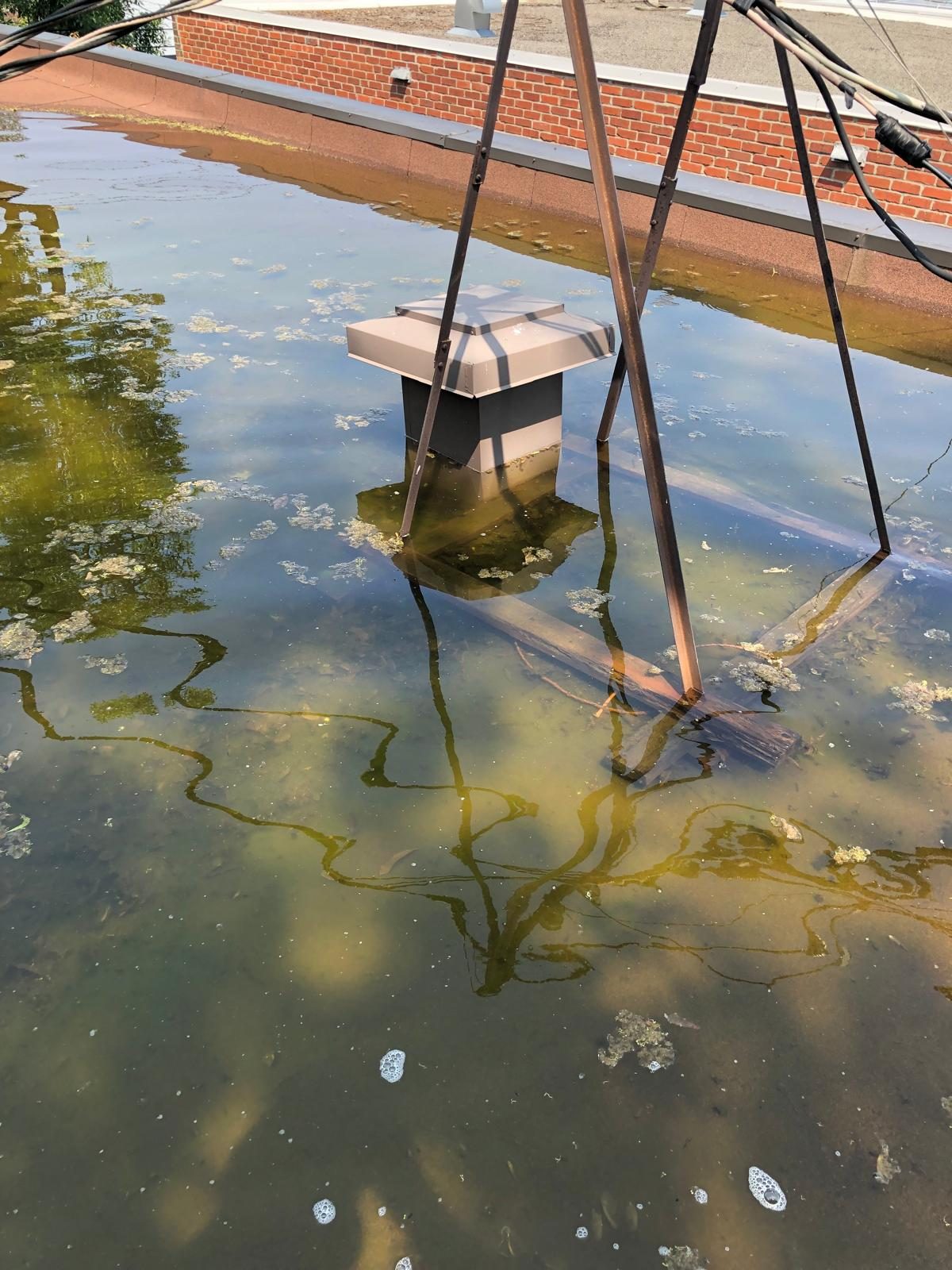
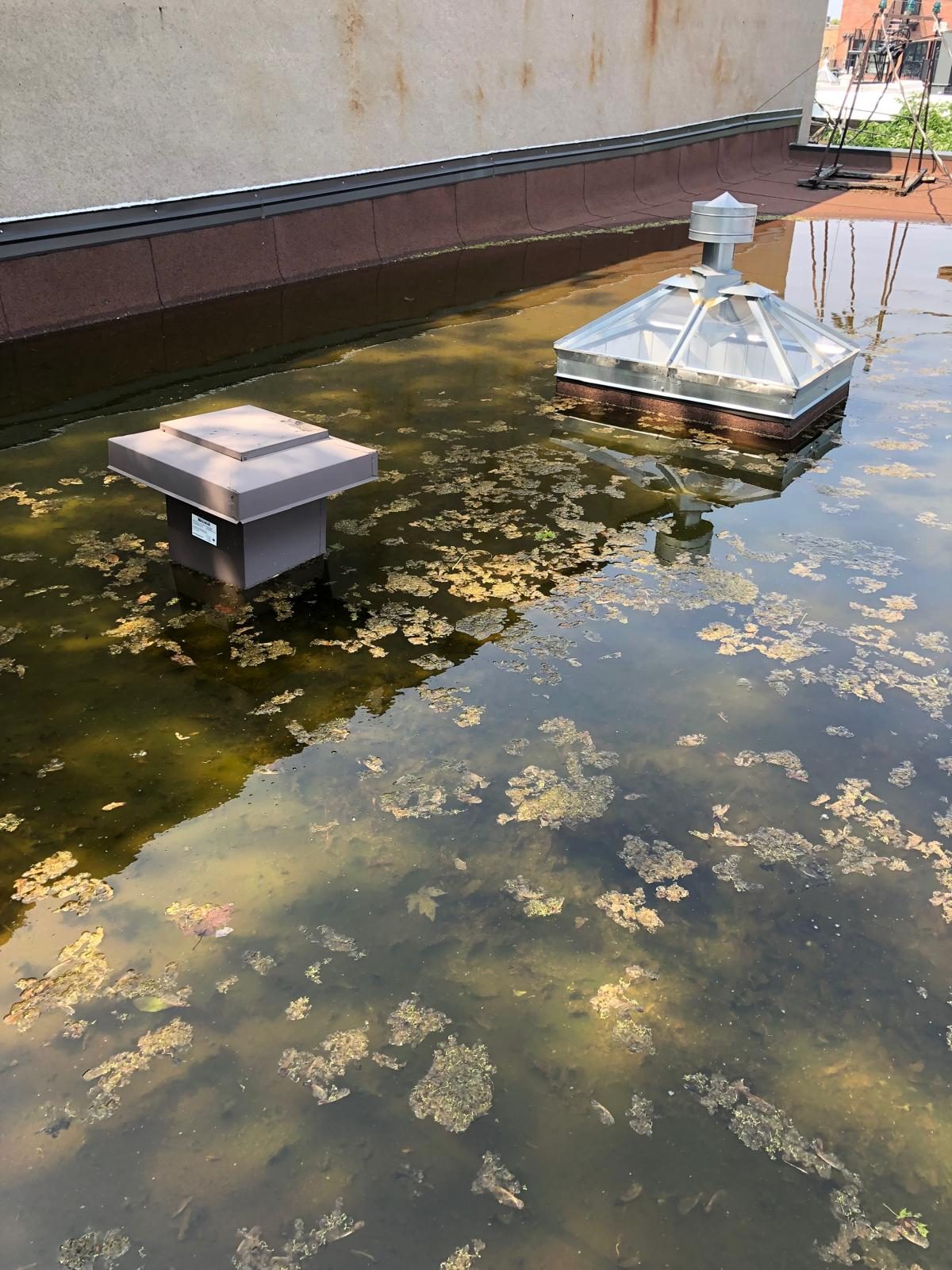
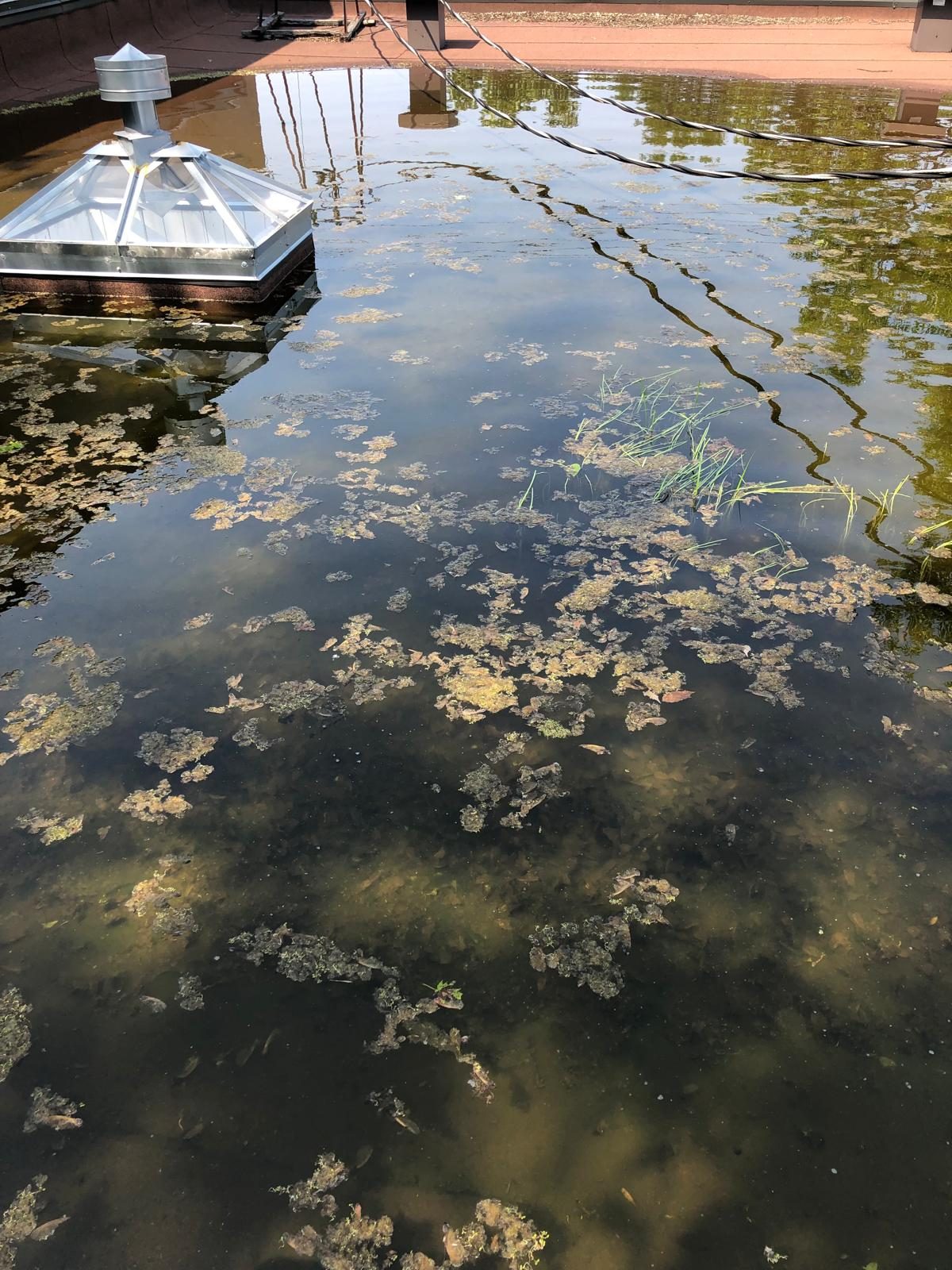
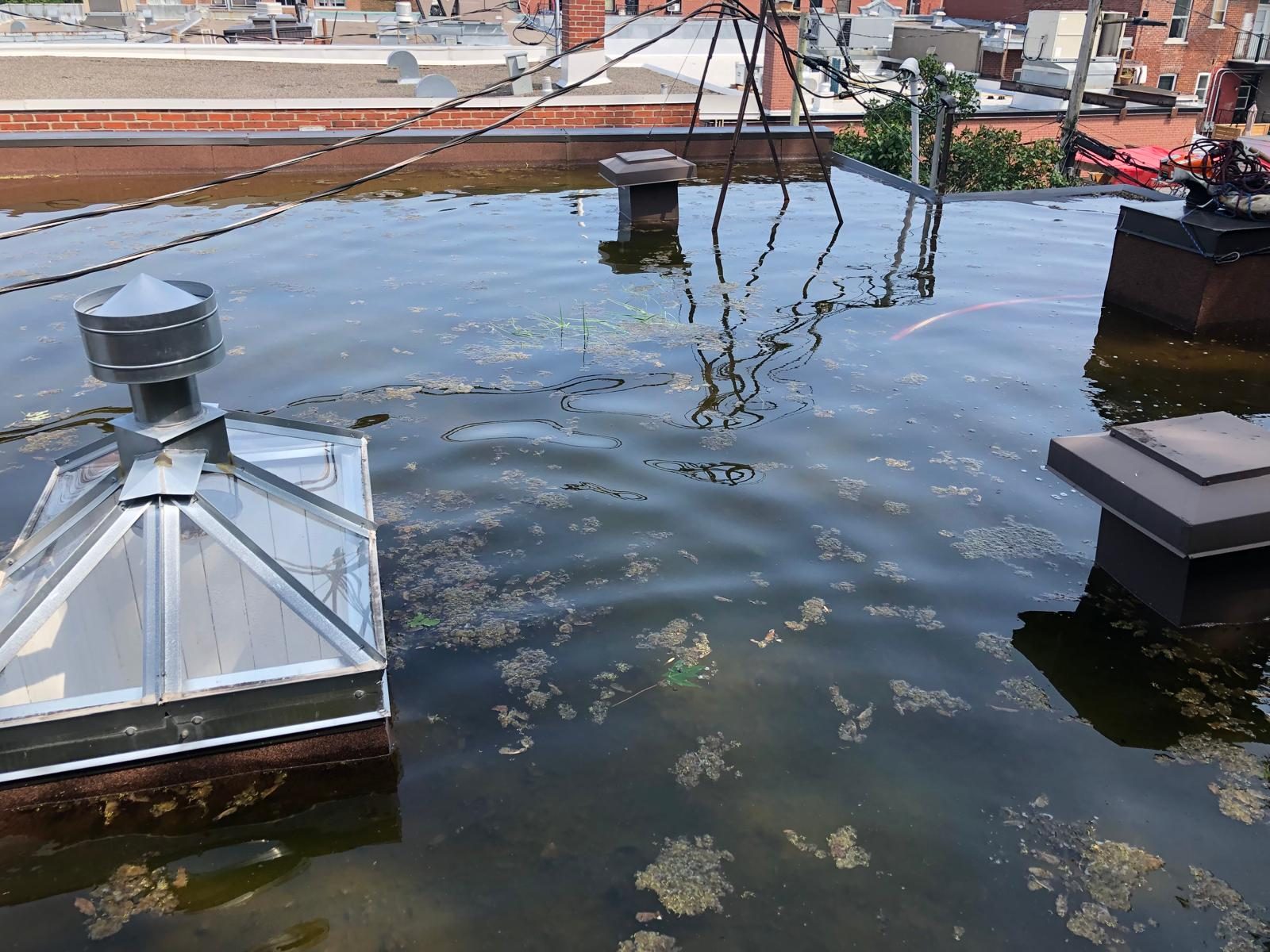
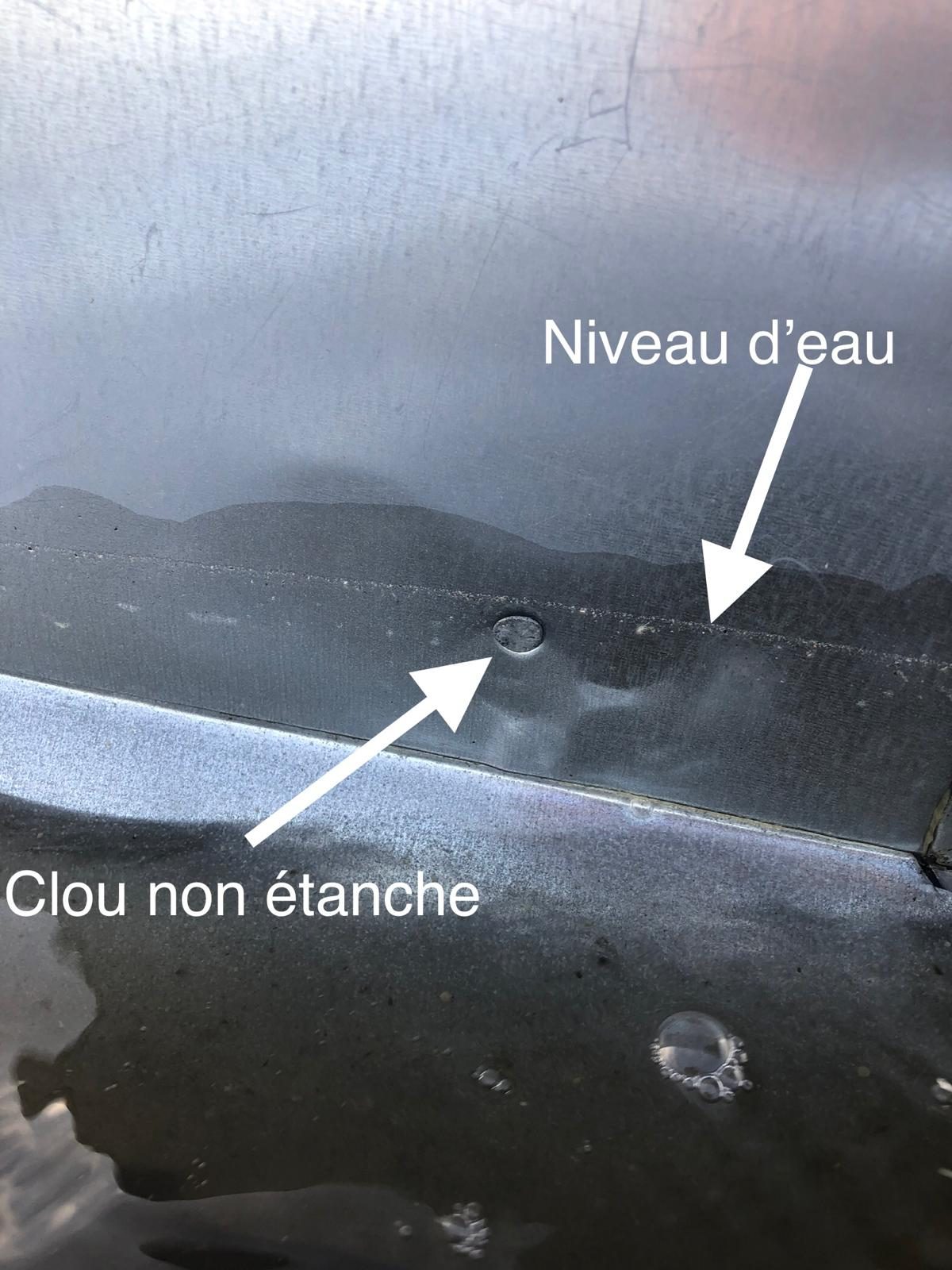
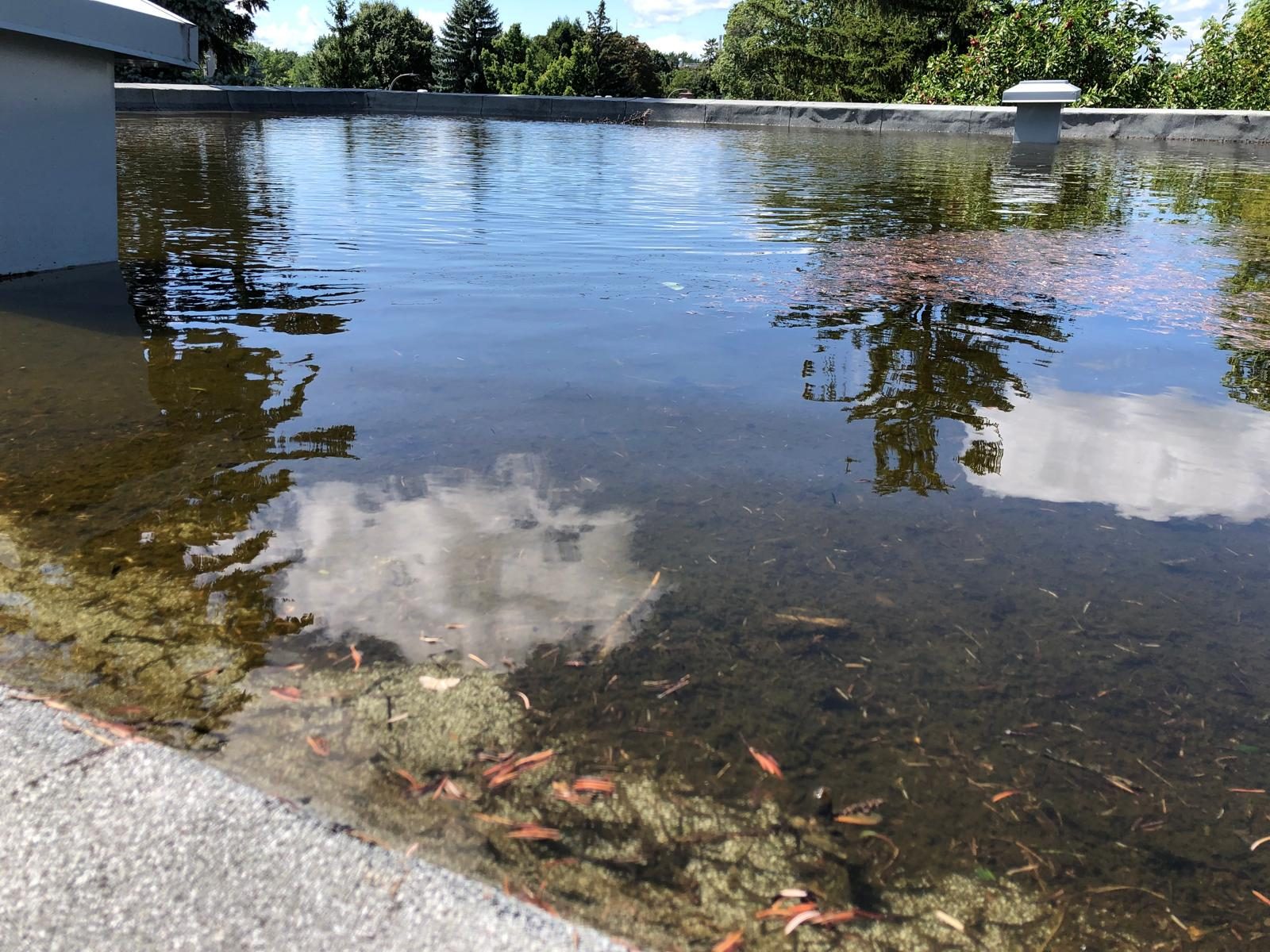
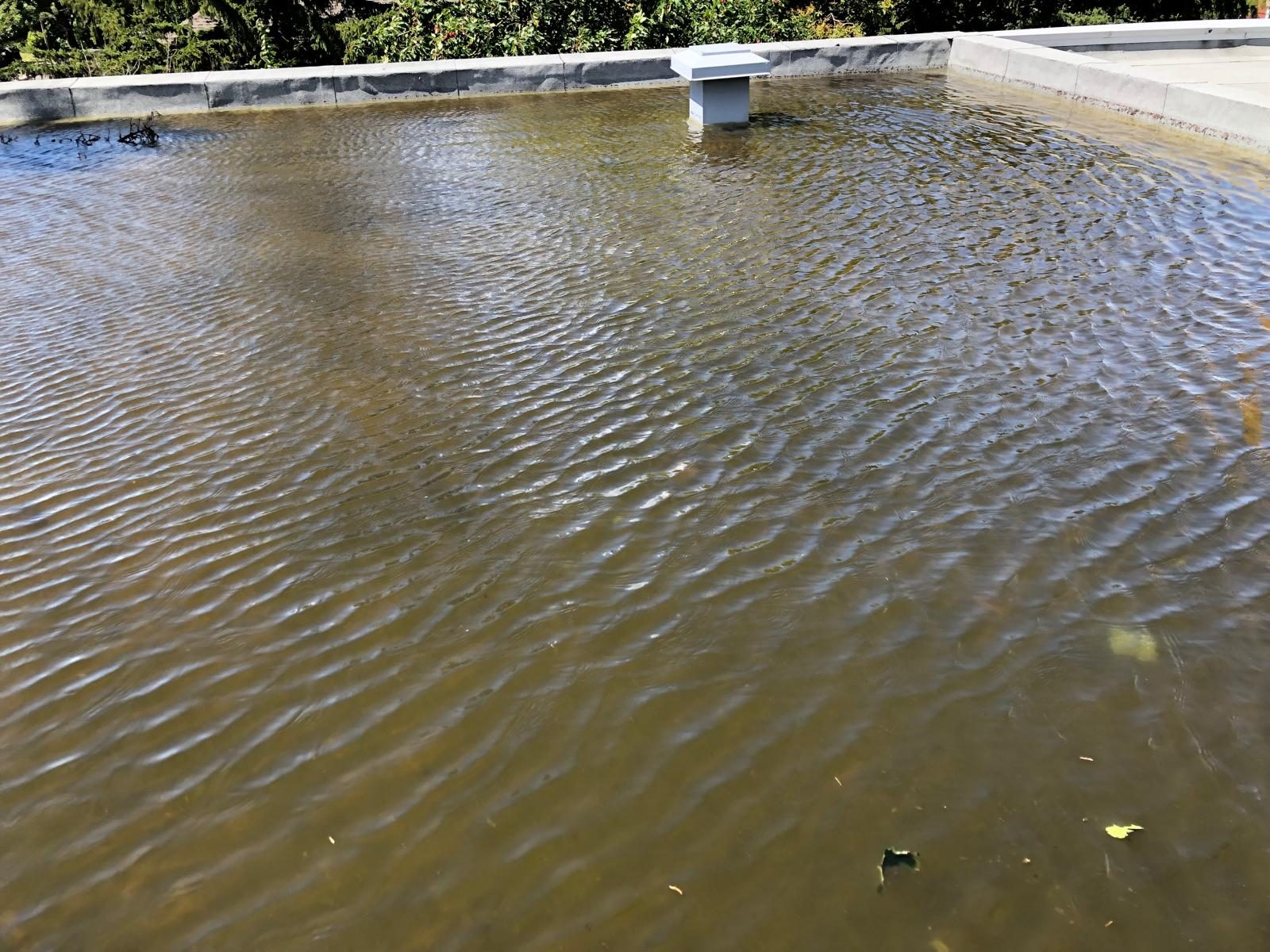
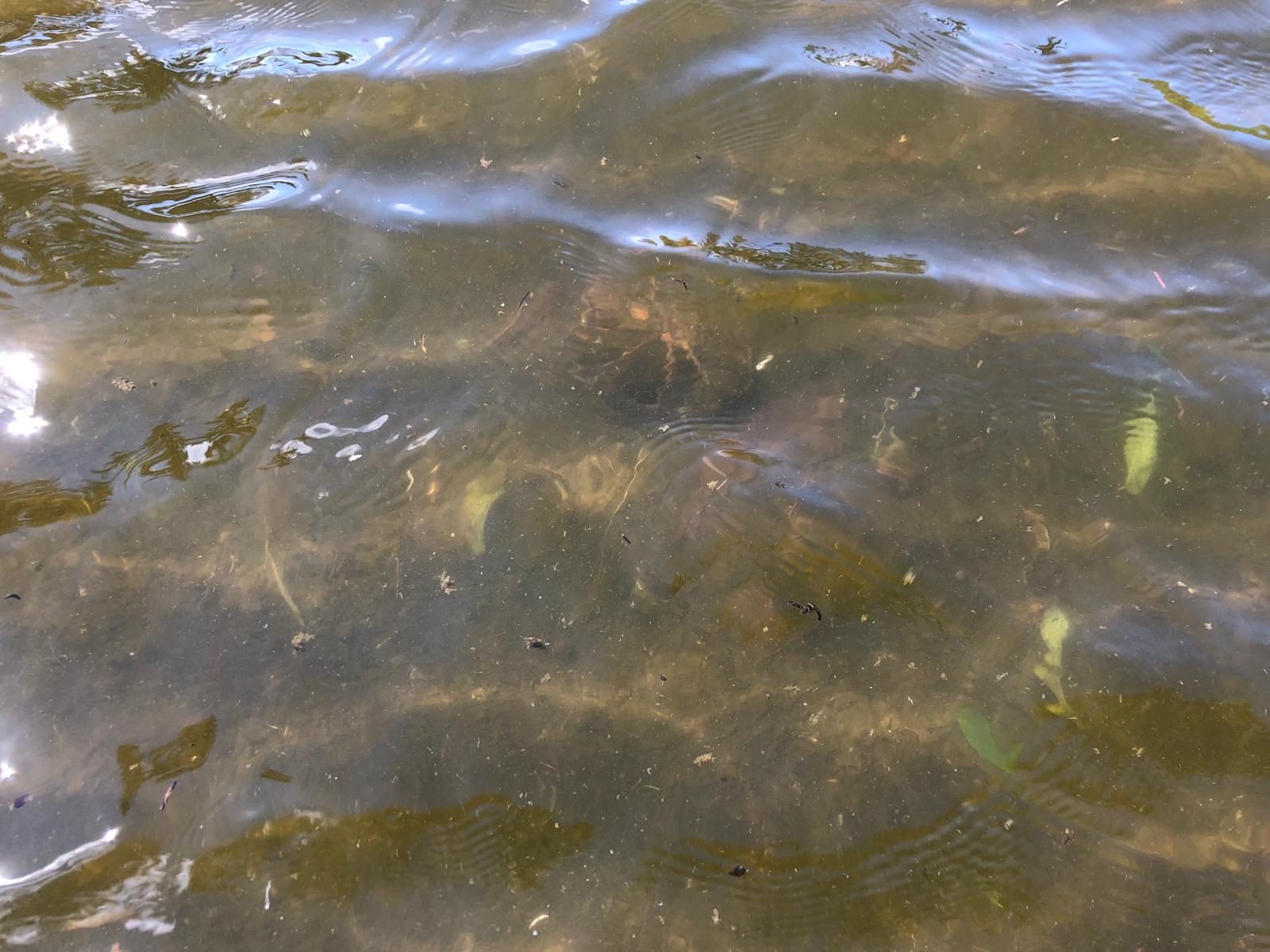
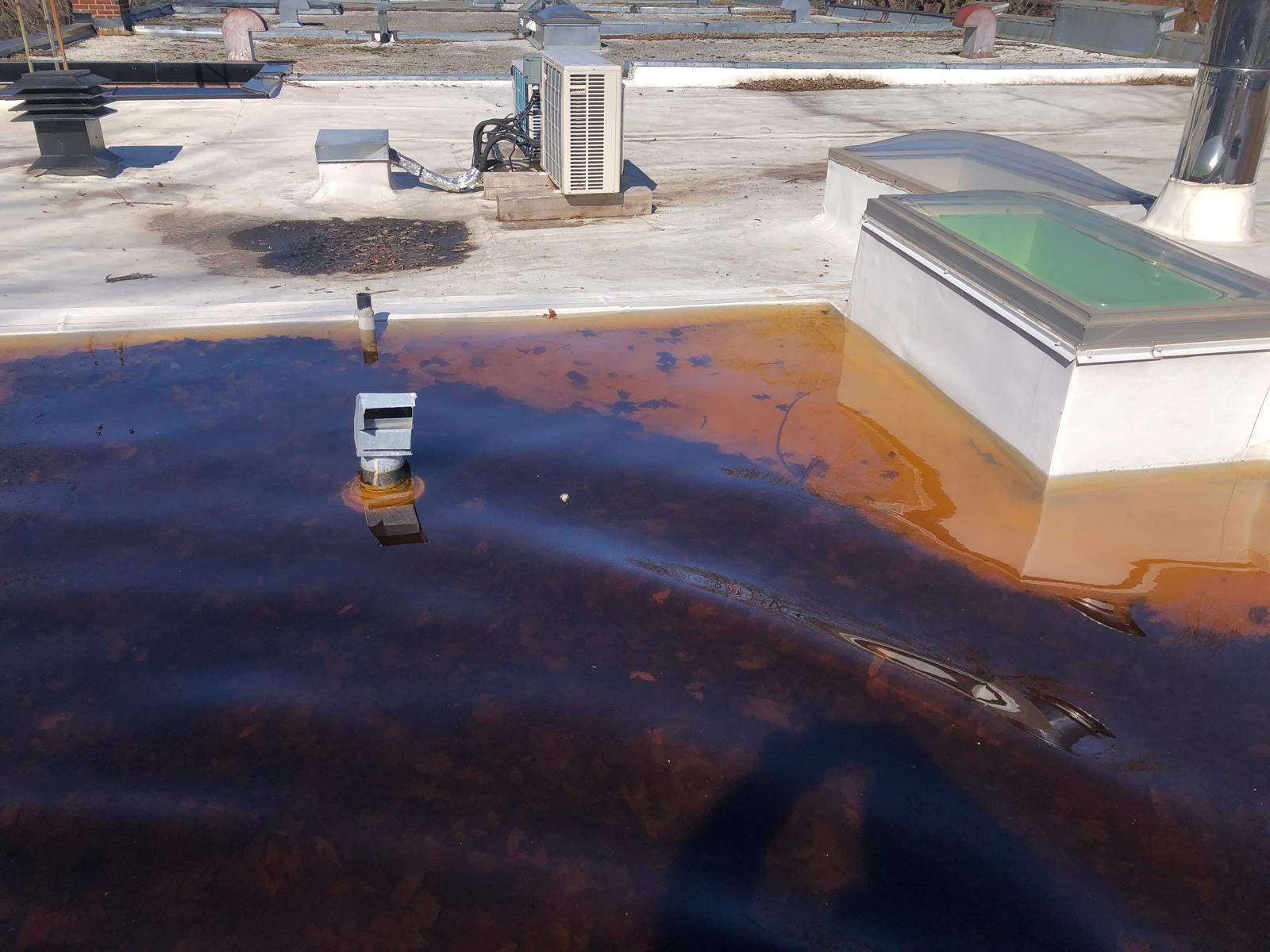
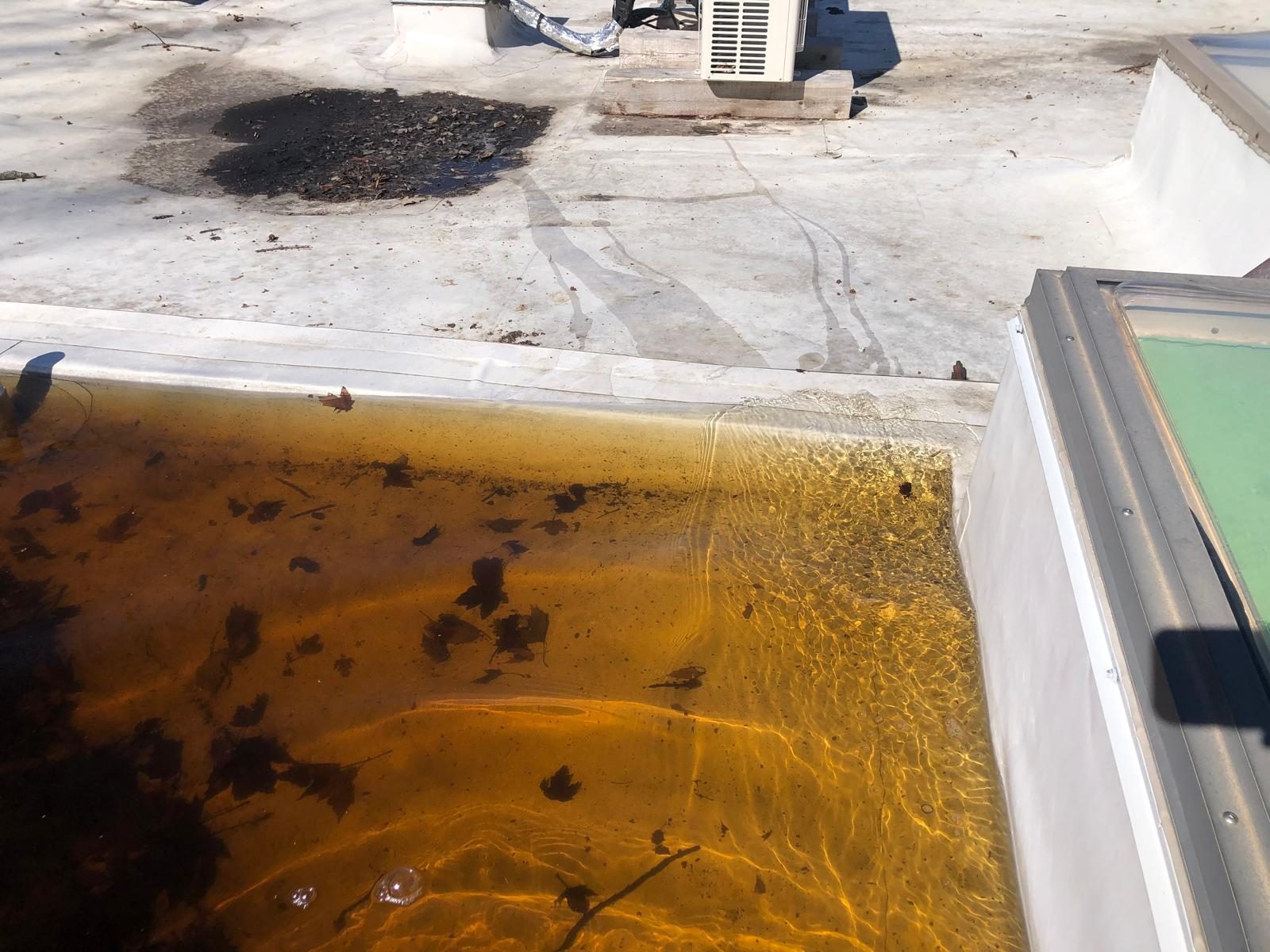
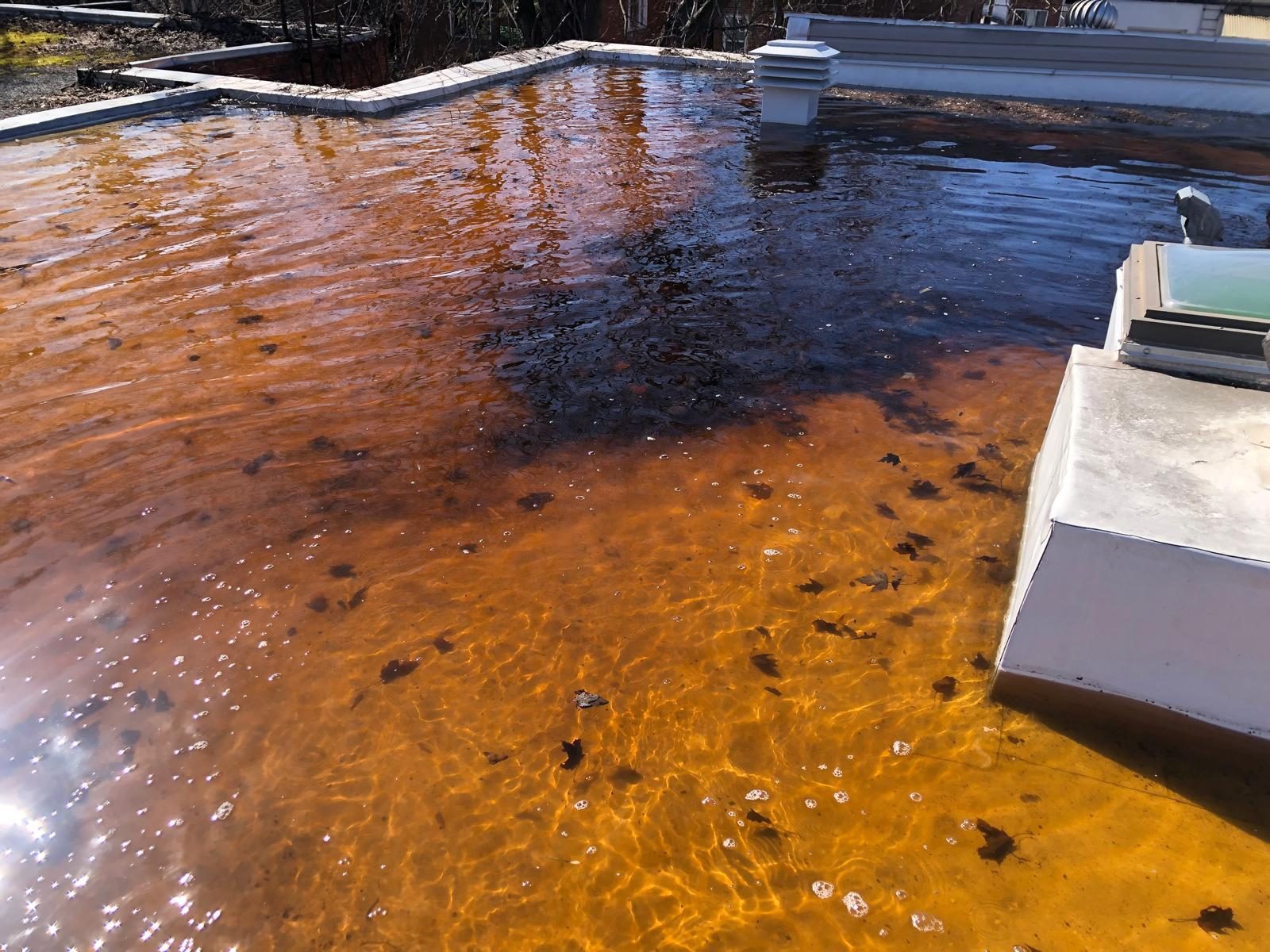
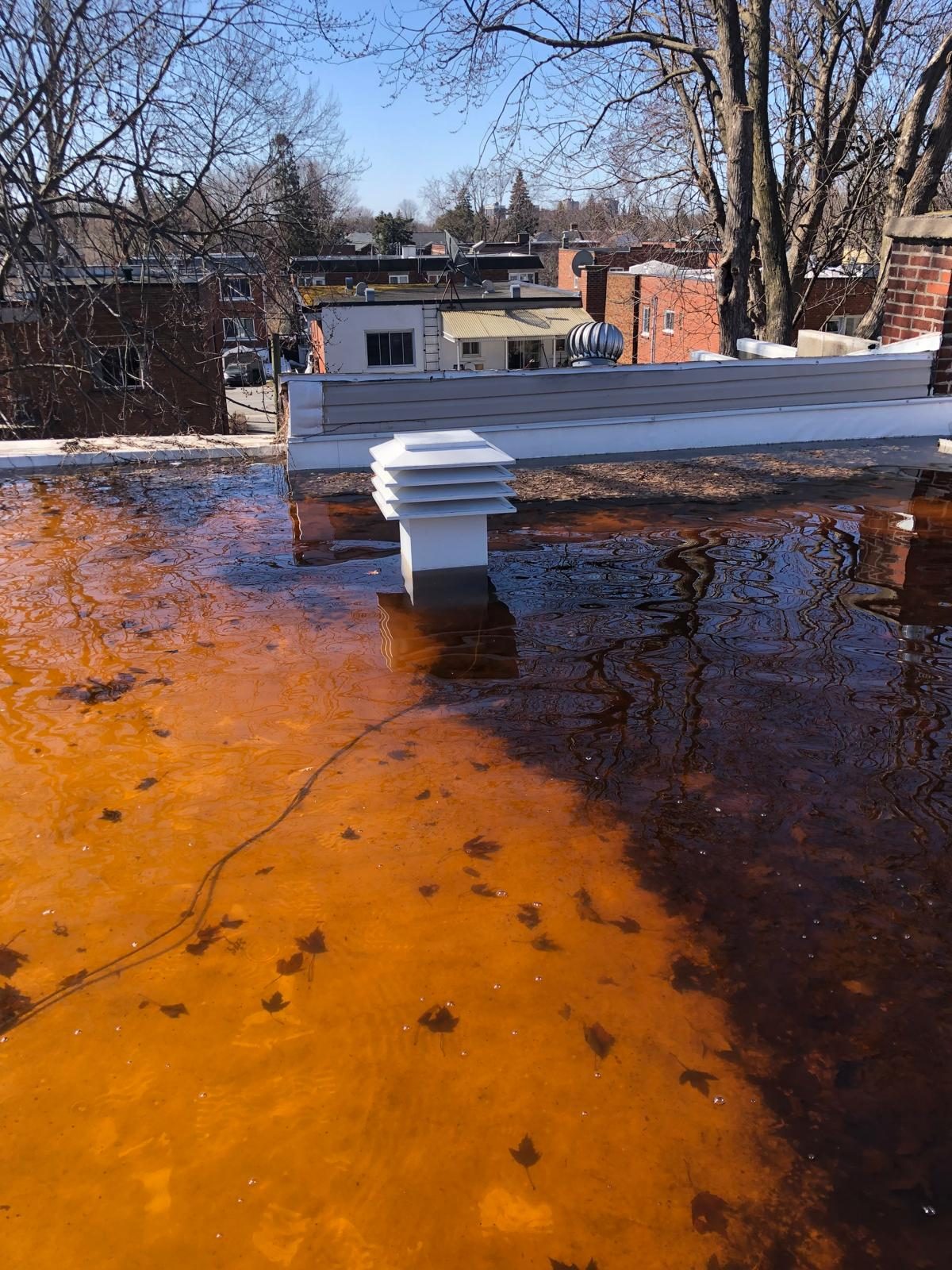
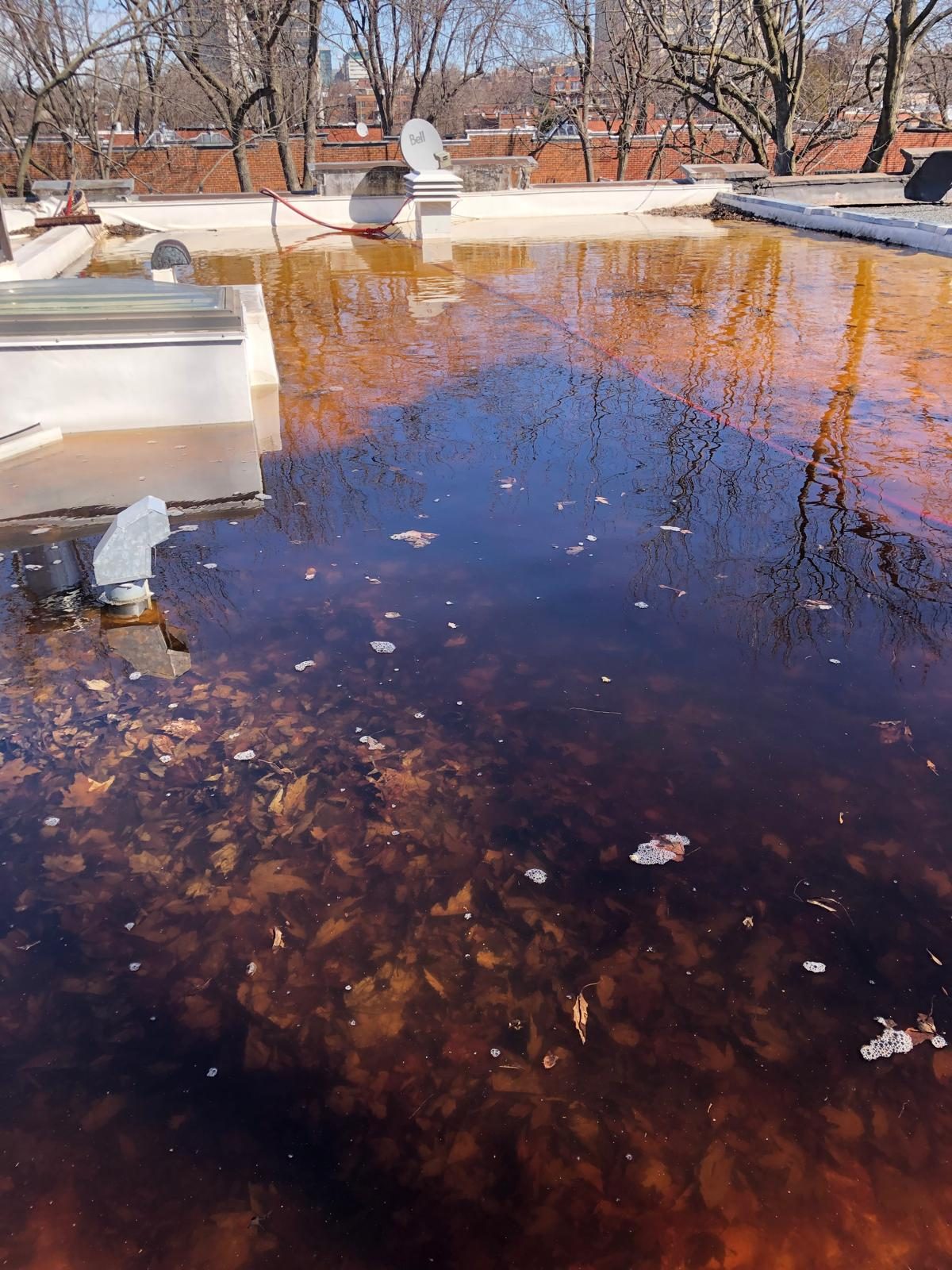
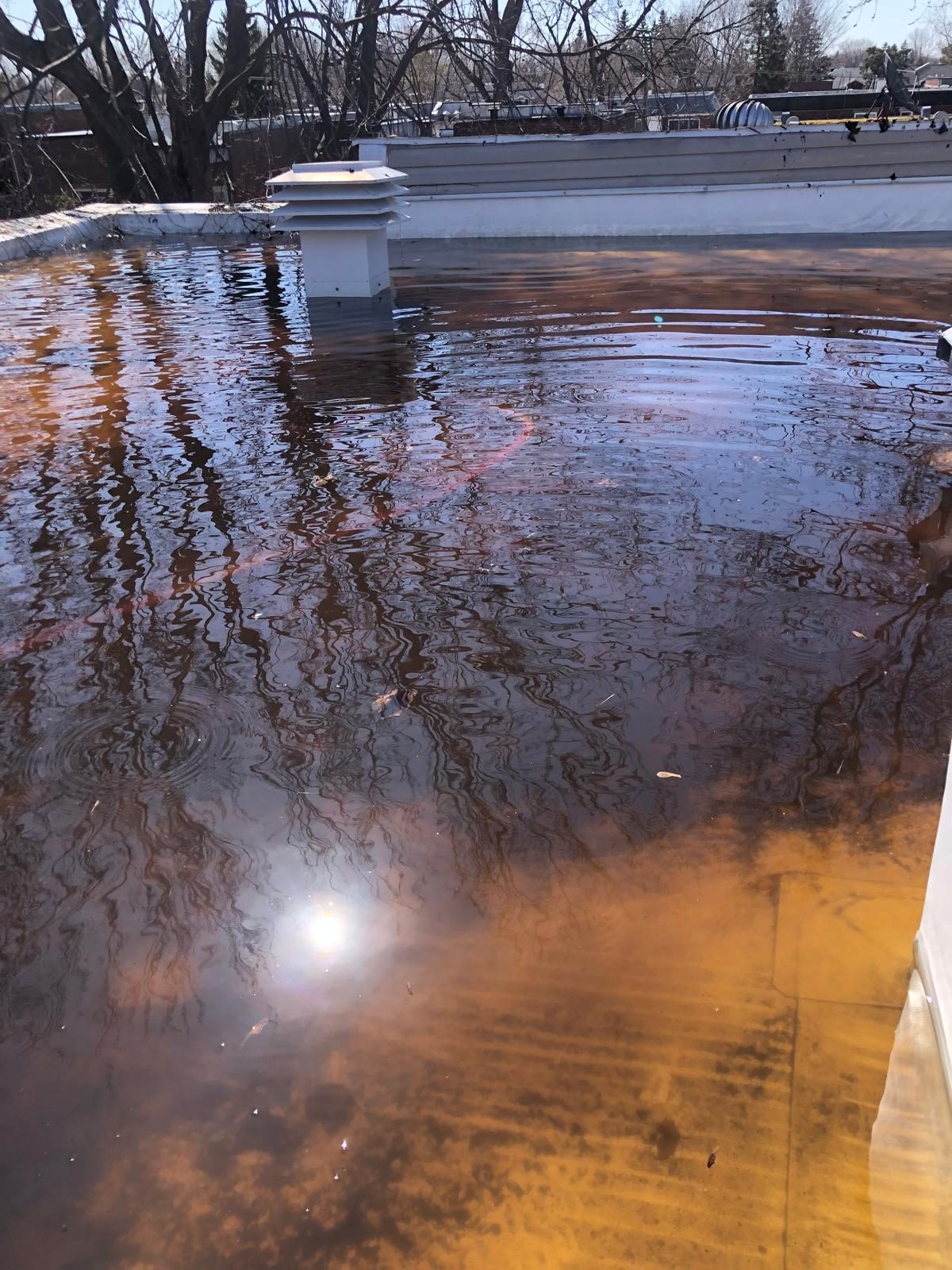
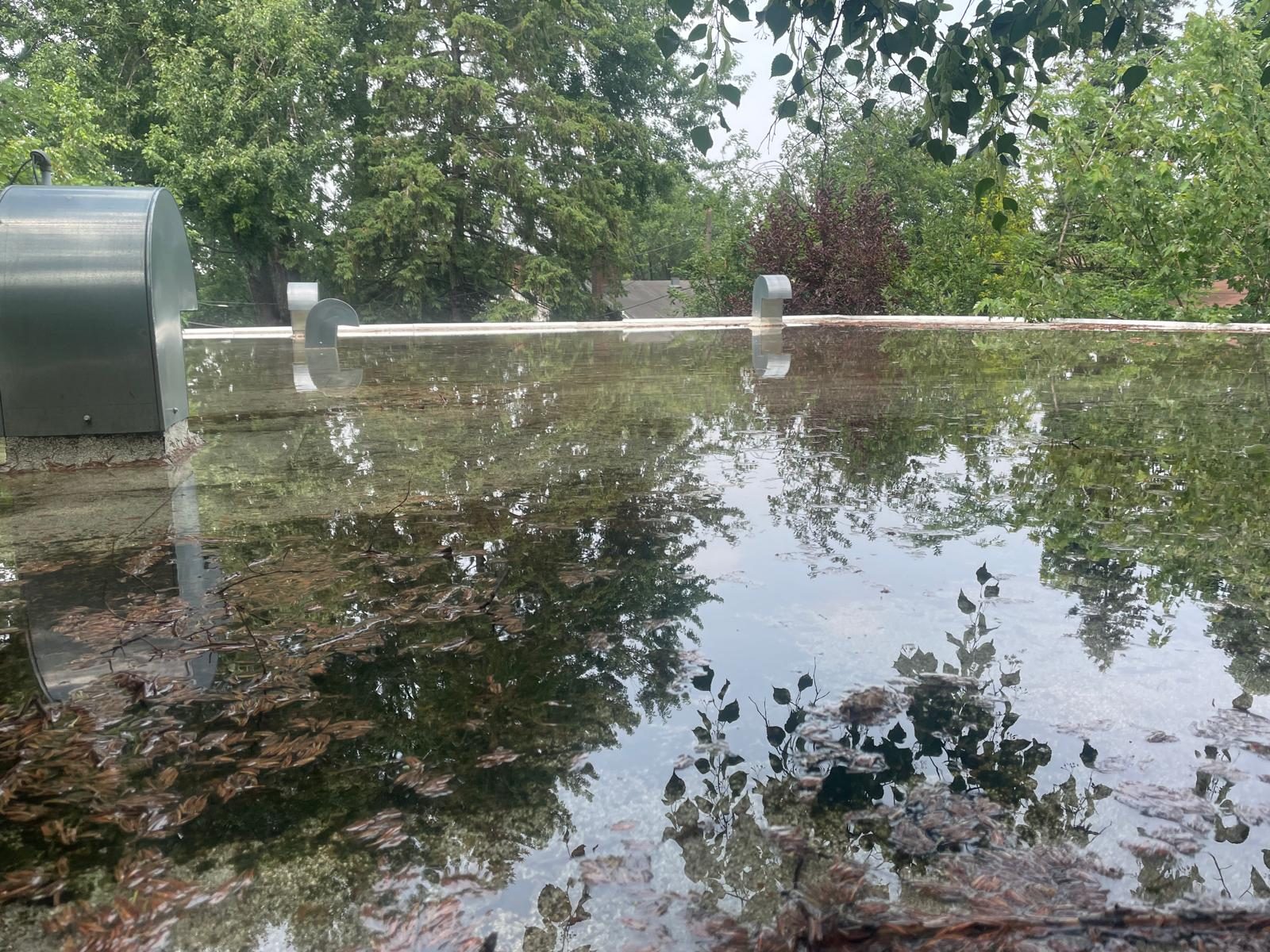
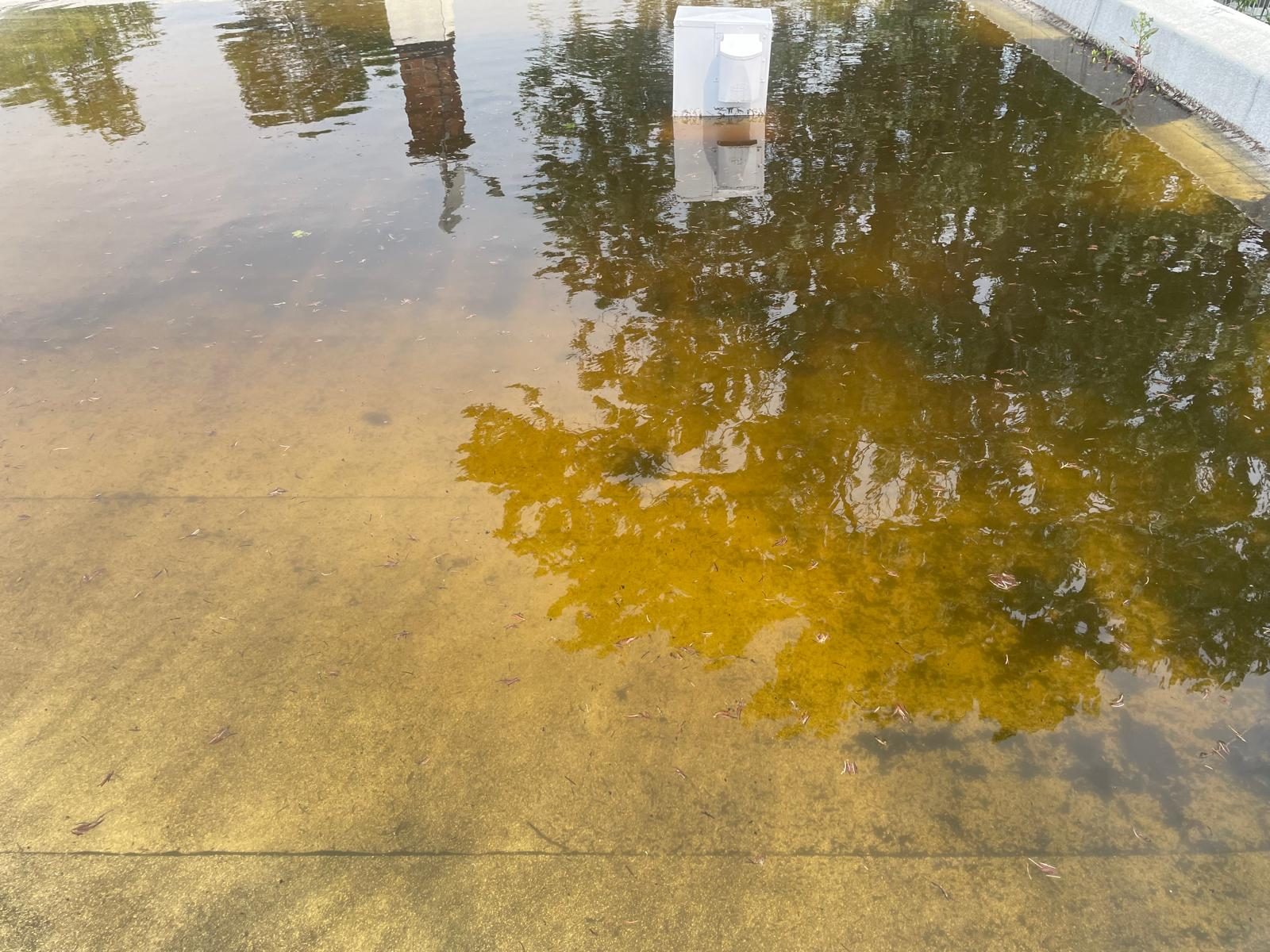
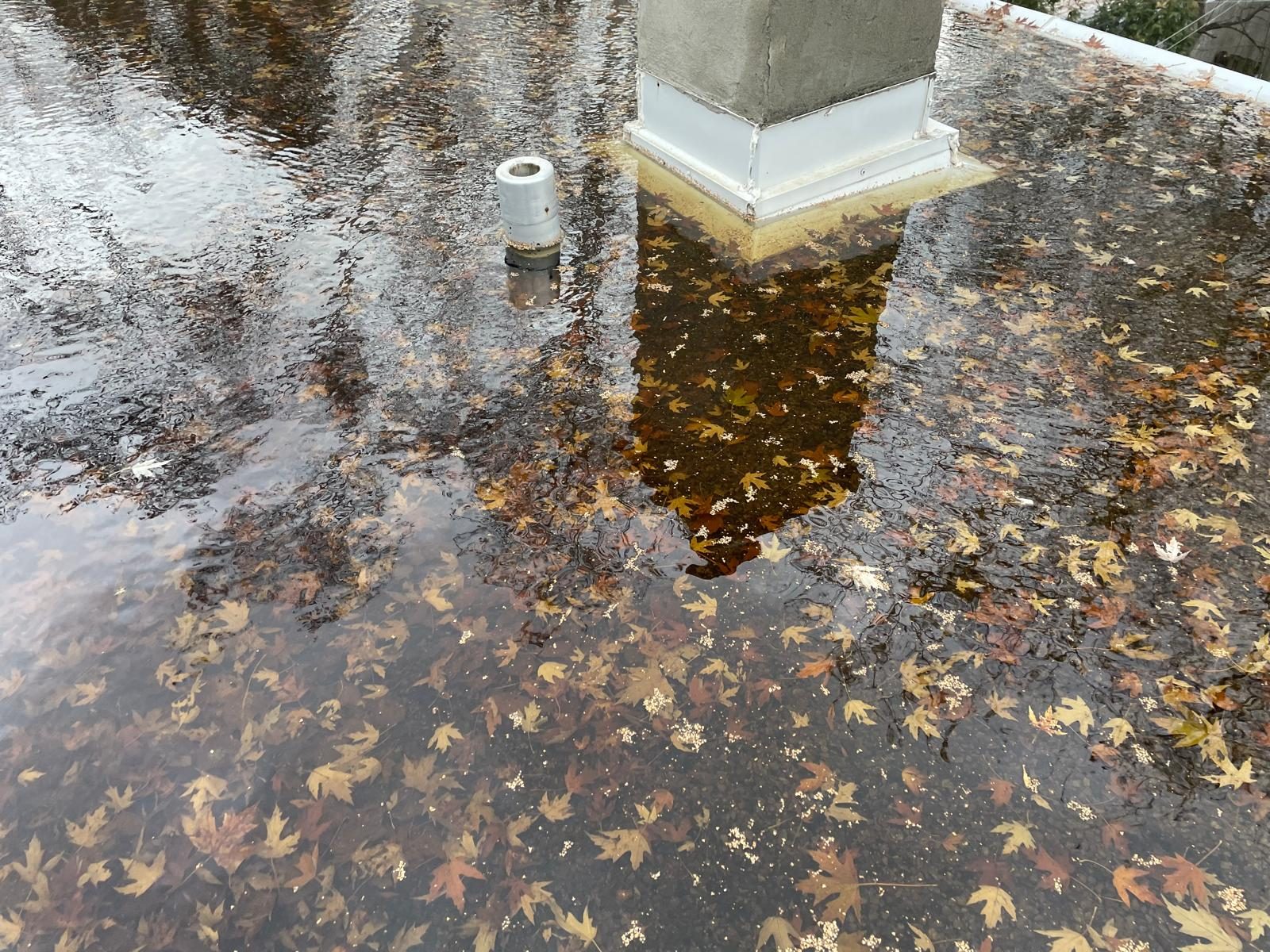
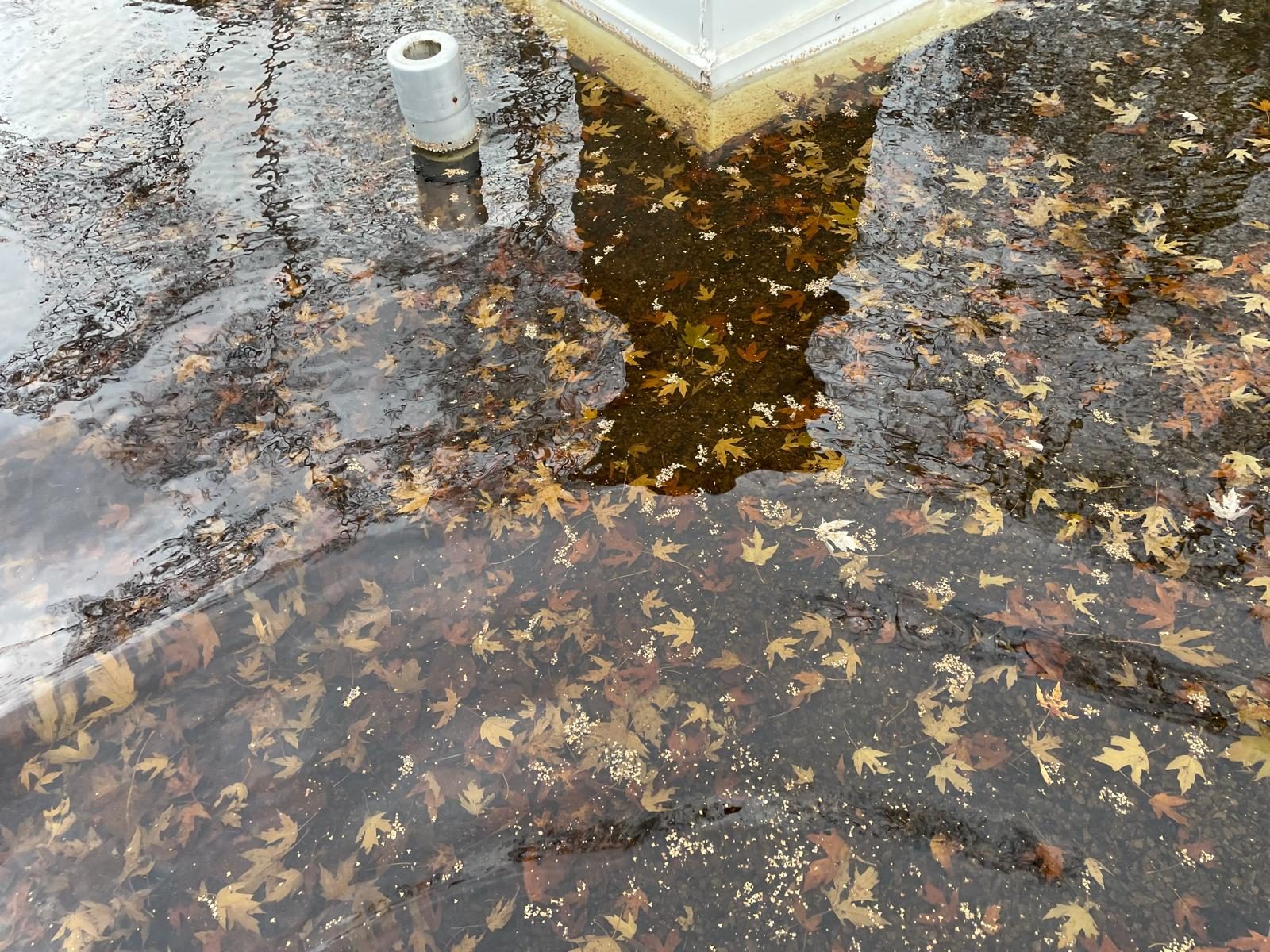
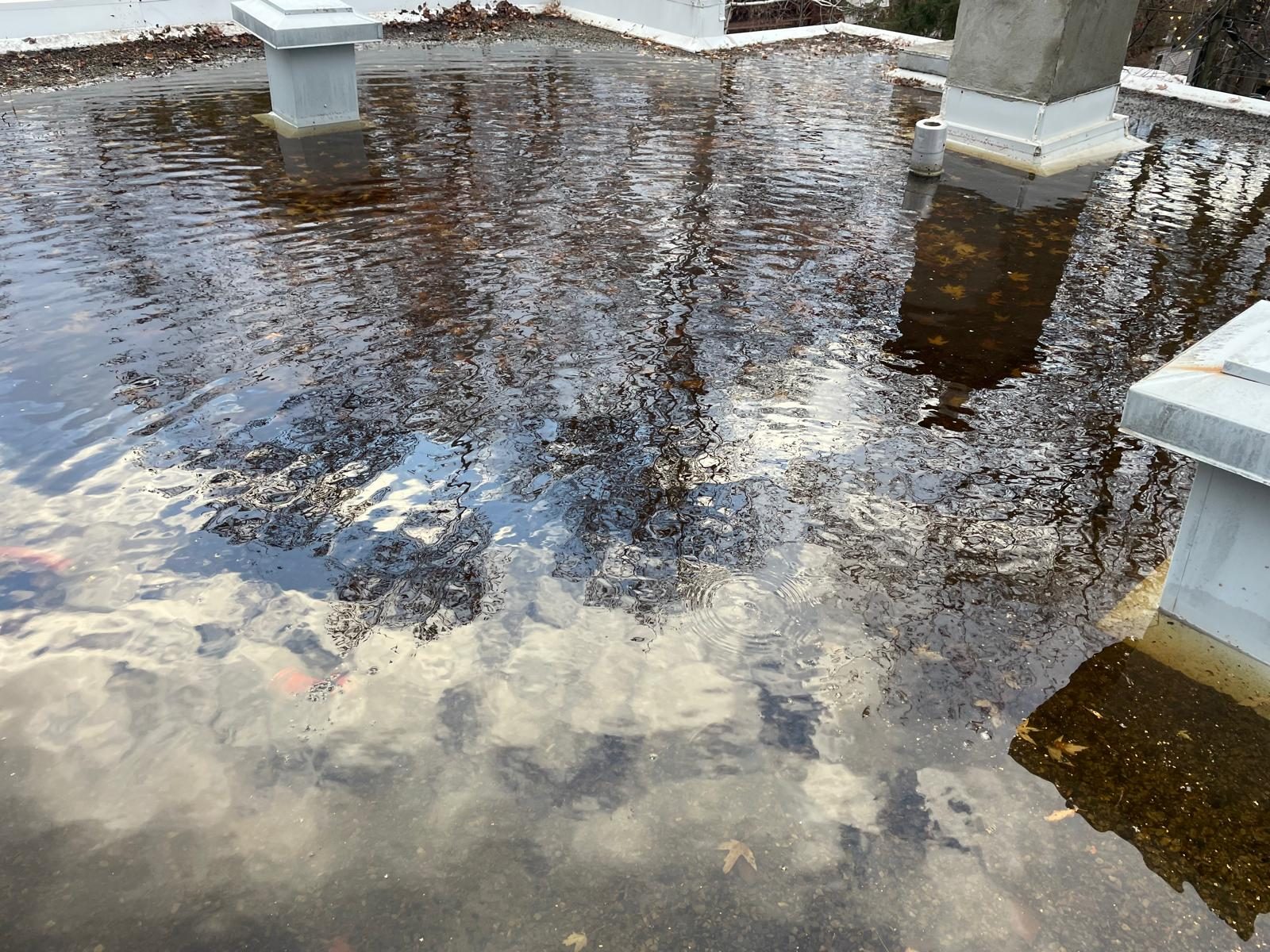
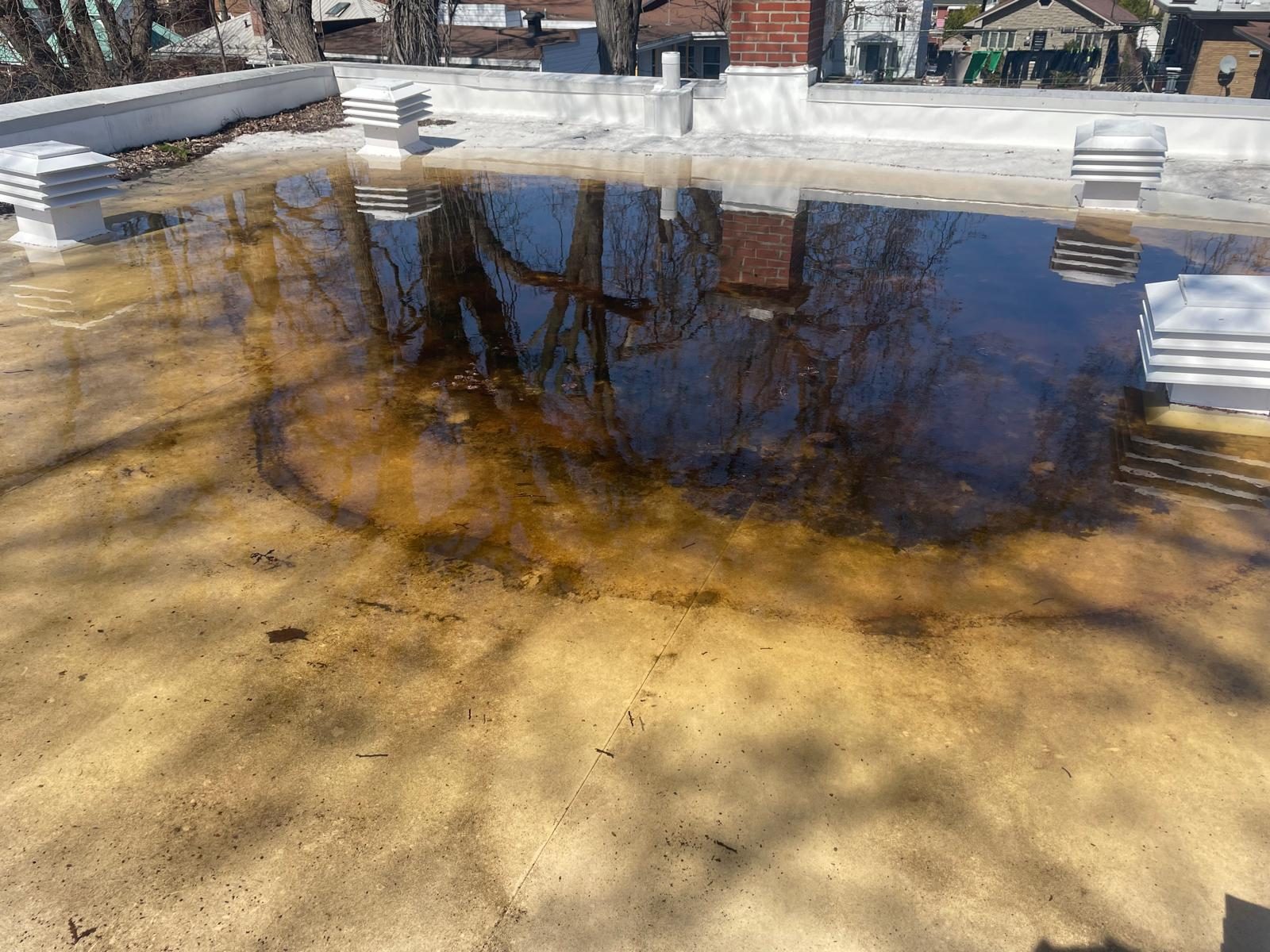
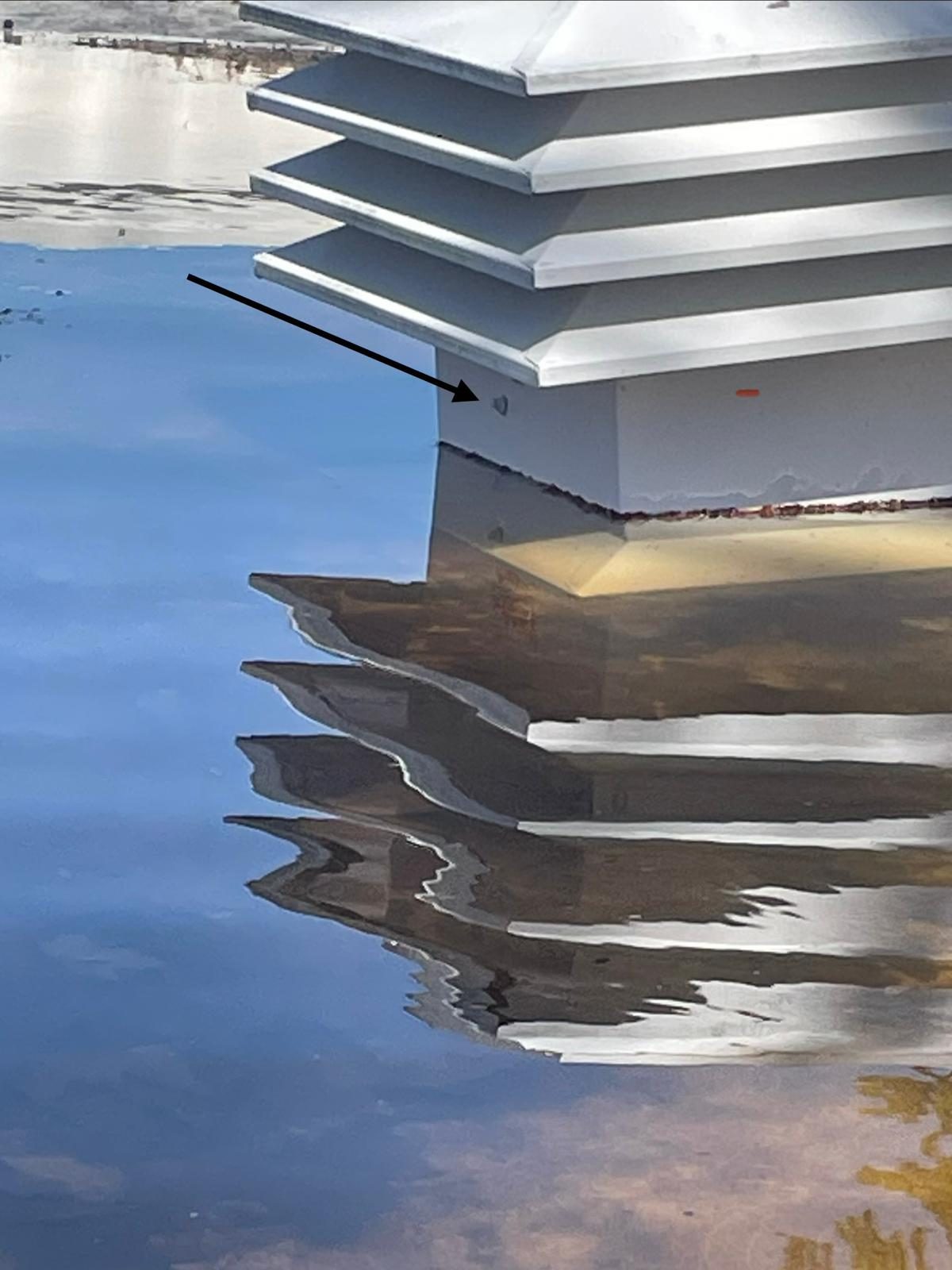
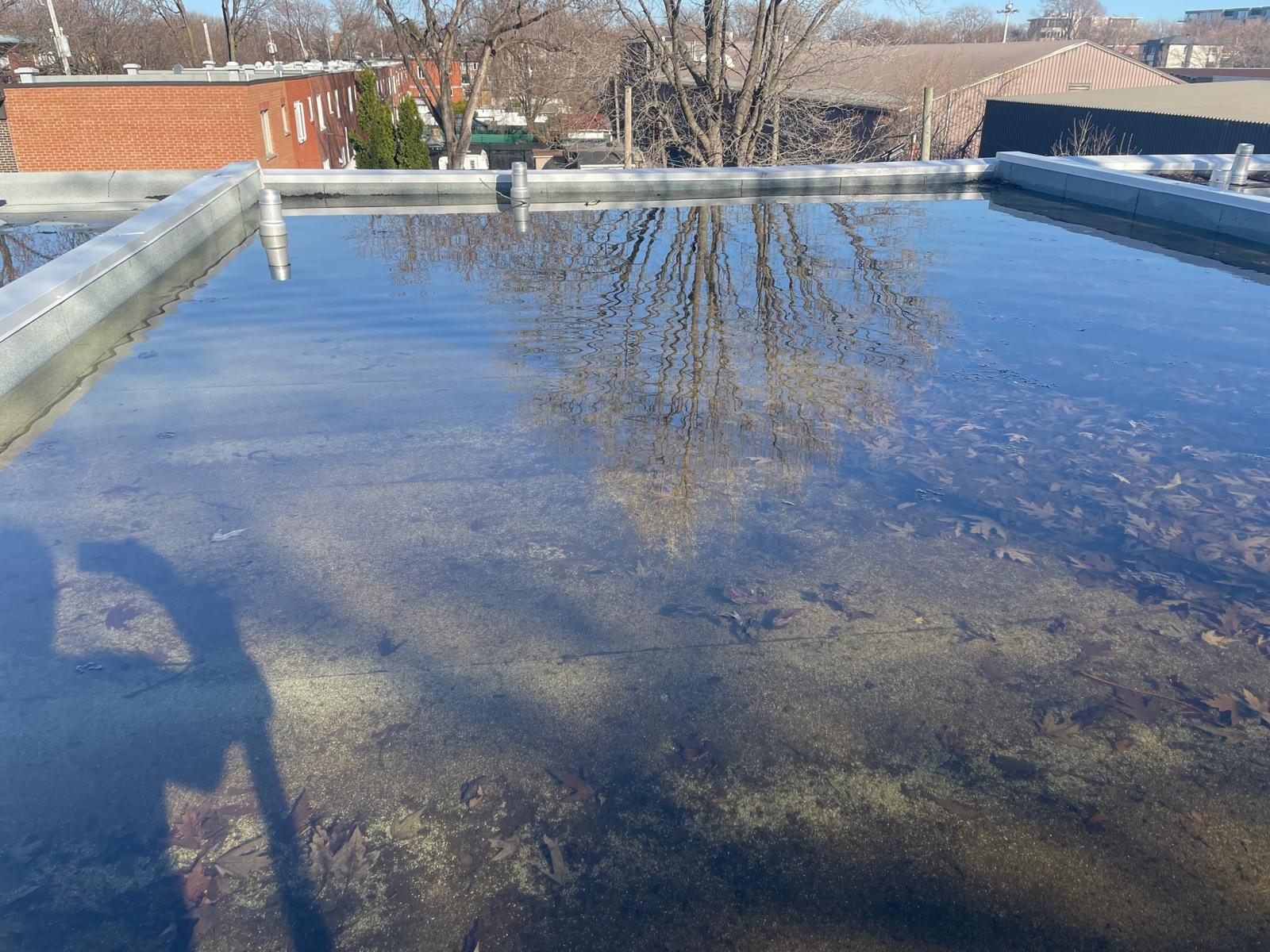
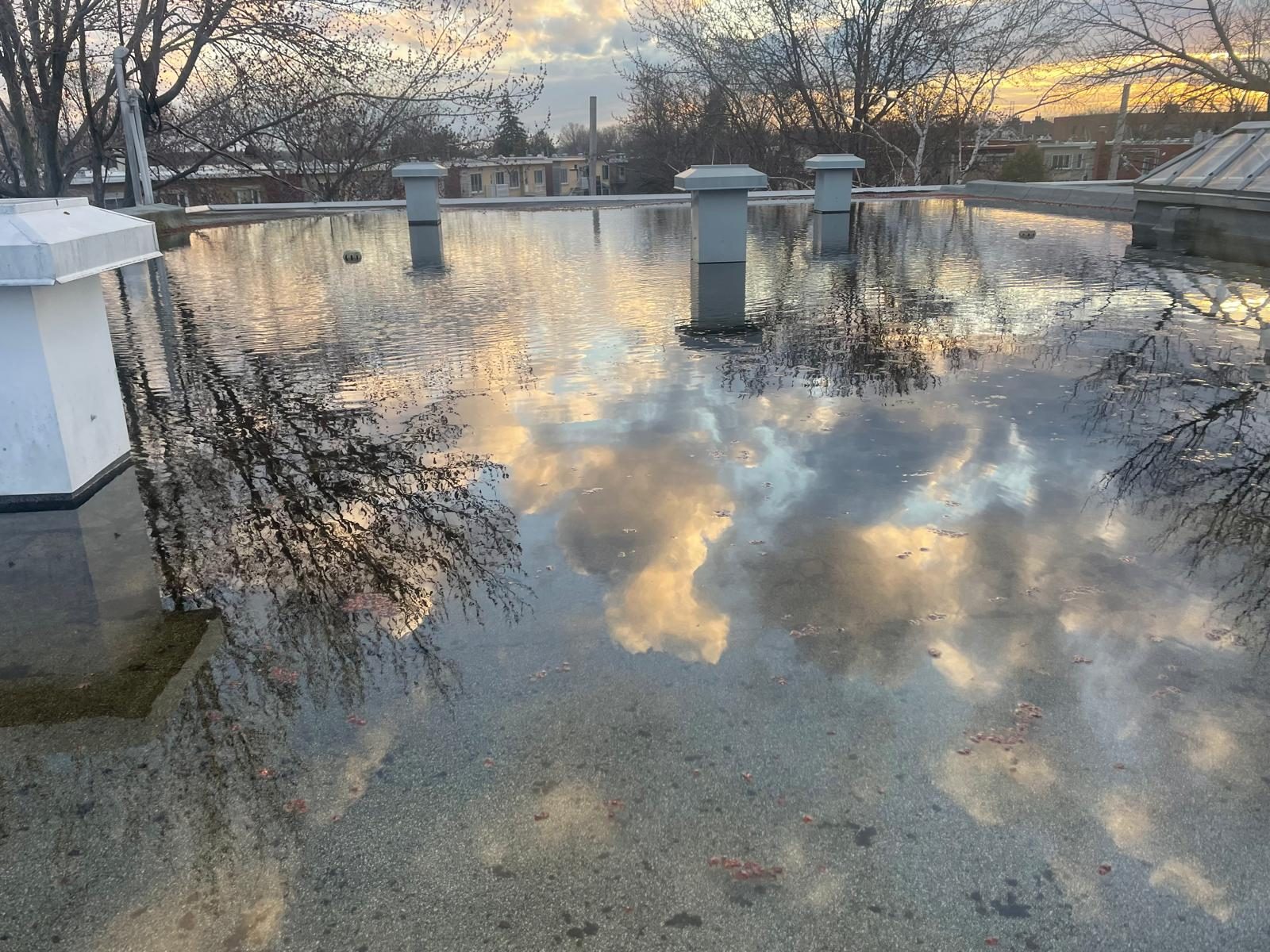
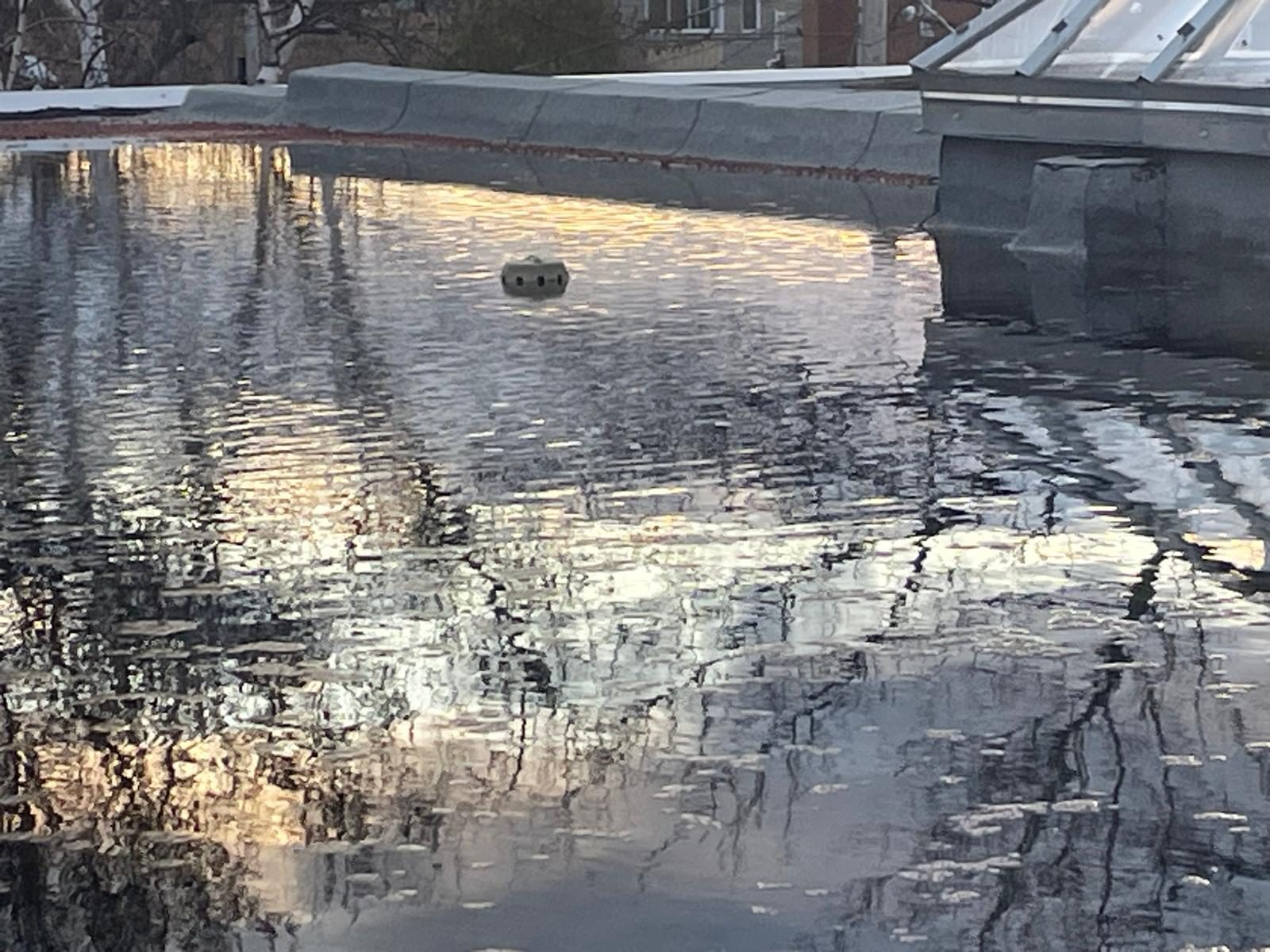
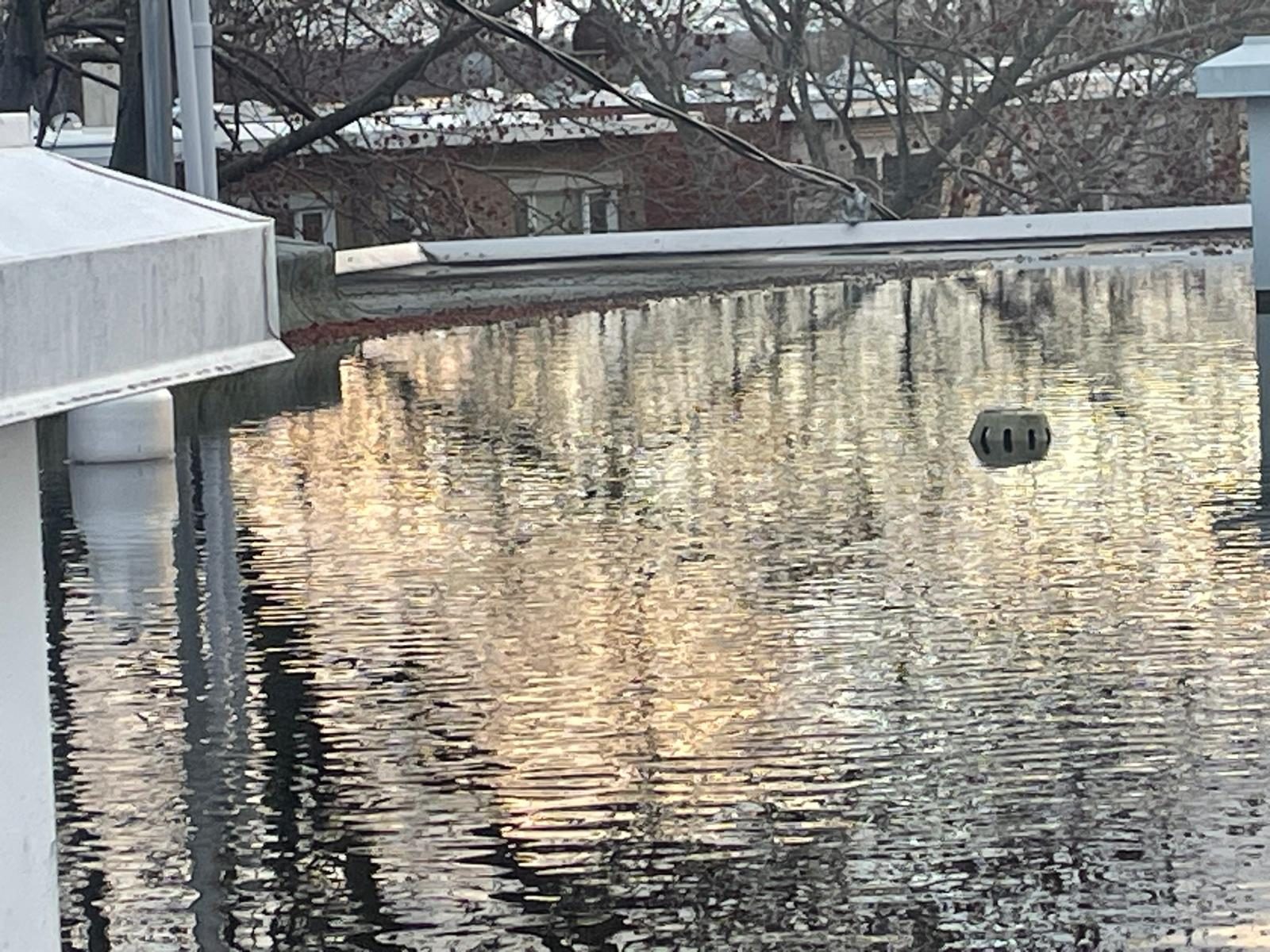
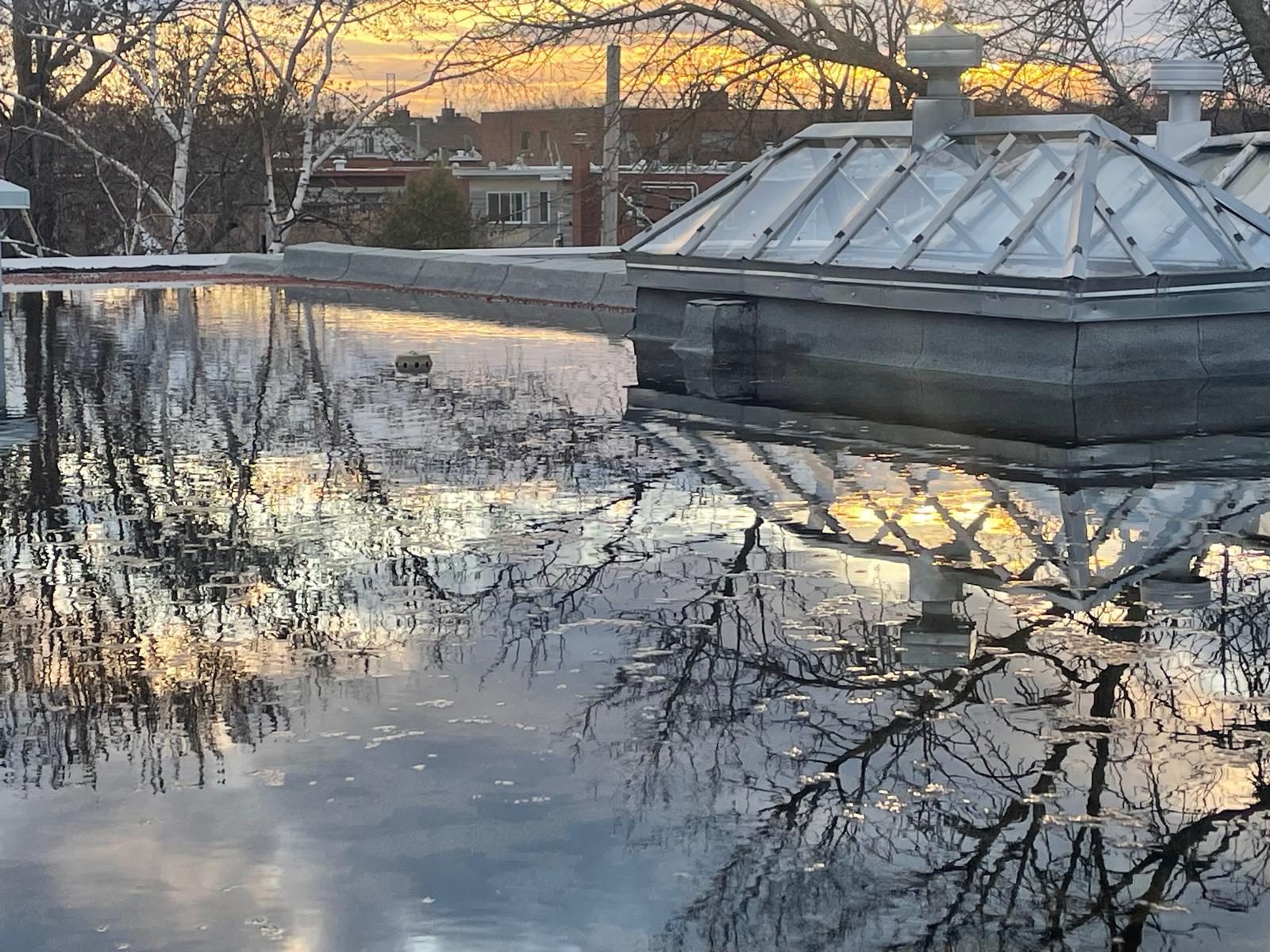
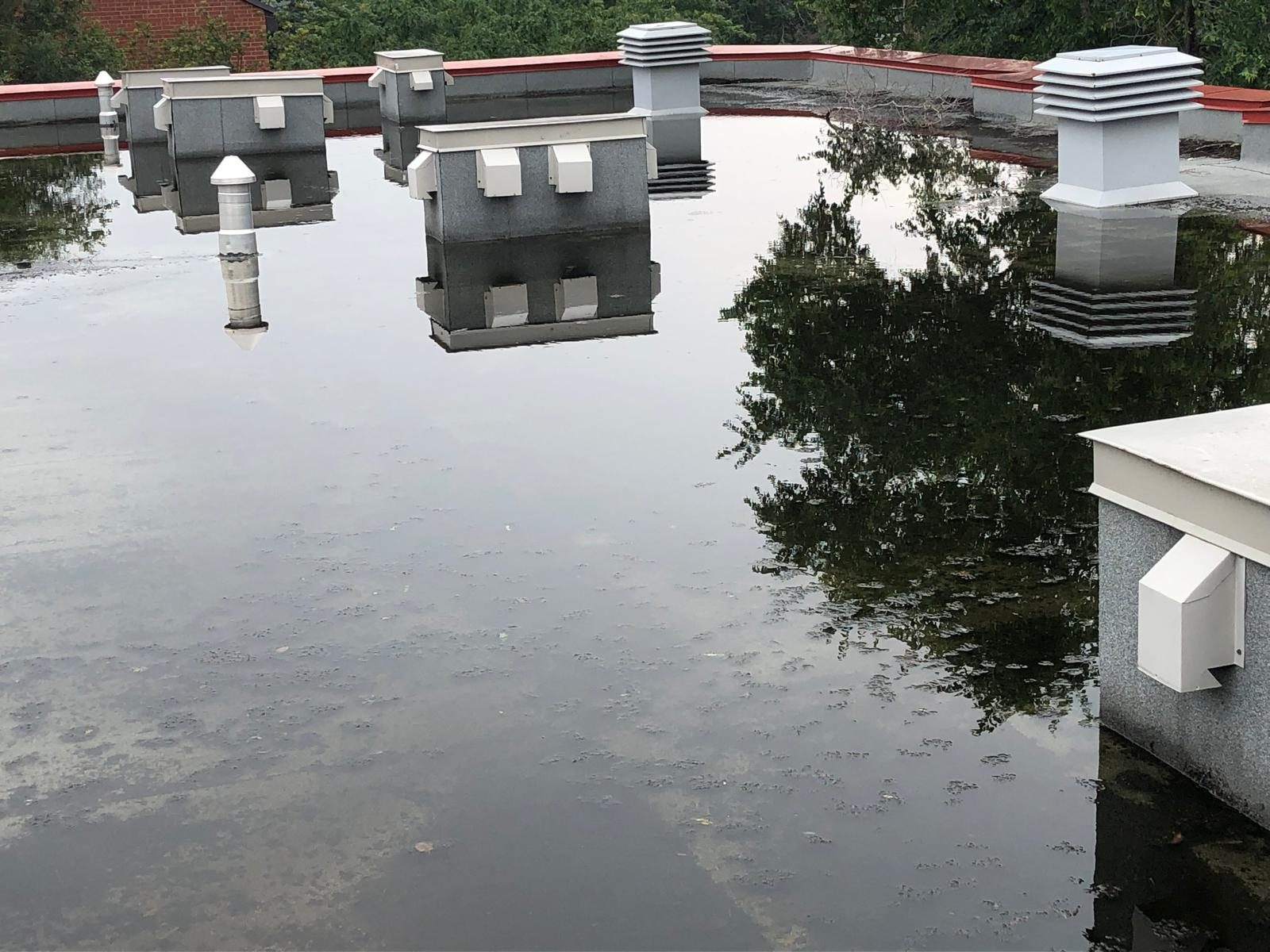
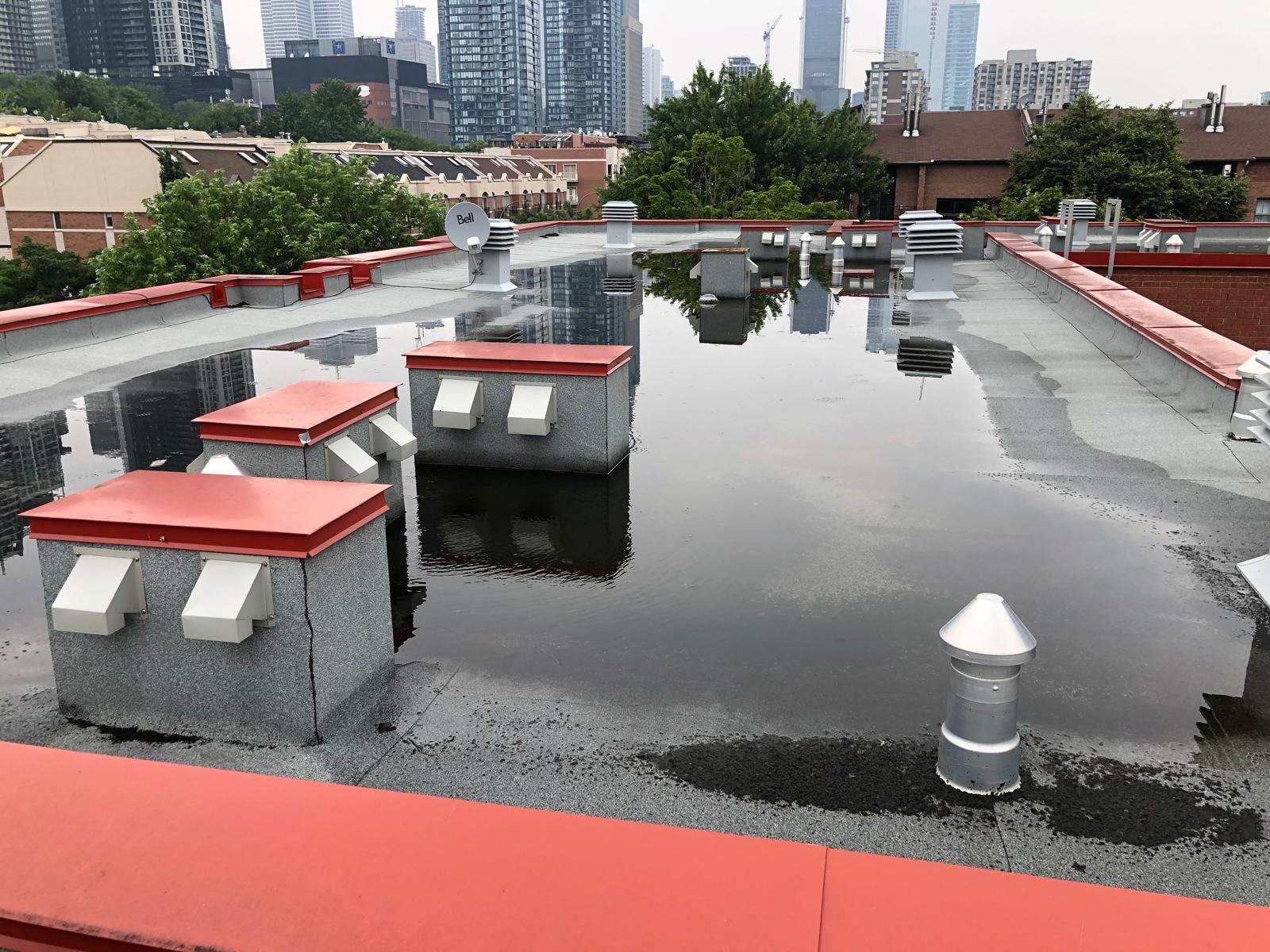
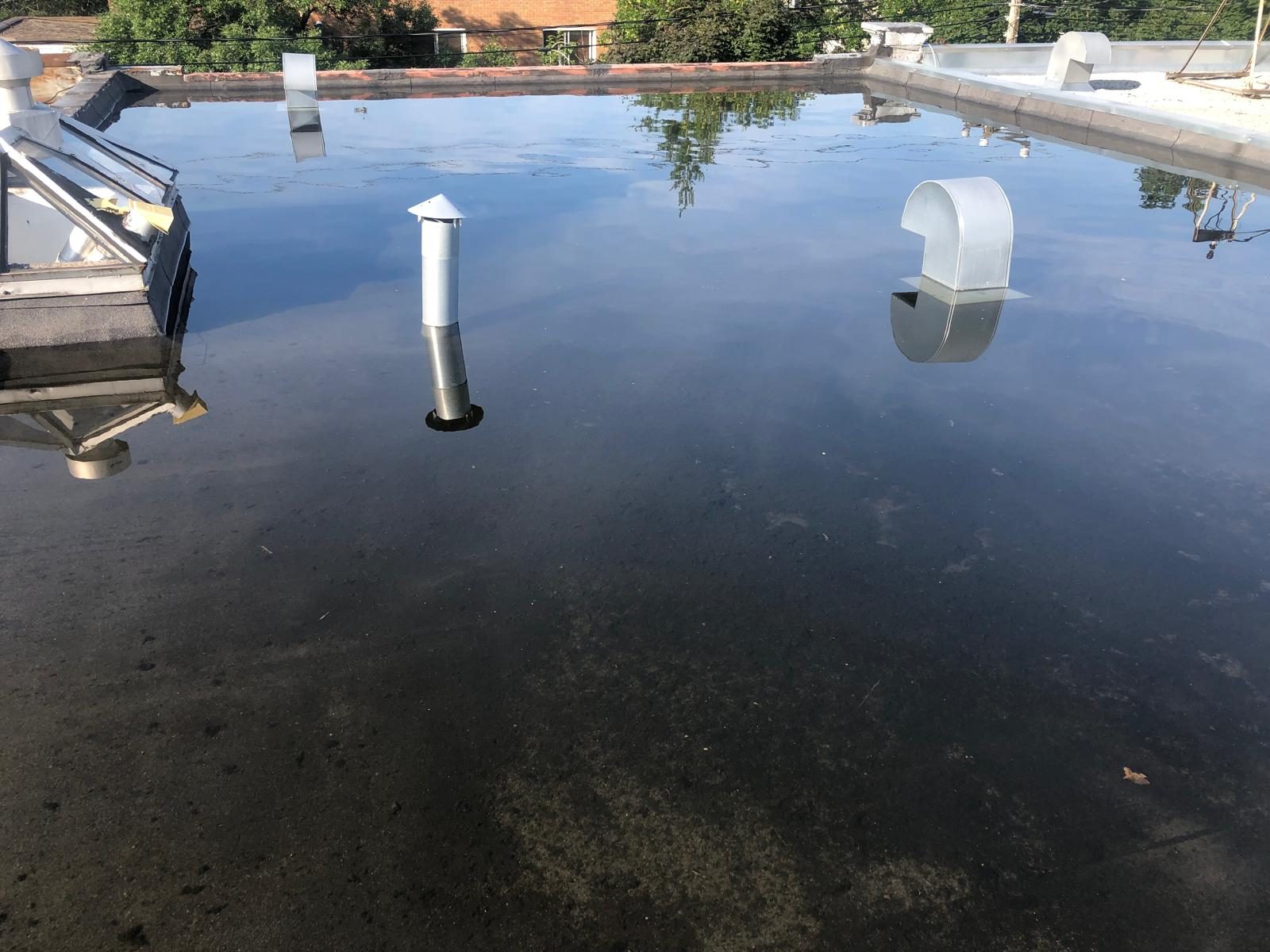
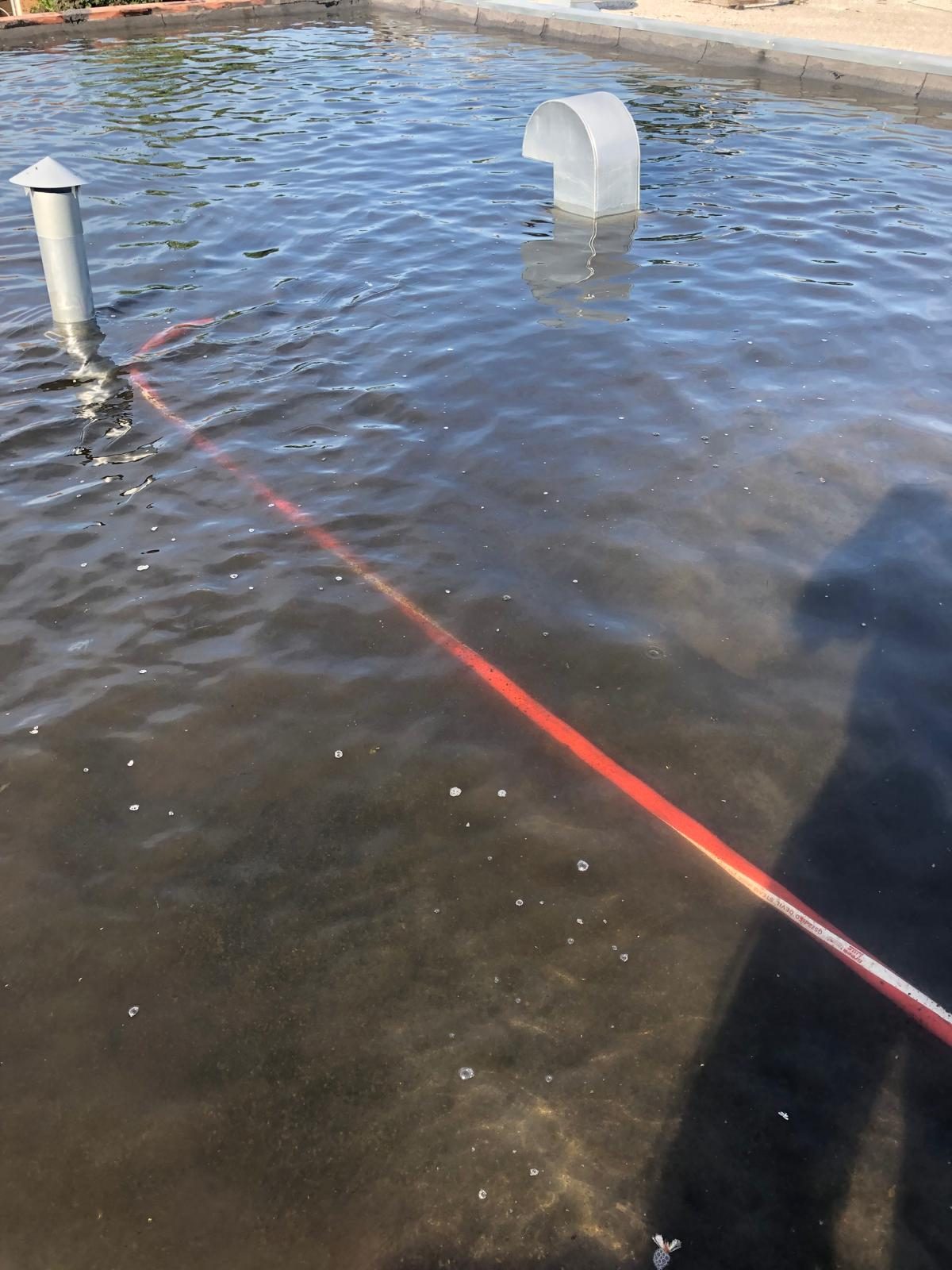
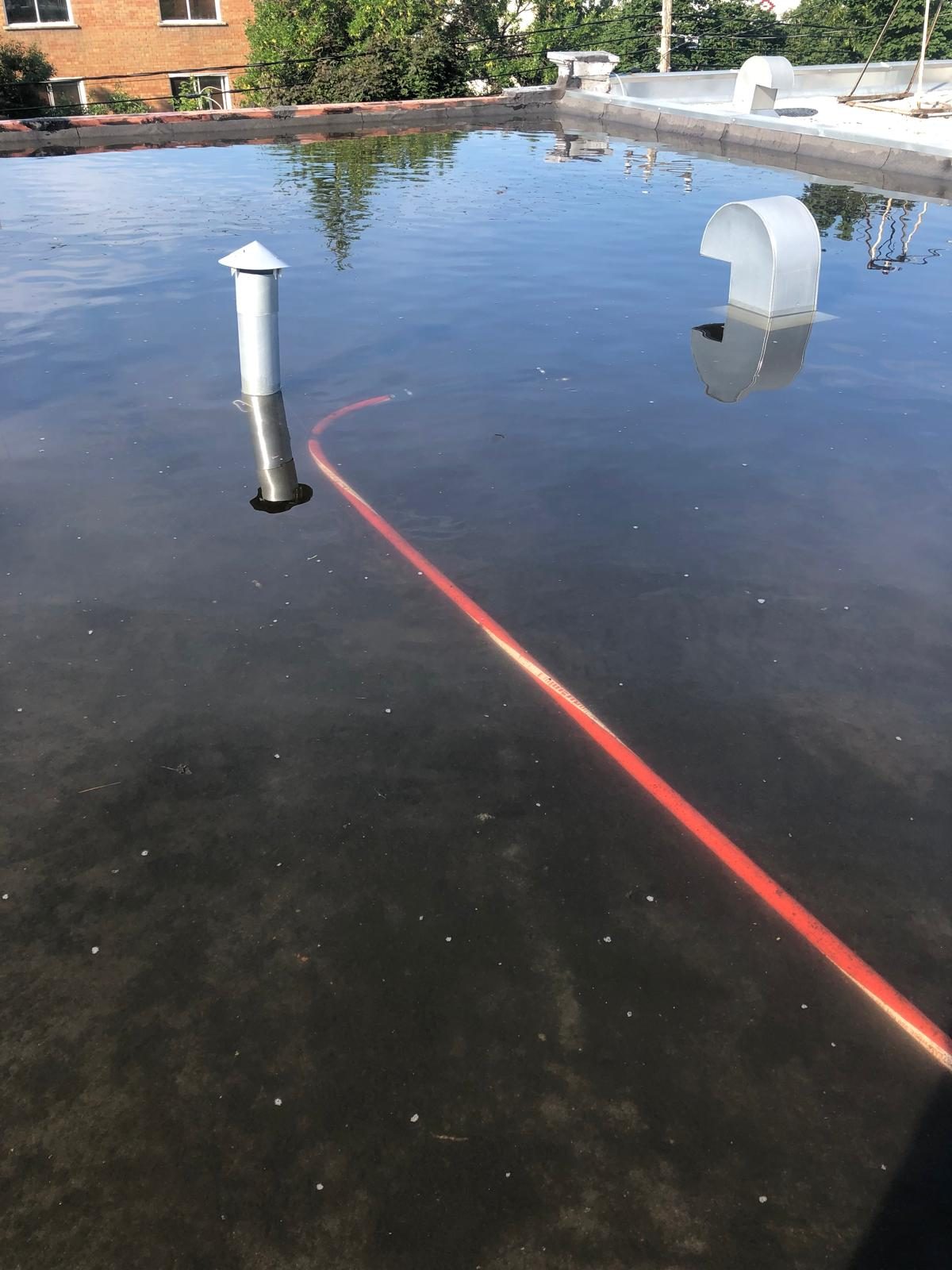
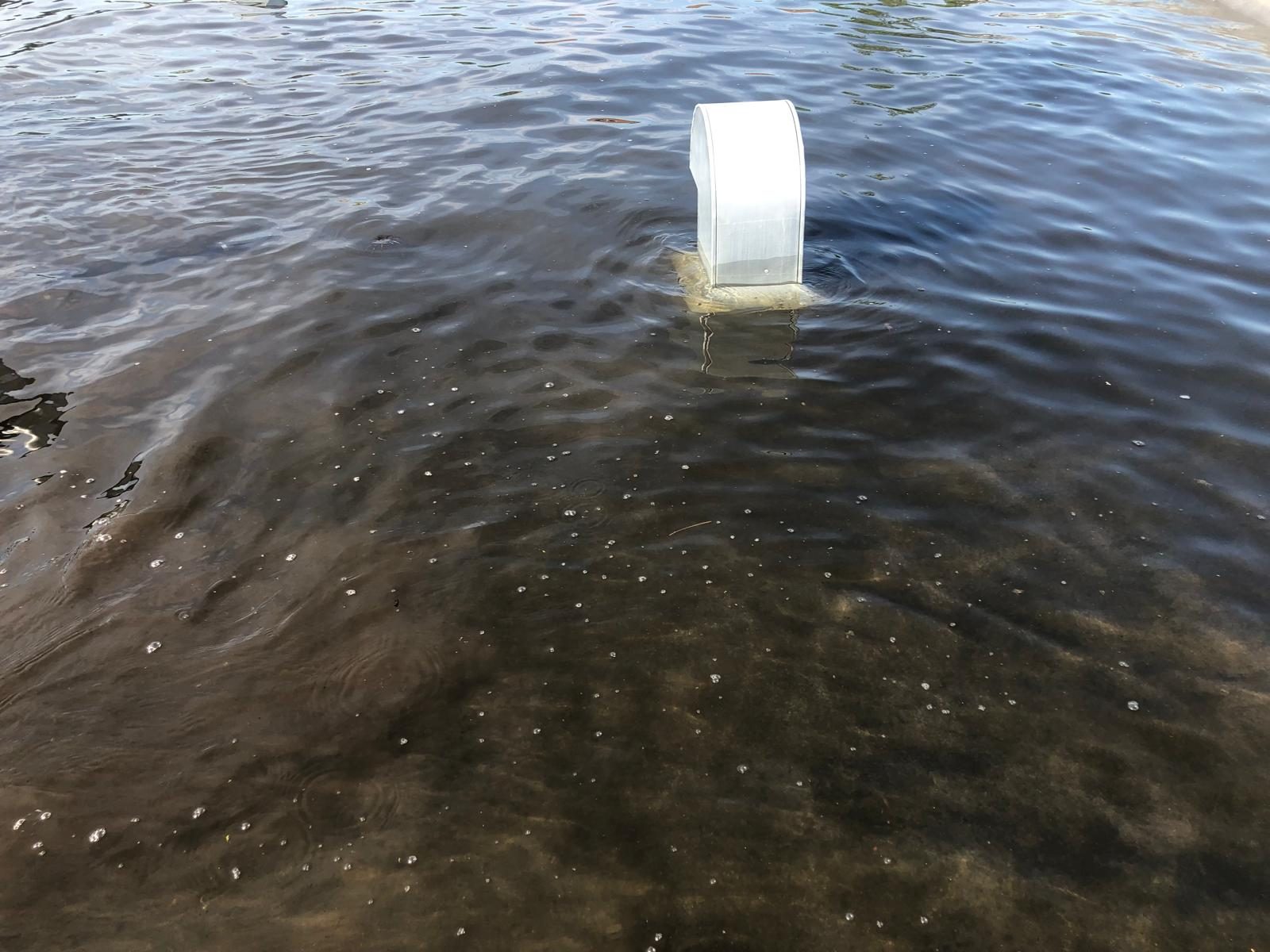
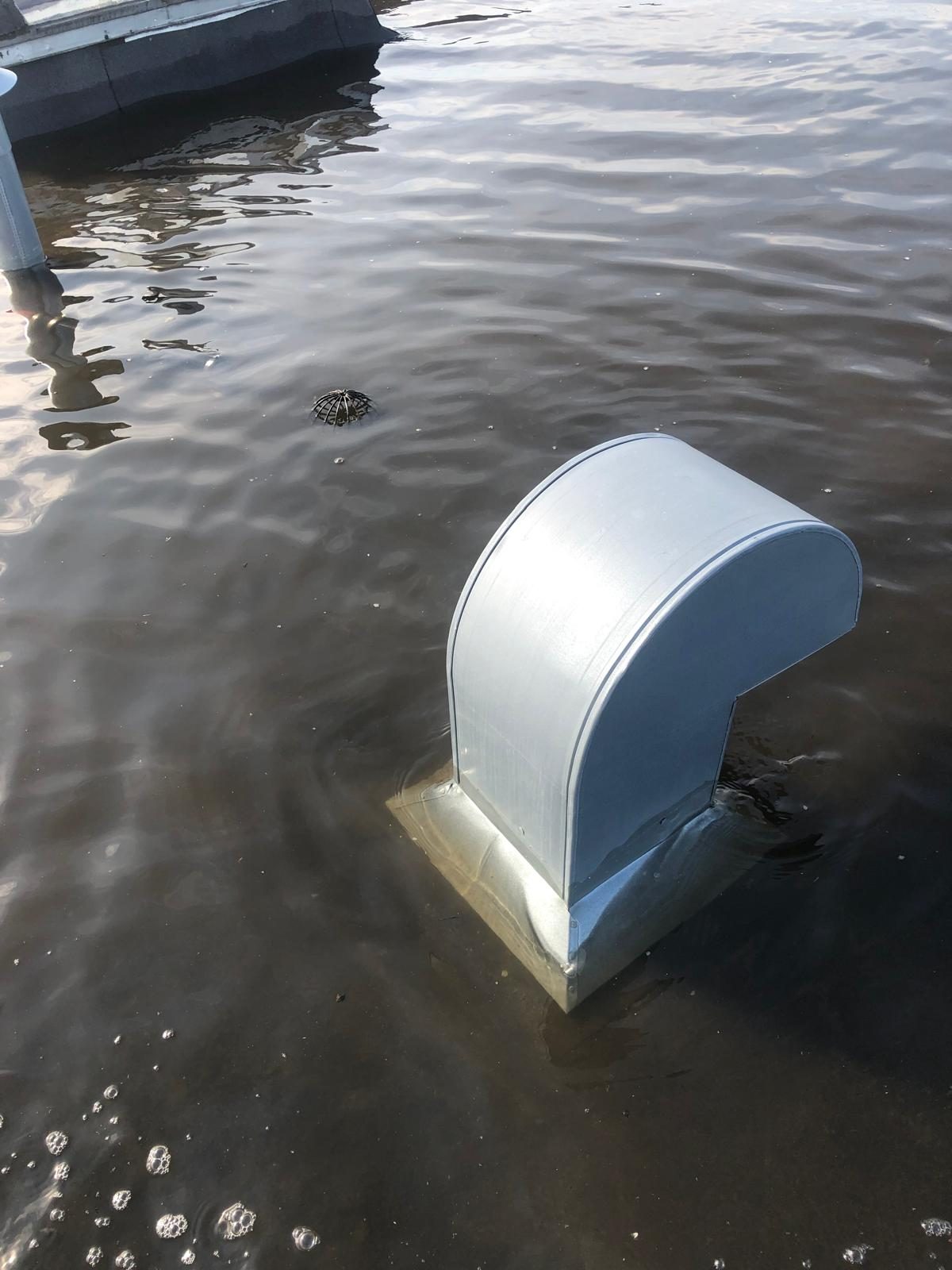
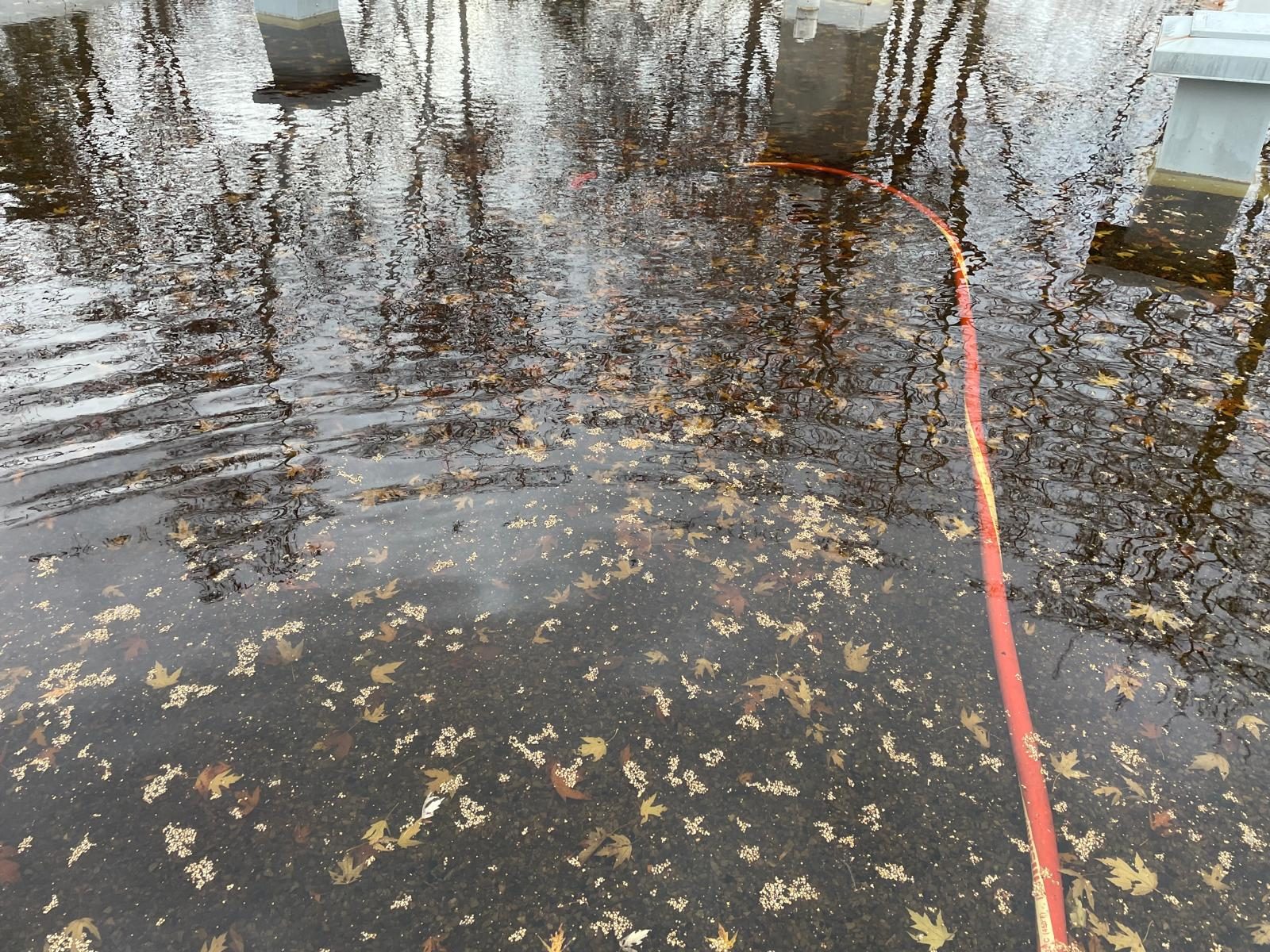
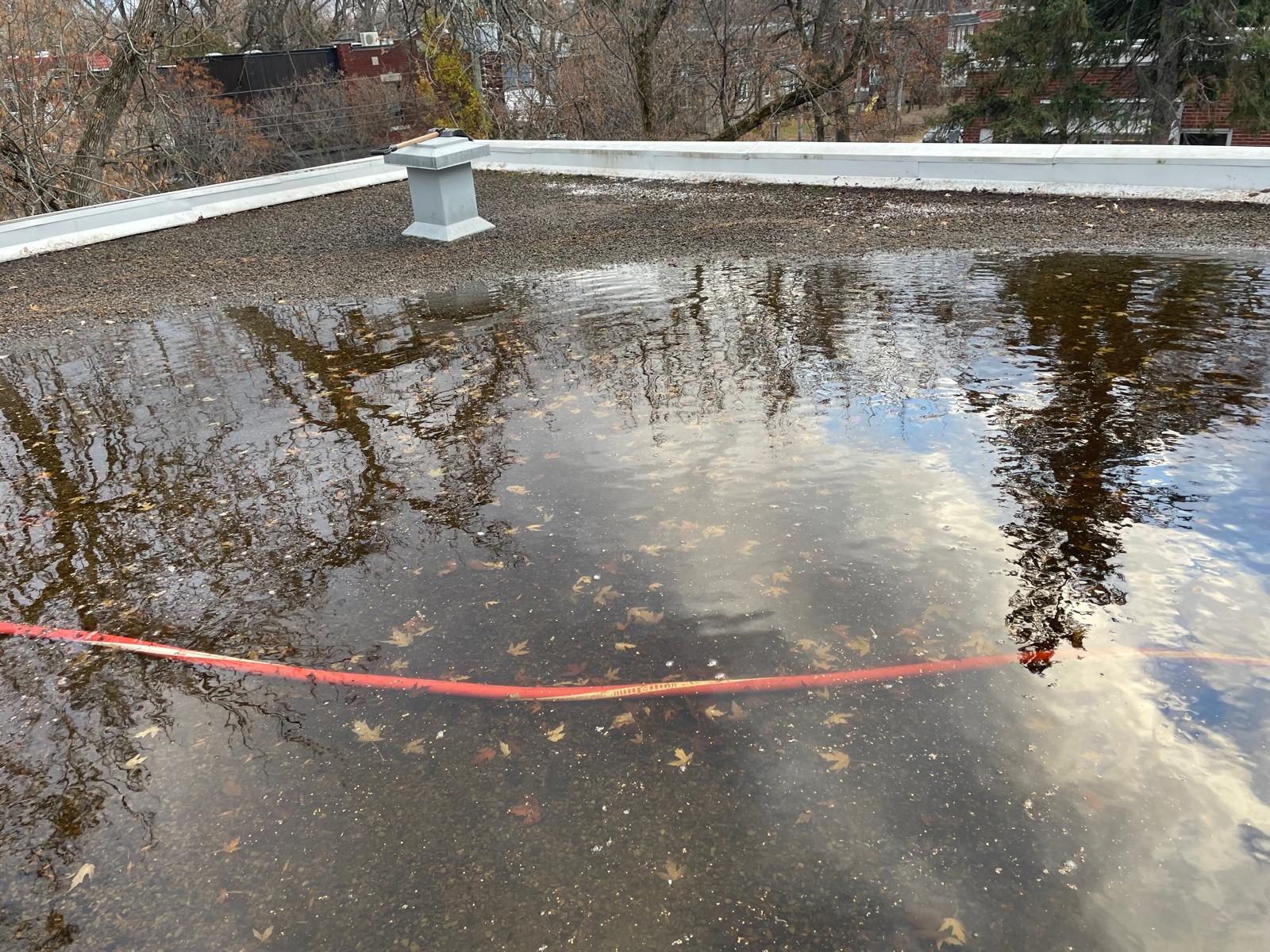
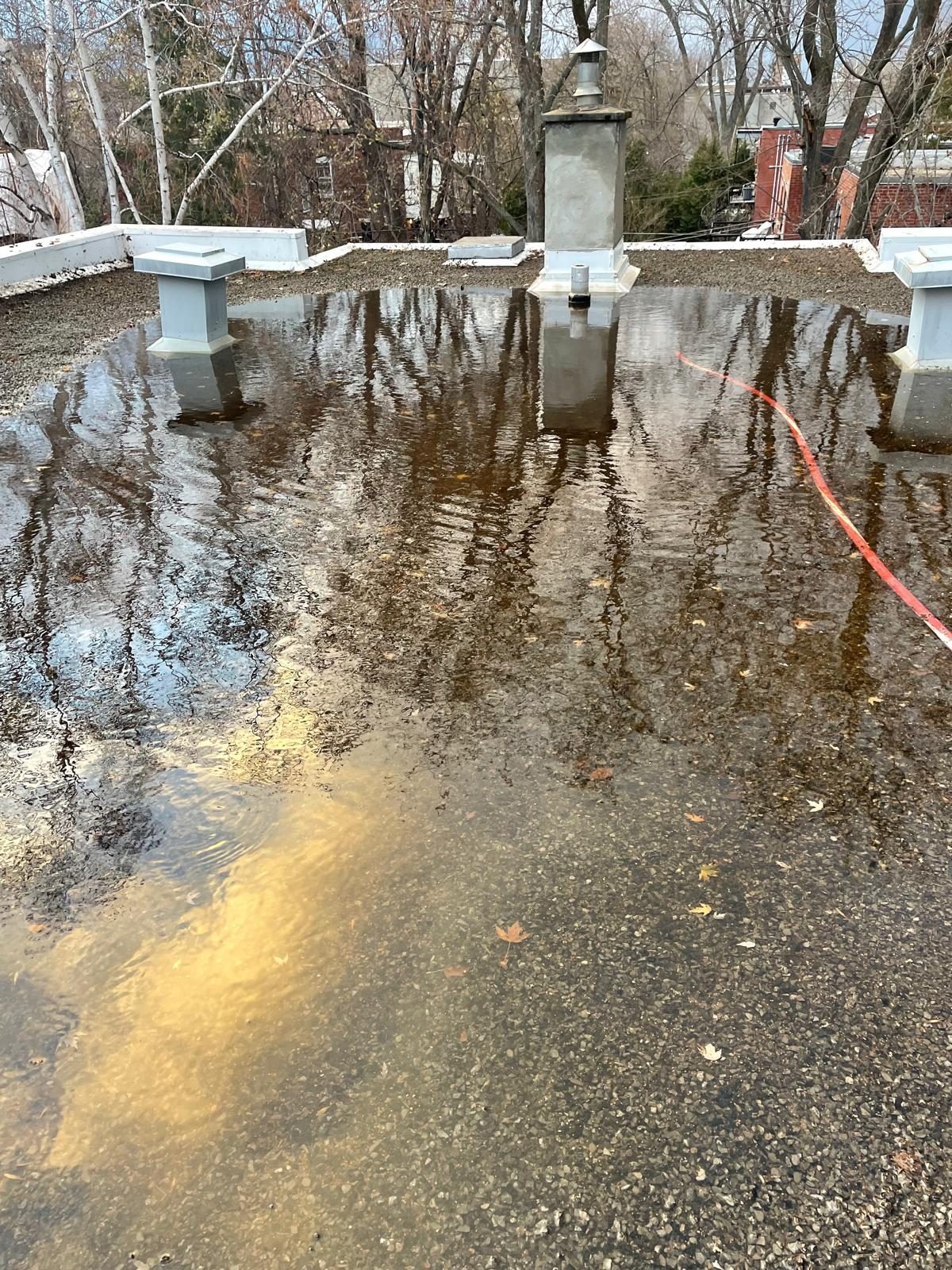
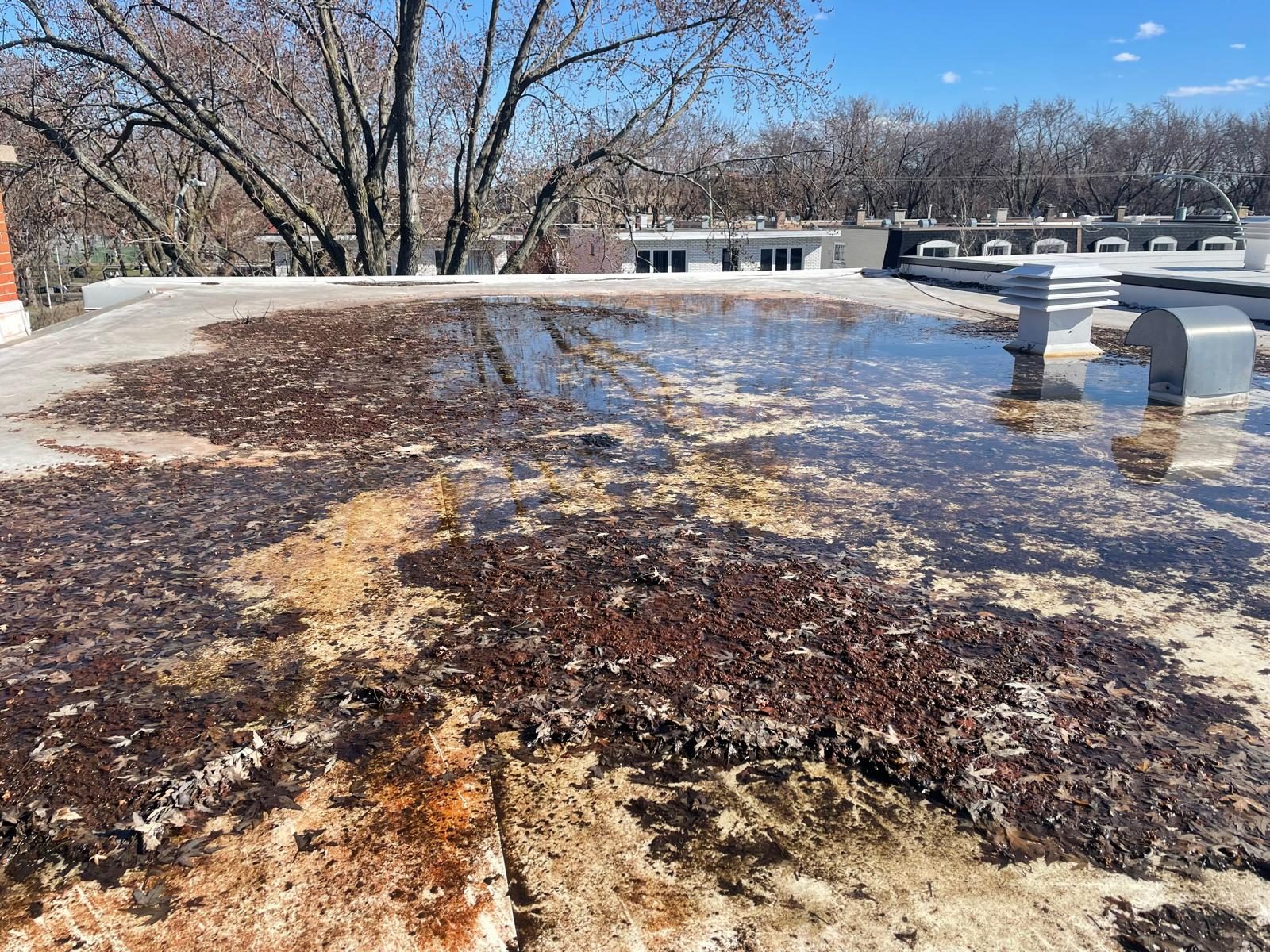
Water accumulation on a flat roof: the water reaches the skylight and the base of the vents.Equipment supports are sitting in water. The longer the water stays, the higher the risk of leaks.Same roof, another angle: the water completely covers the base of the equipment.A flooded city roof, with leaves and debris floating toward the drain.A large area of standing water on a commercial roof.Water collects along the parapet and around the vents.Water stained yellow by leaves that have been rotting on the roof for weeks.In the rain, the roof no longer drains: the water has nowhere to go.A flat roof under water, surrounded by trees that drop their leaves on it every fall.Clumps of moss and algae float on the standing water.The base of the equipment and its supports are under water.Skylight and vent surrounded by water and floating debris.The entire roof surface is under water, up to the skylight.Water everywhere: skylights and vents are all sitting in water.An unsealed nail below the water line: a possible leak point. That's why water should never be left standing.A flat roof under water, with debris on the bottom.A large stretch of standing water, rippled by the wind.Under the water: leaves and deposits built up on the membrane.Water turned brown by decaying leaves, collected against the skylight.Same roof: the water covers the base of the skylight.Leaves at the bottom of the standing water.A residential flat roof completely under water.Leaves have built up under the water and prevent drainage.The standing water reaches all the way to the vents.A flooded roof surrounded by trees.Standing water across the whole roof.Leaves all over the roof, under the water.Leaves pile up against the vents and toward the drain.A flooded roof reflecting the sky.The water drops and reveals the deposits on the membrane.The equipment reflected in the water around it.A large flat roof entirely under water.A flooded roof at the end of the day.The standing water spreads all the way to the parapets.Same roof, seen from the other side.The skylight surrounded by water.
The cause: a clogged drain
Leaves, roots, moss and debris always end up in the same place: the drain. That is almost always where water accumulation starts.
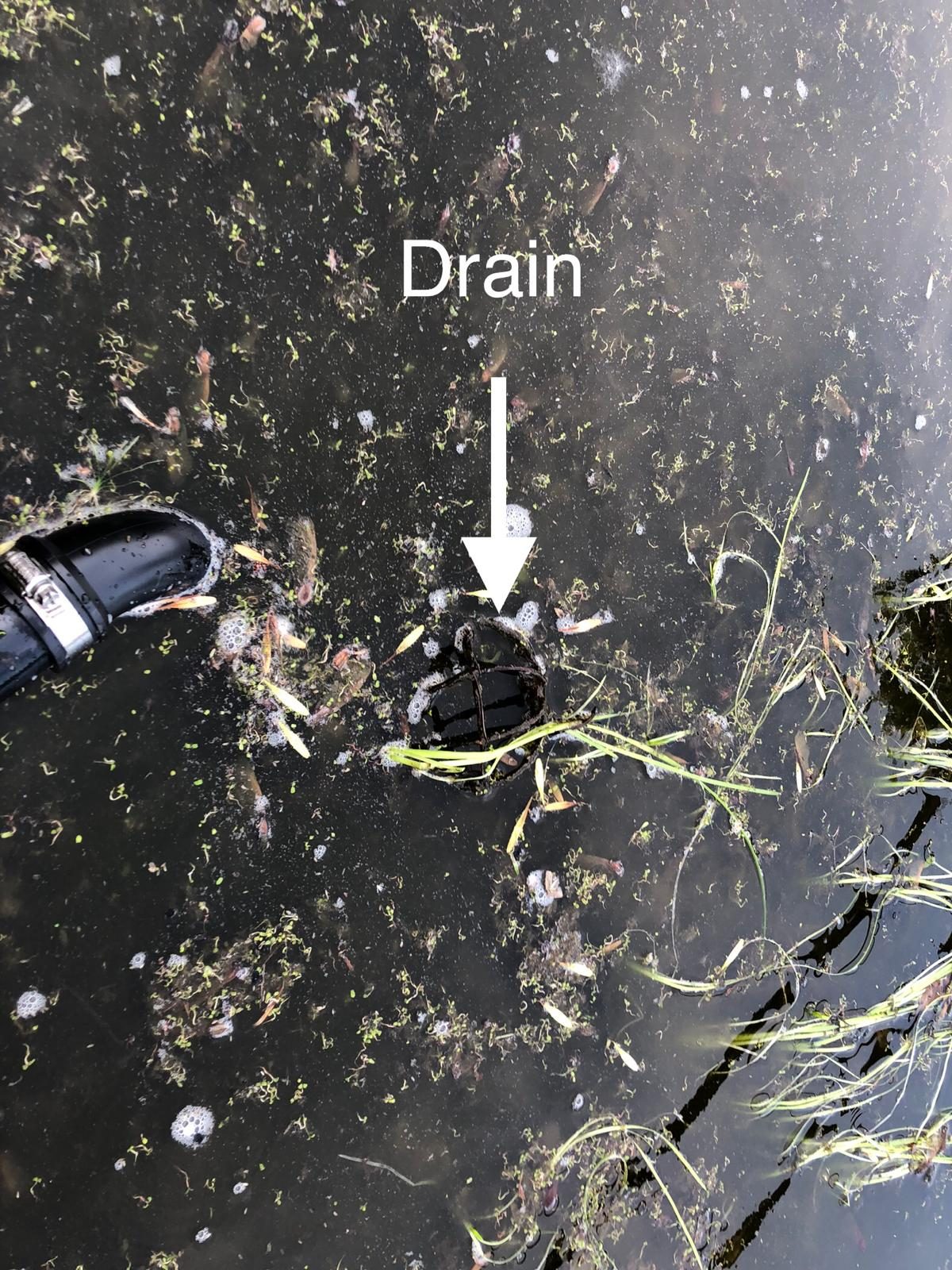
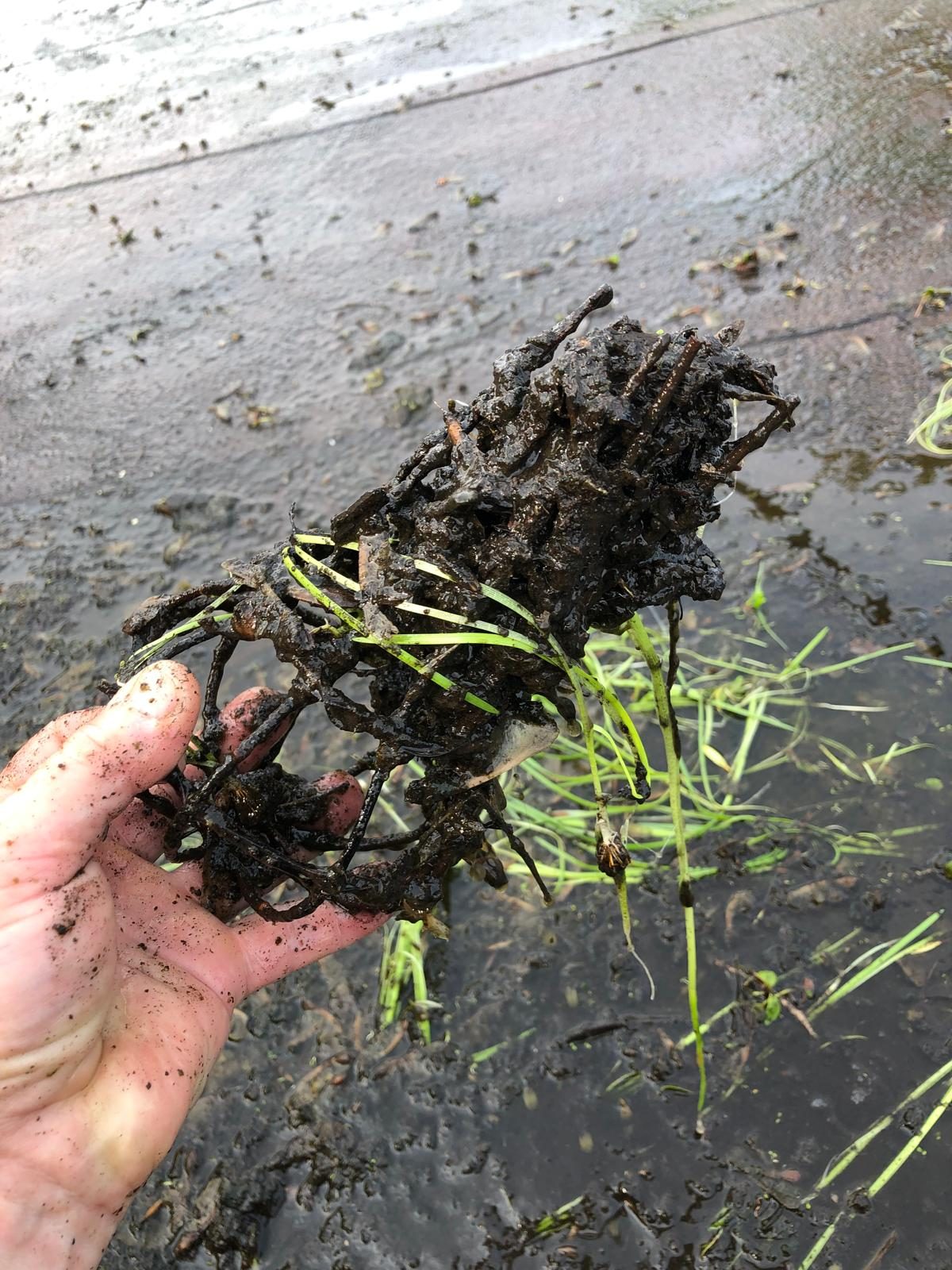
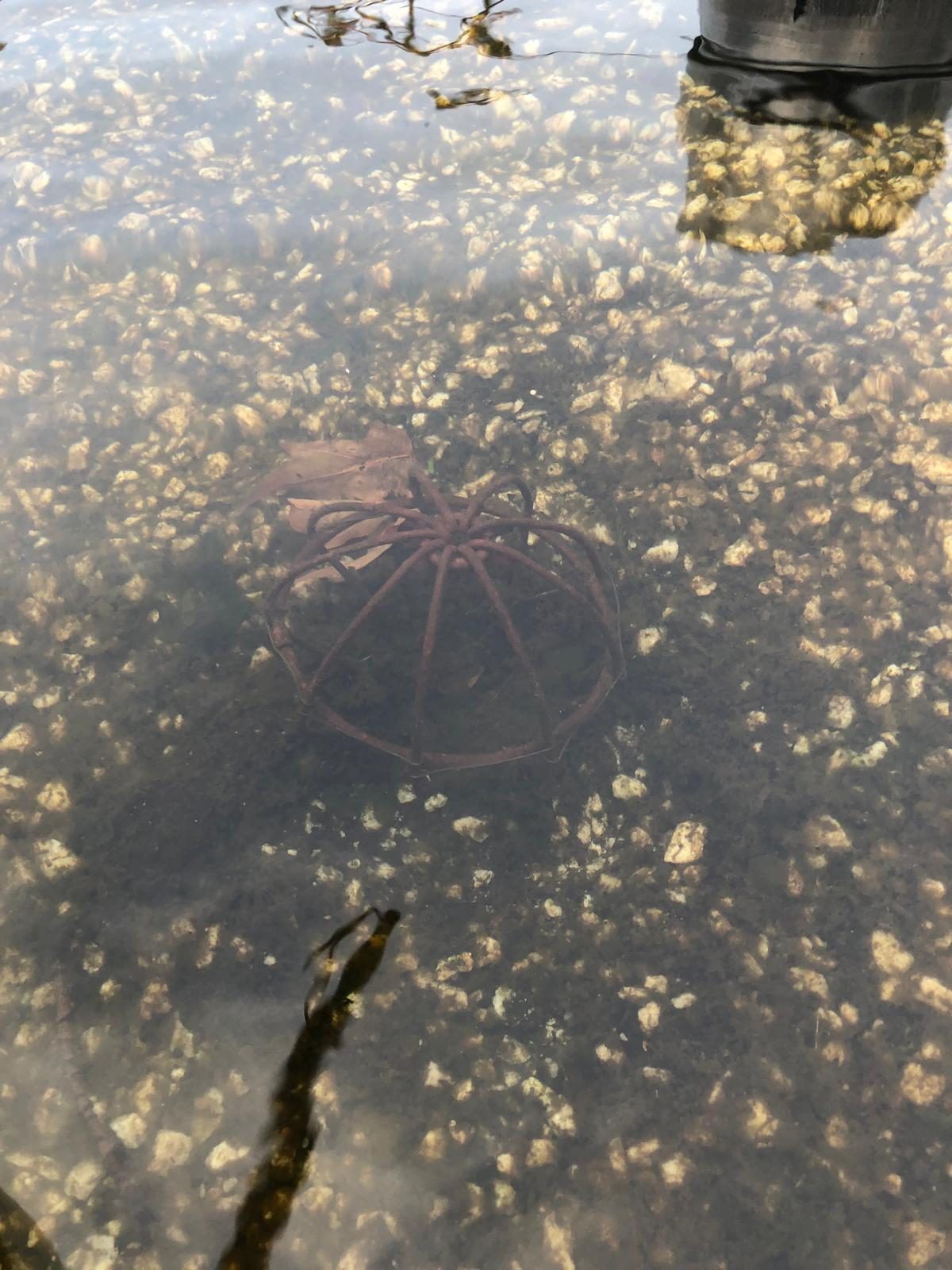
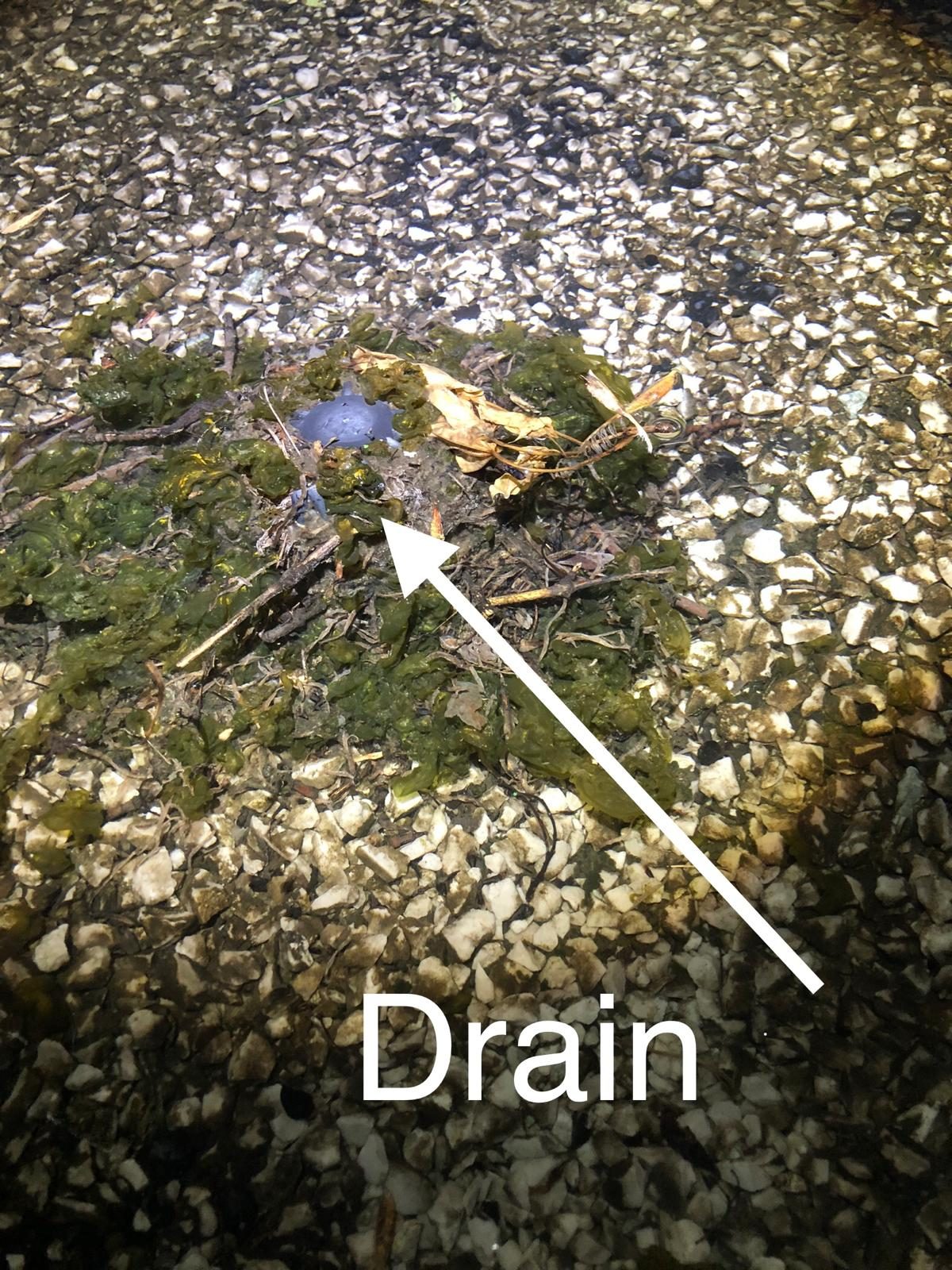
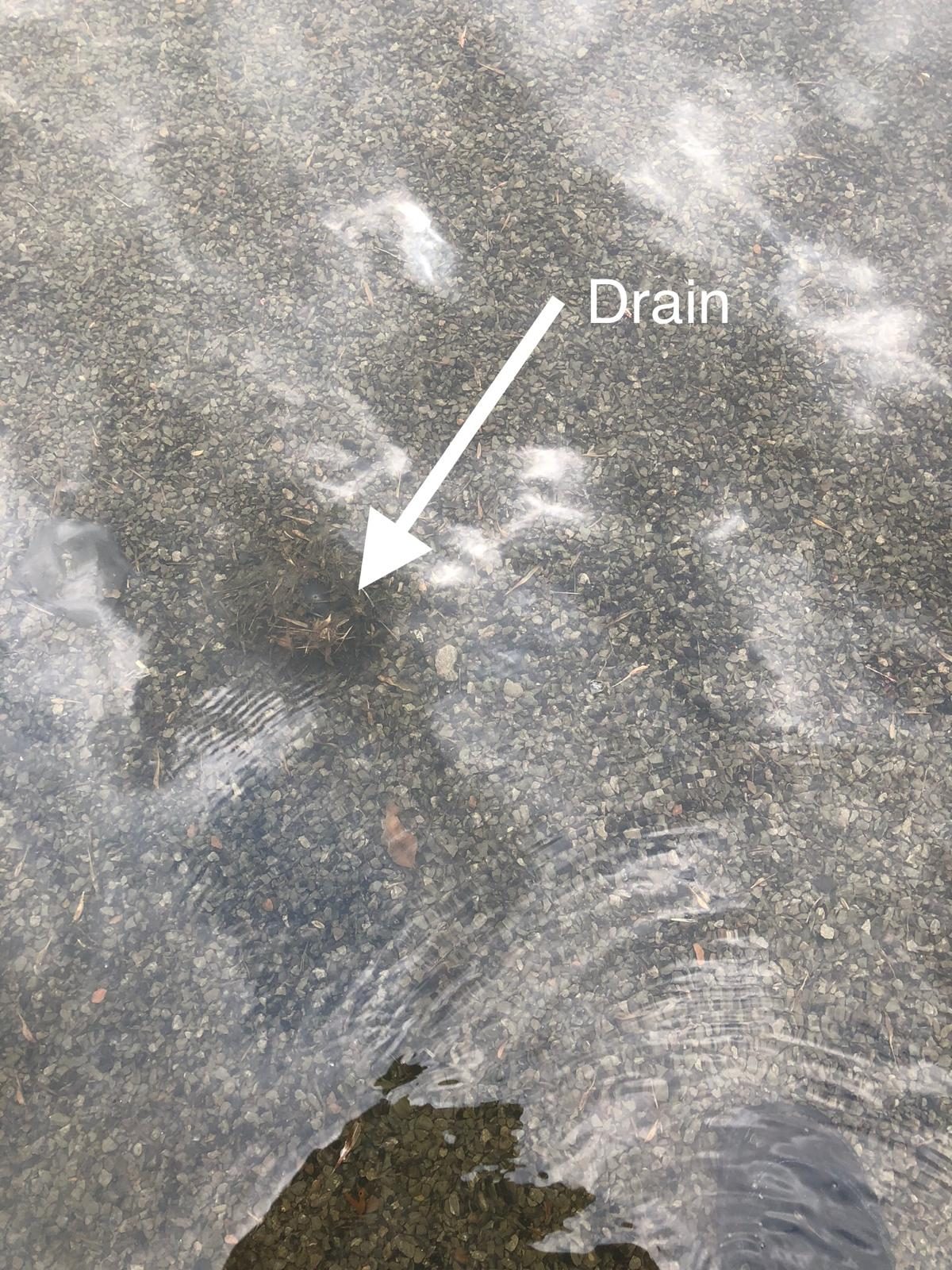
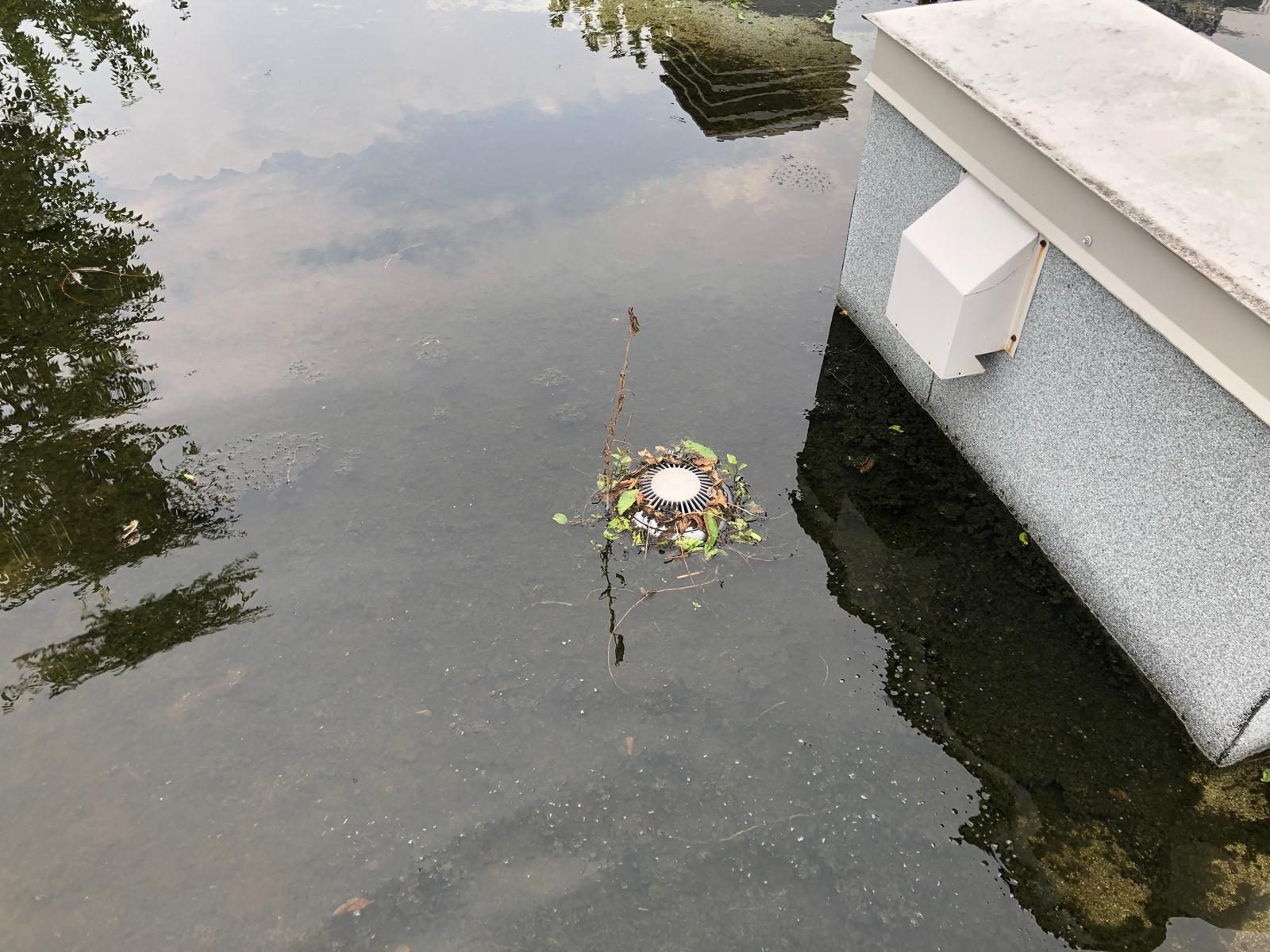
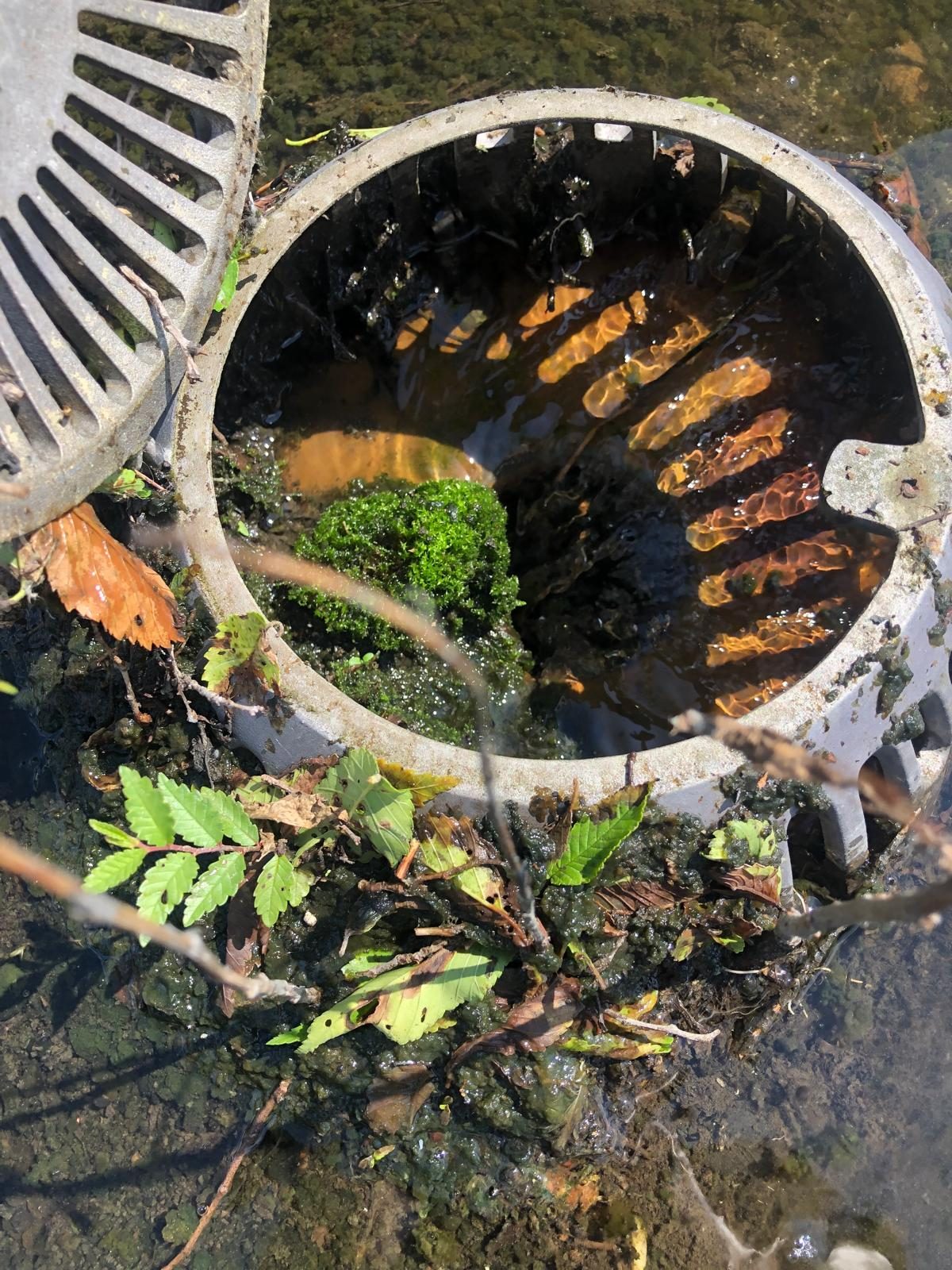
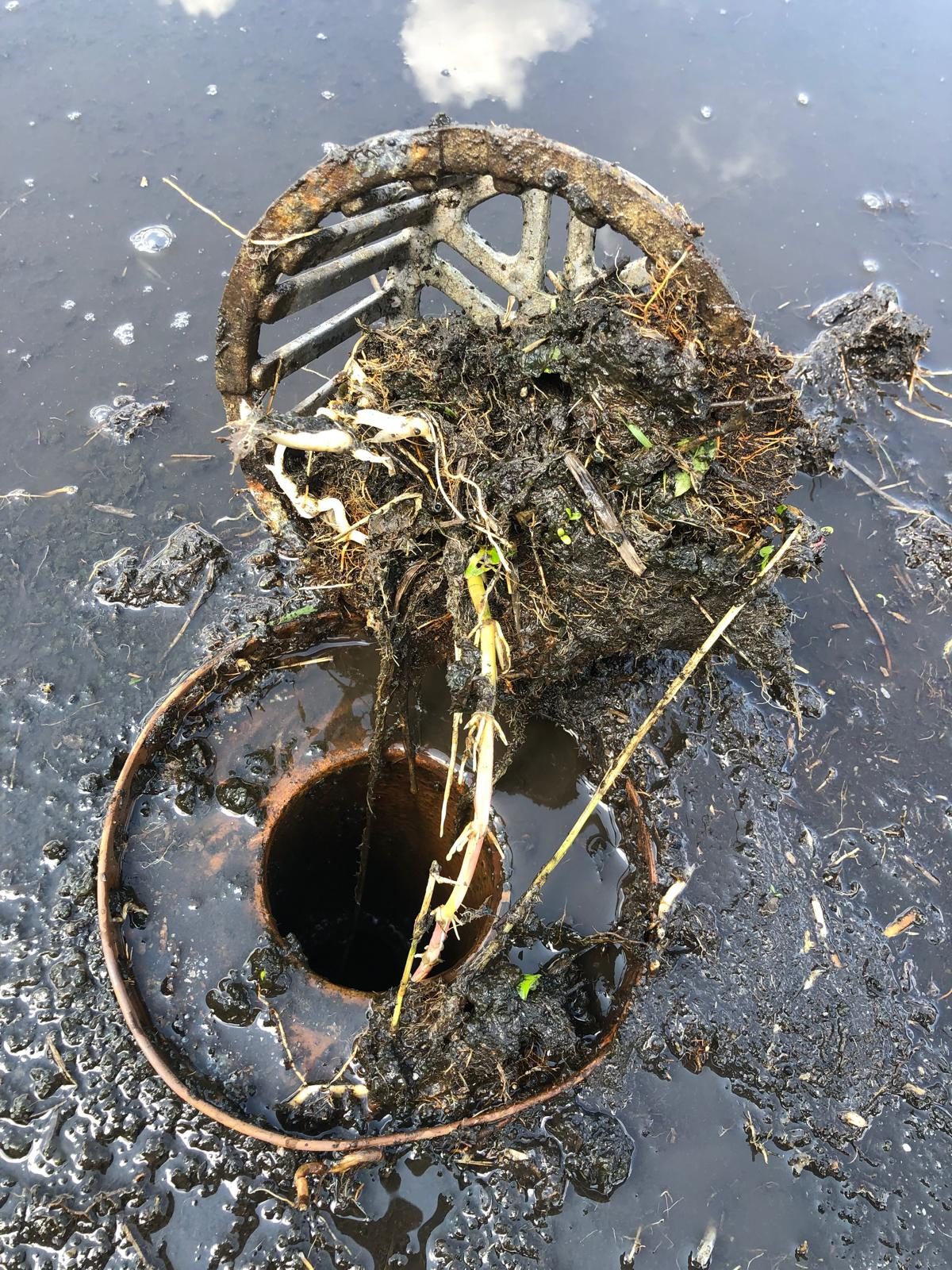
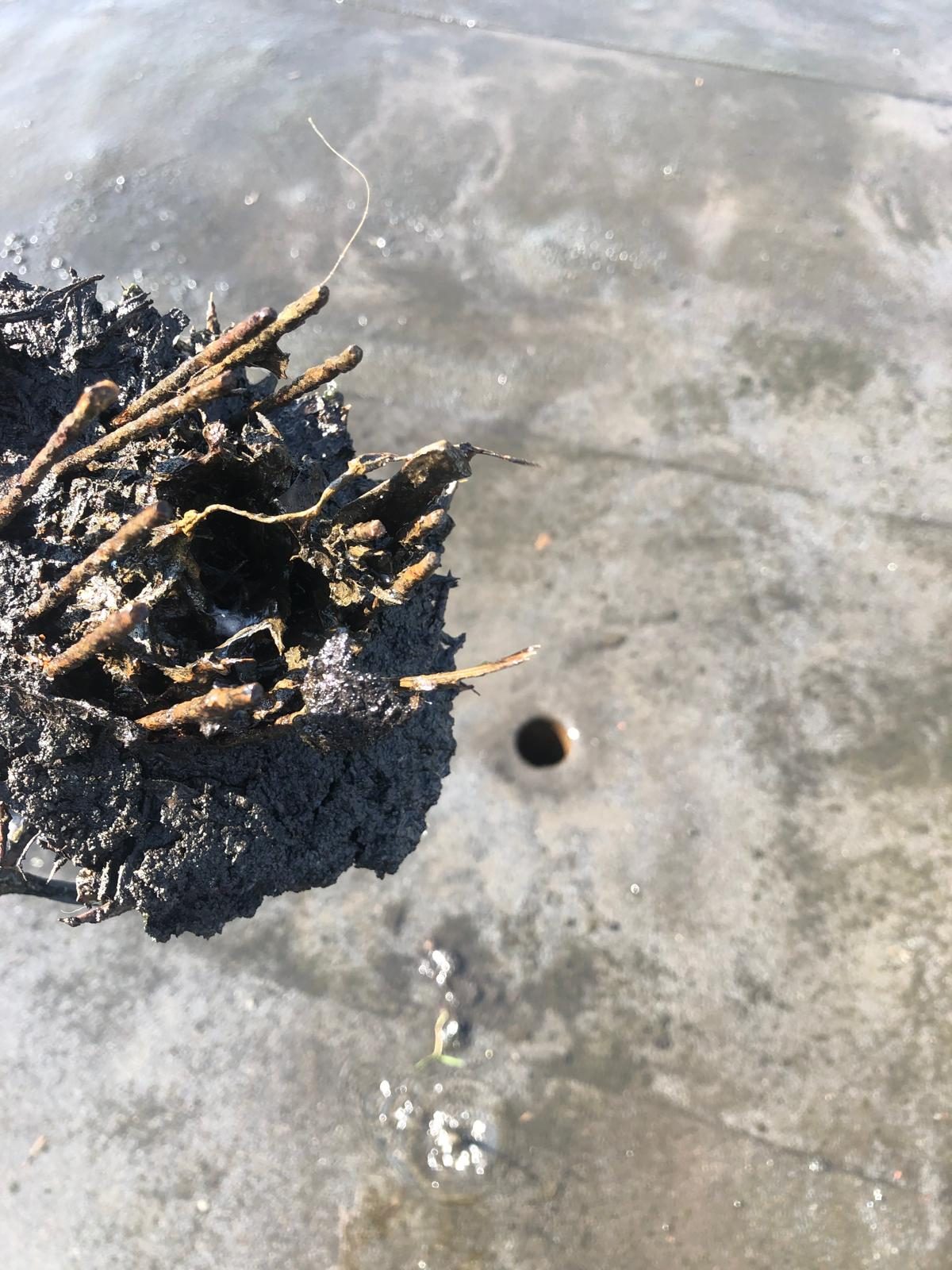
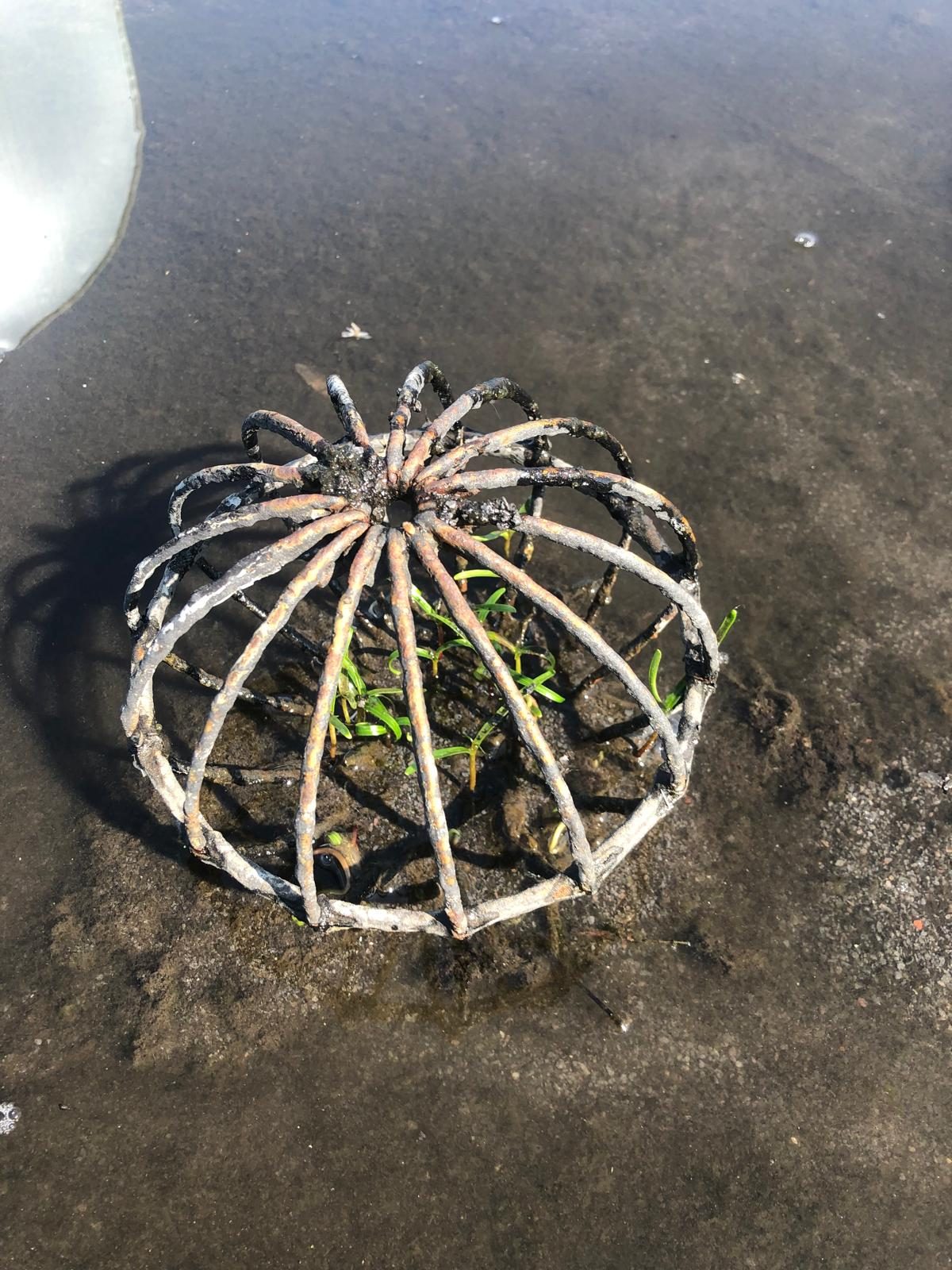
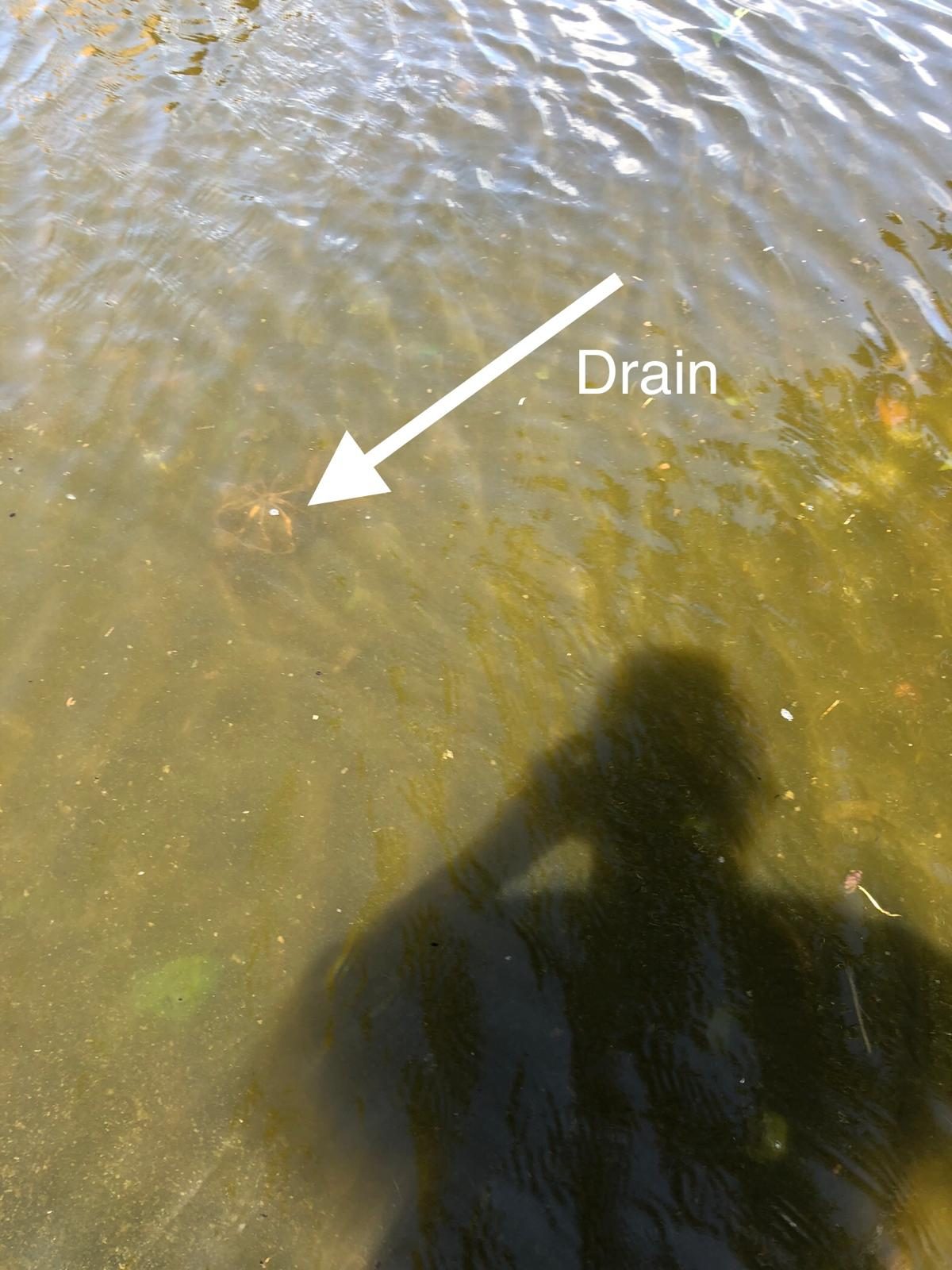
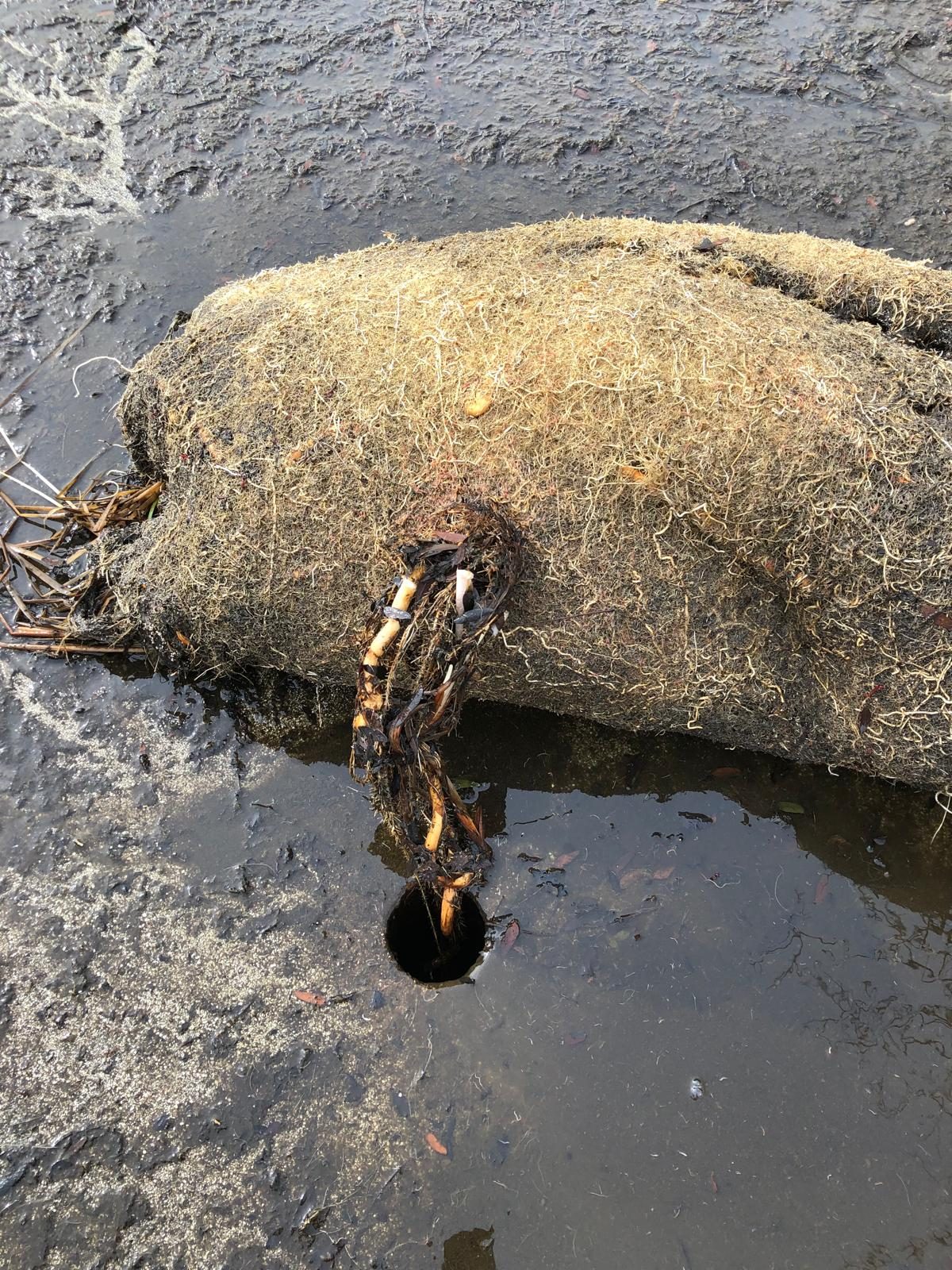
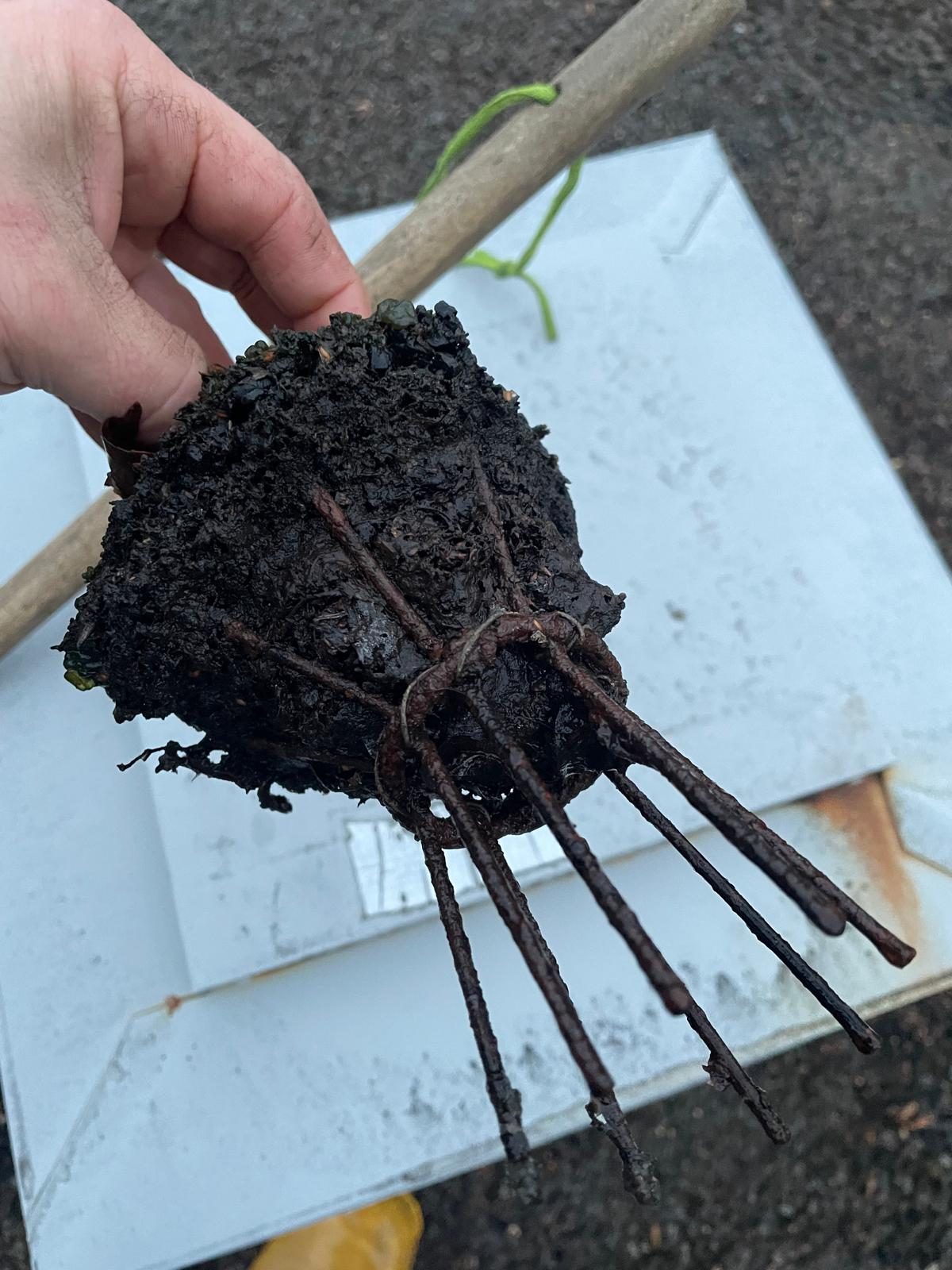
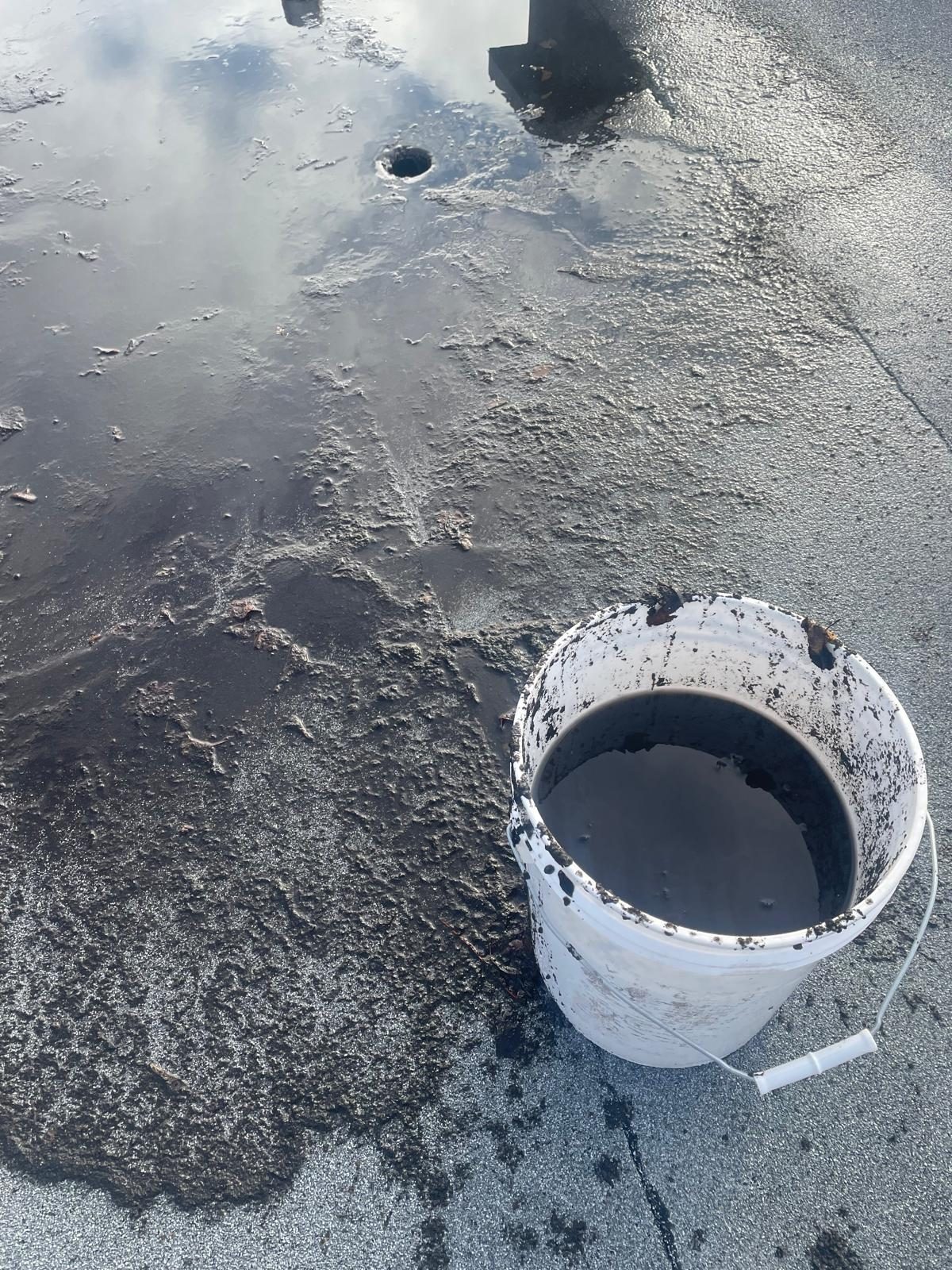
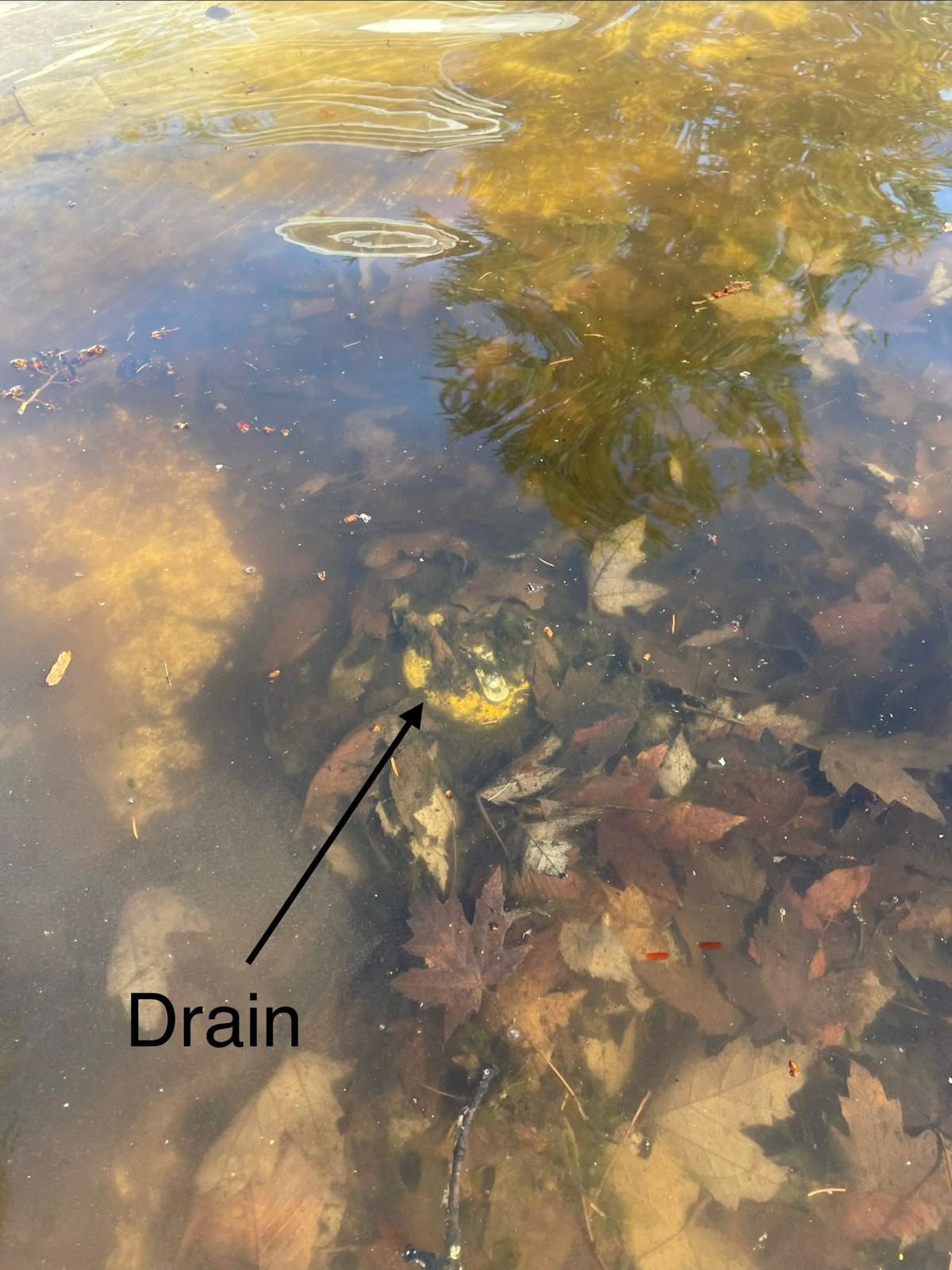
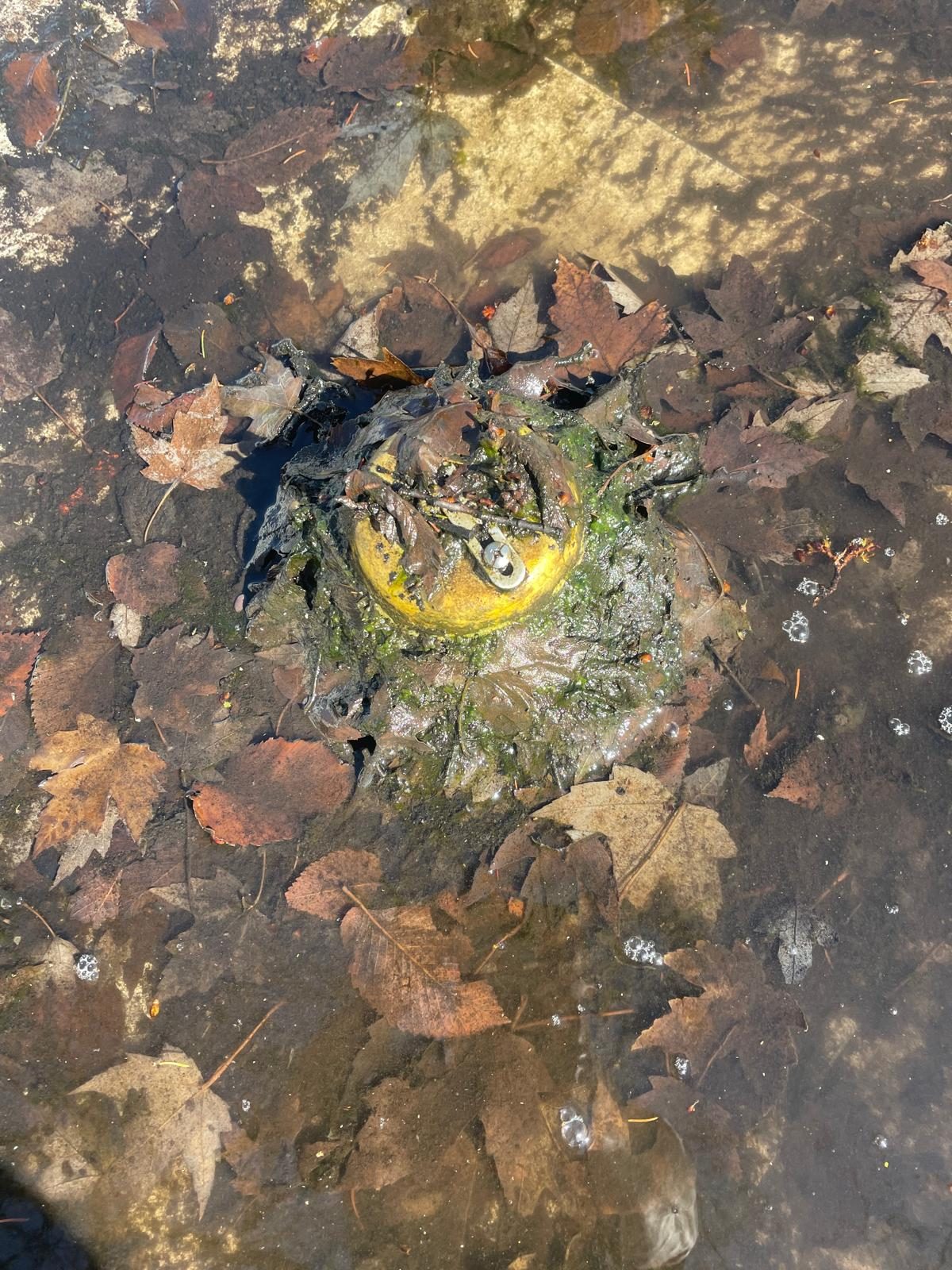
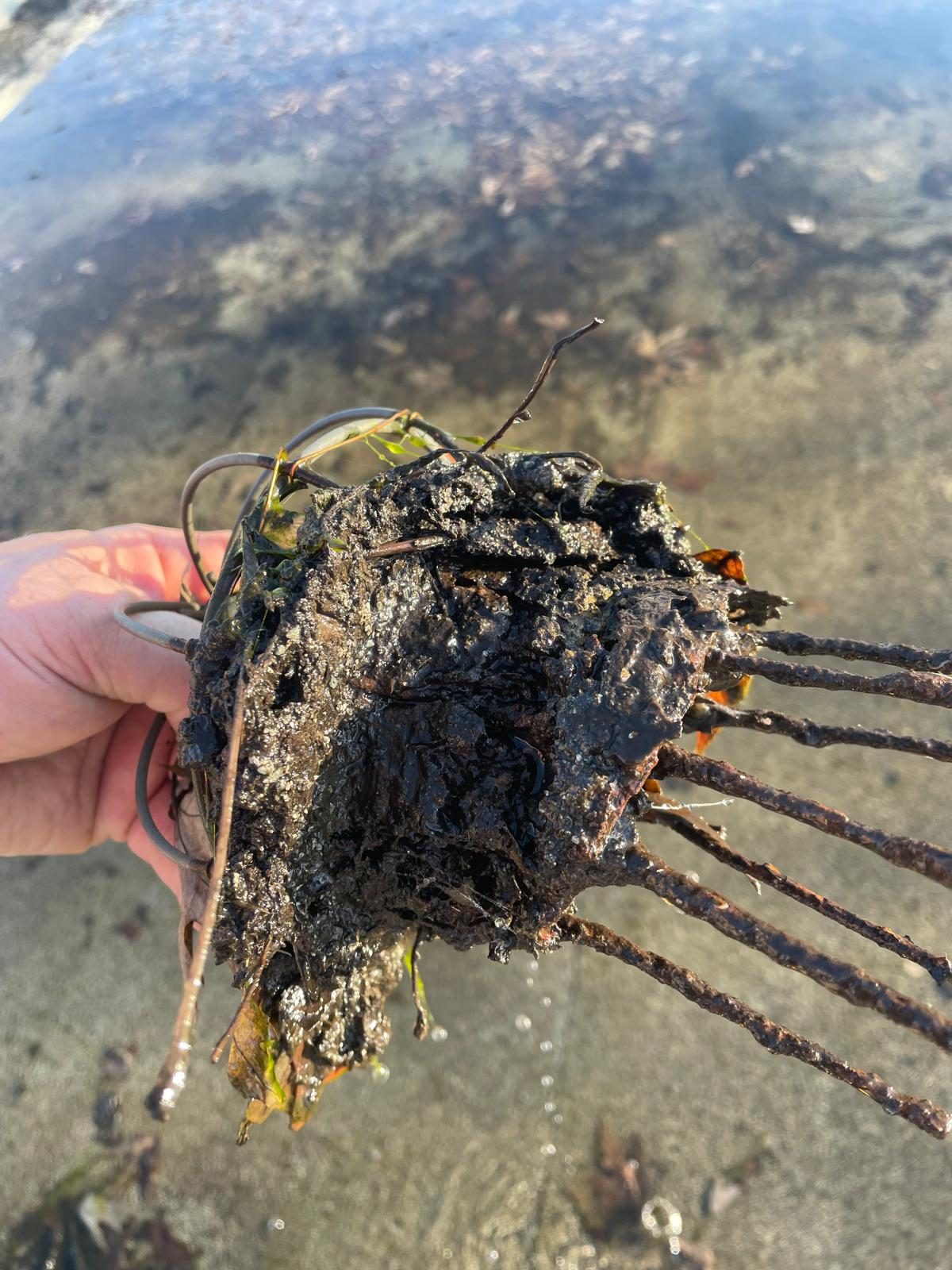
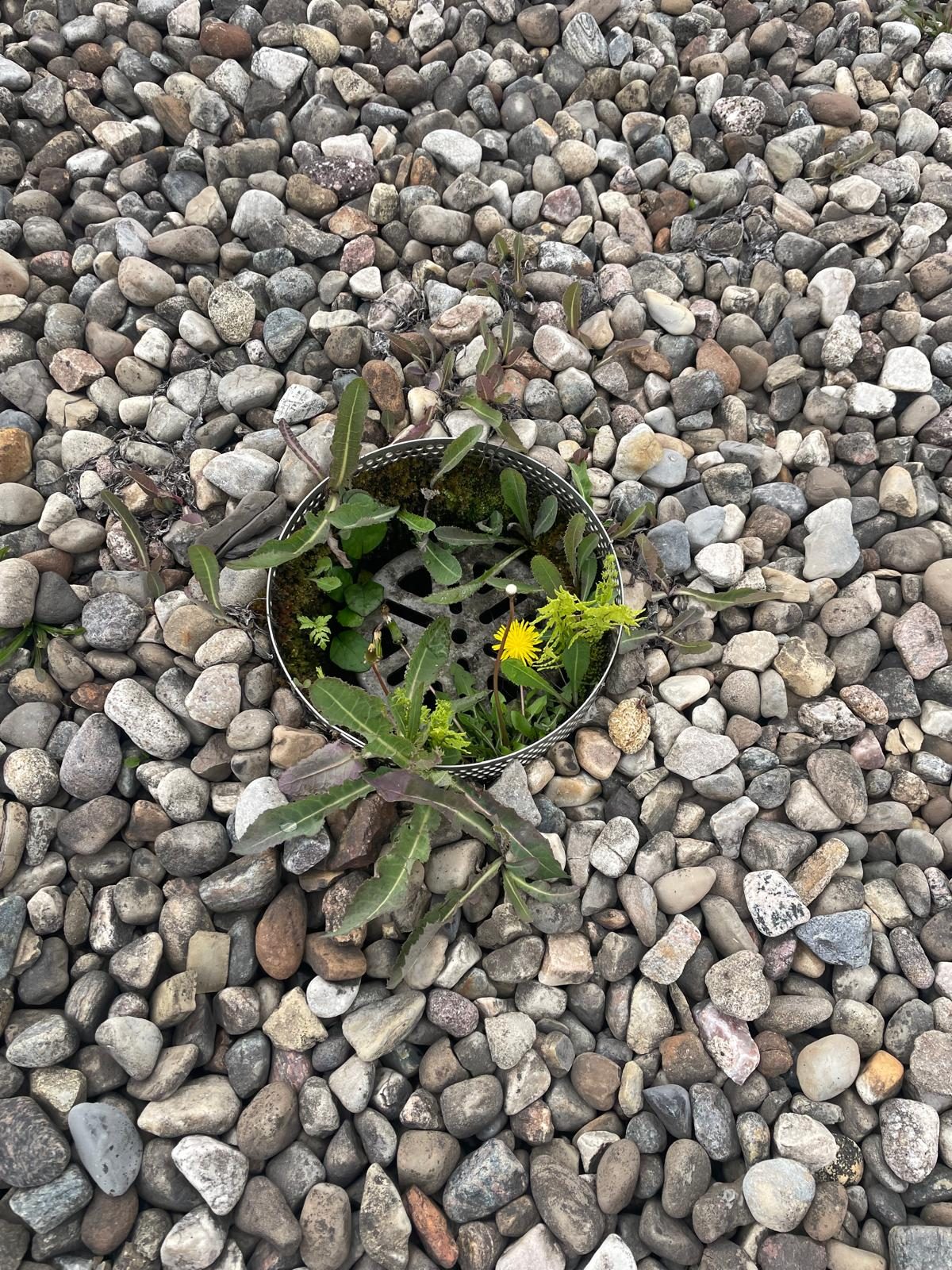
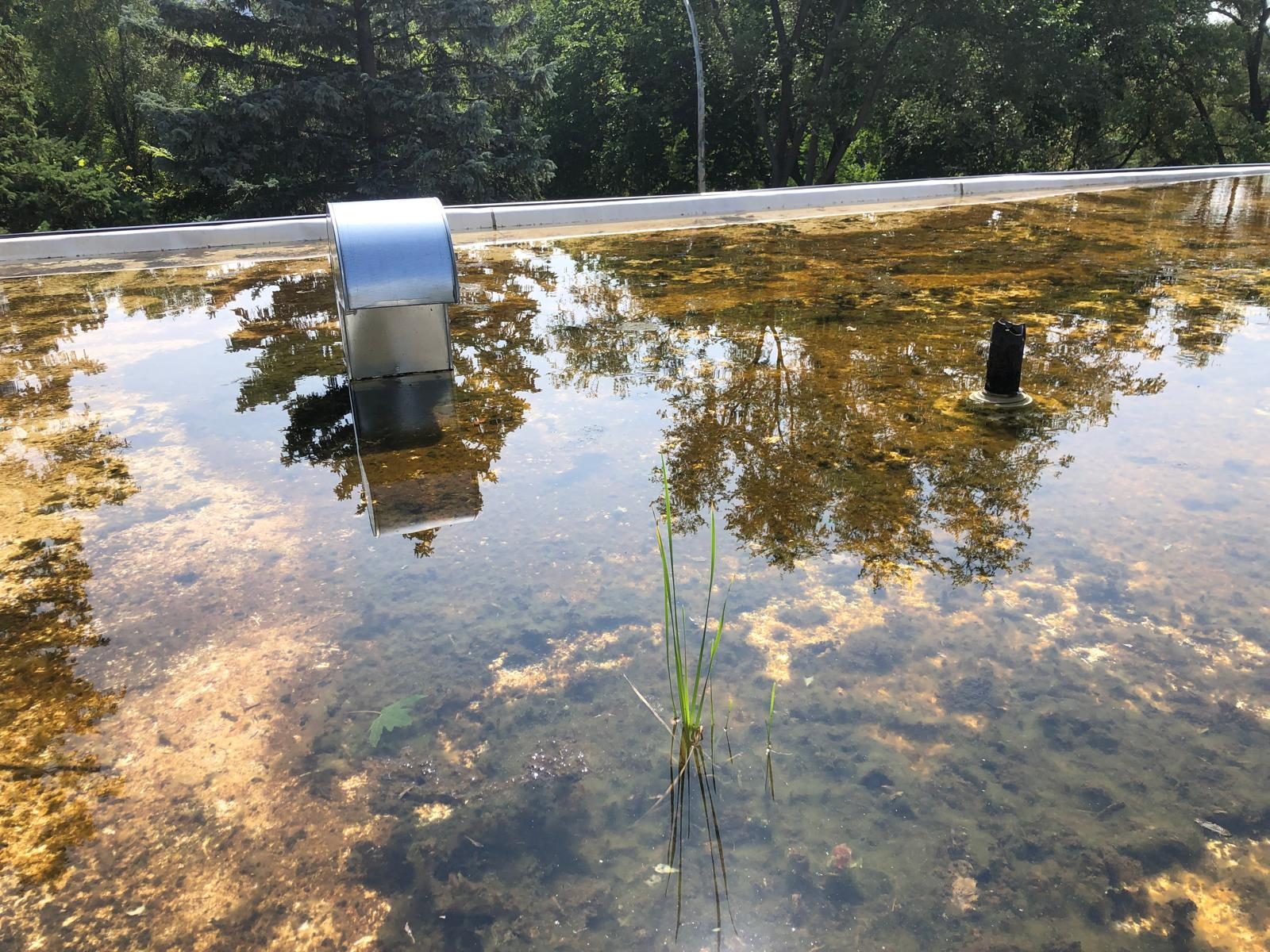
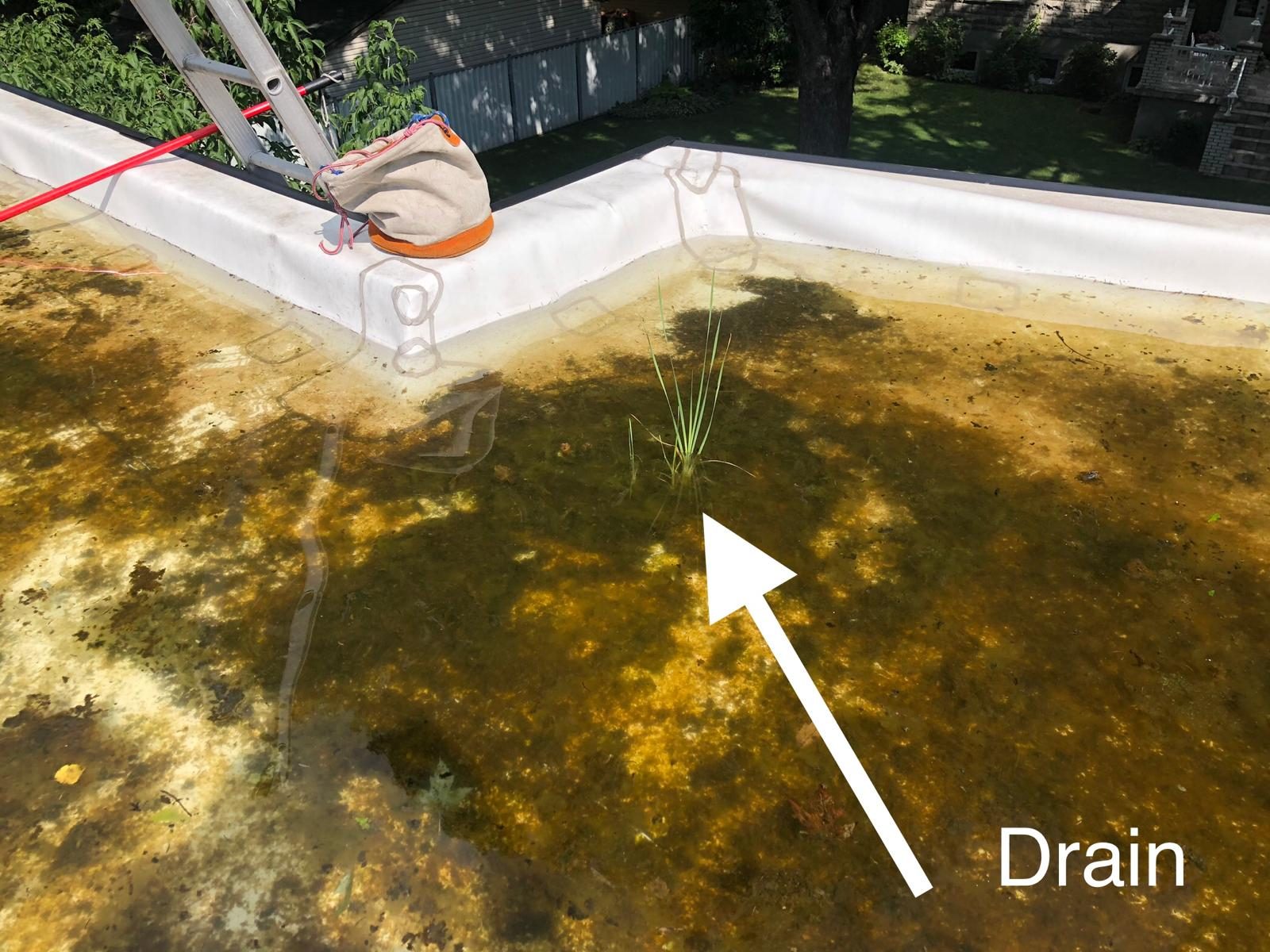
The drain, overgrown with grass and debris, no longer lets water through.What comes out of a clogged drain: a plug of roots, soil and grass.The drain strainer, under water and covered in deposits.On a gravel roof, the drain disappears under moss and leaves.The drain is right there under the water, but nothing flows out anymore.A clump of debris floats over the drain and blocks it.A drain strainer overgrown with plants.The strainer removed, full of roots and debris: the drain opening is finally visible.The debris plug removed and set next to the drain opening.A strainer with plants already growing in it.The drain at the bottom of the water: impossible to reach without pumping first.A mass of roots and debris sitting over the drain opening.A strainer completely clogged with mud and debris.A bucket full of the mud and debris pulled out of the drain.The drain, under the water and under a layer of leaves.Close-up: leaves completely cover the drain.The strainer pulled out of the drain, covered in mud and leaves.On a gravel roof, weeds growing in the drain.
When nature moves onto the roof
Left without maintenance, a flat roof collects enough soil for plants to grow, often right on top of the drain.
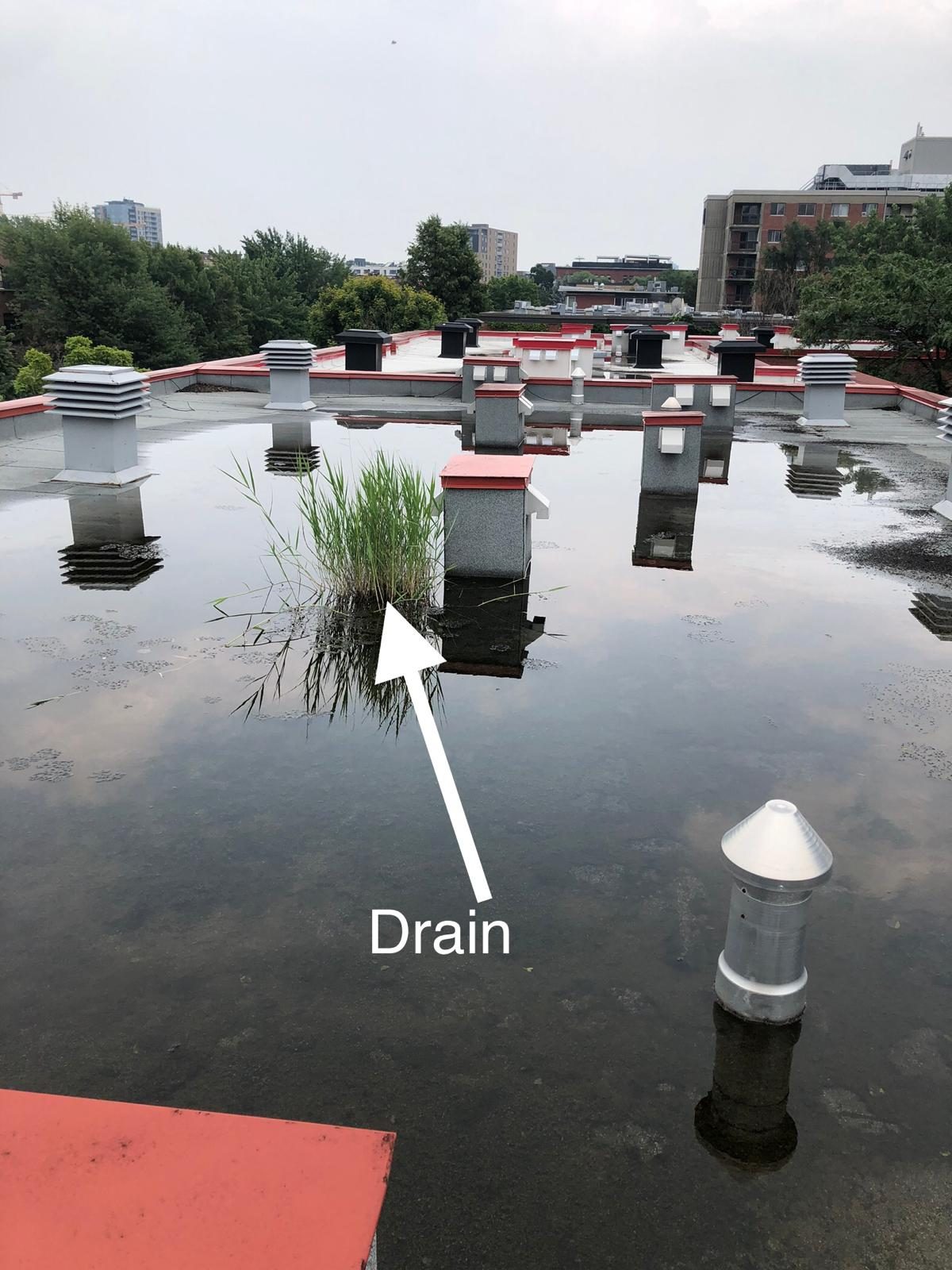
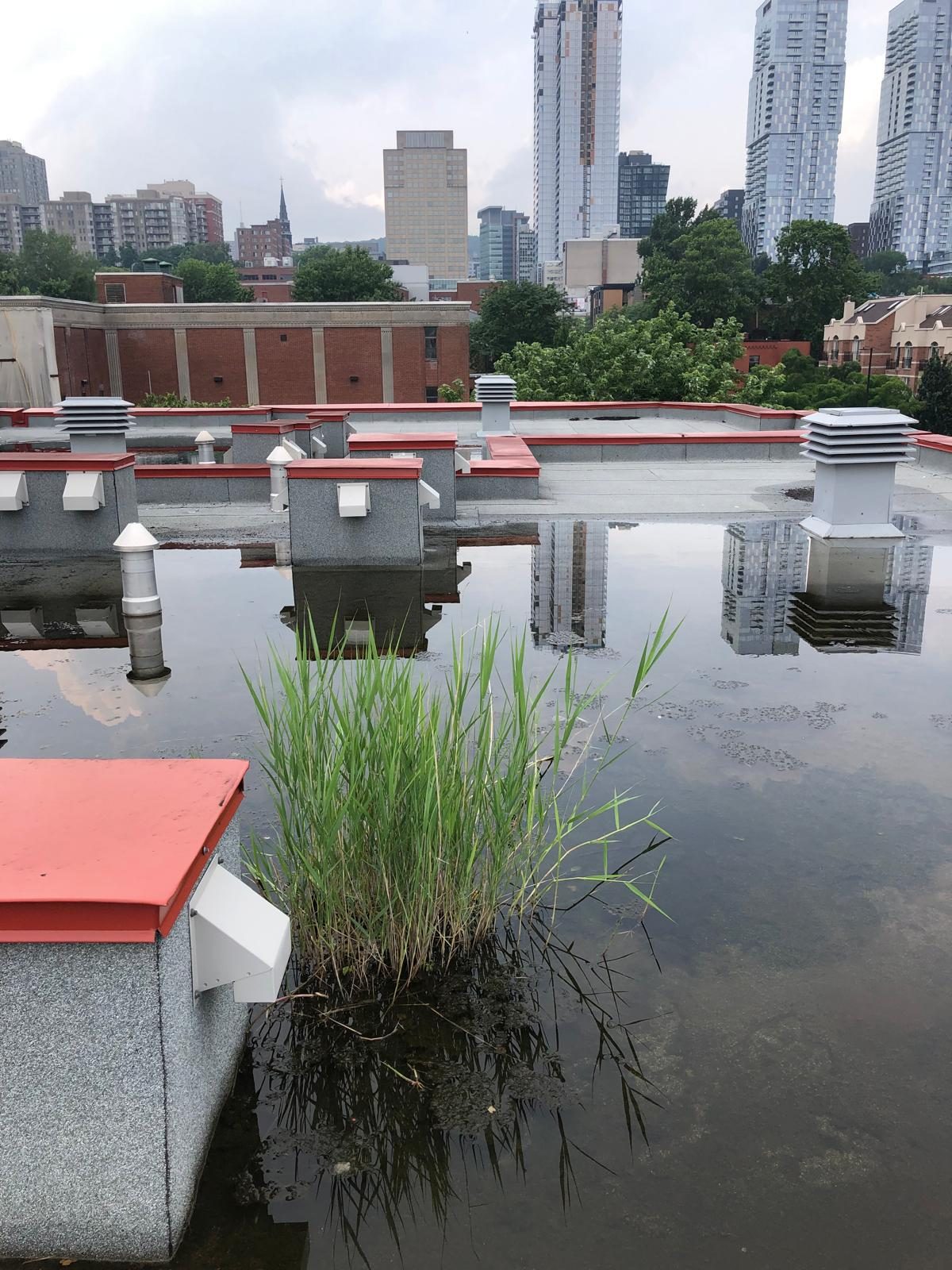
A downtown roof completely flooded; in the distance, grass is already growing in the water.Same roof: the water spreads from one parapet to the other.Tall grass has grown right on top of the drain.The grass has taken root in the soil built up around the drain.Grass growing in the standing water.The drain, hidden under water and vegetation.Dried grass growing in the middle of the flooded roof.A whole clump of vegetation has taken root on the roof.The vegetation pulled up in a pile, right above the drain.Downtown, a clump of tall grass grows right in the water, on top of the drain.
Water pumping
We set a pump at the lowest point, send the water away from the building, then clear the drain so water flows normally again.
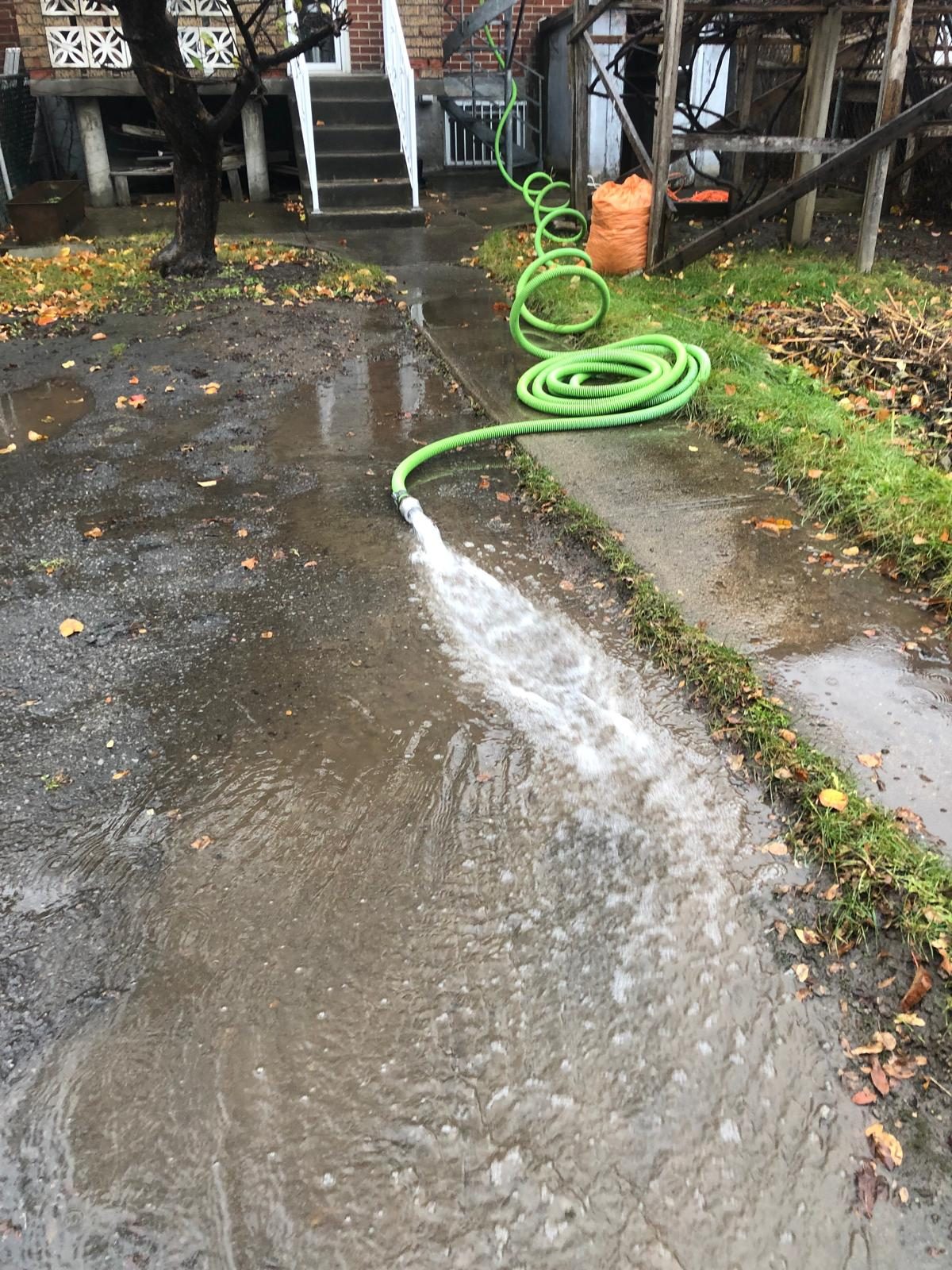
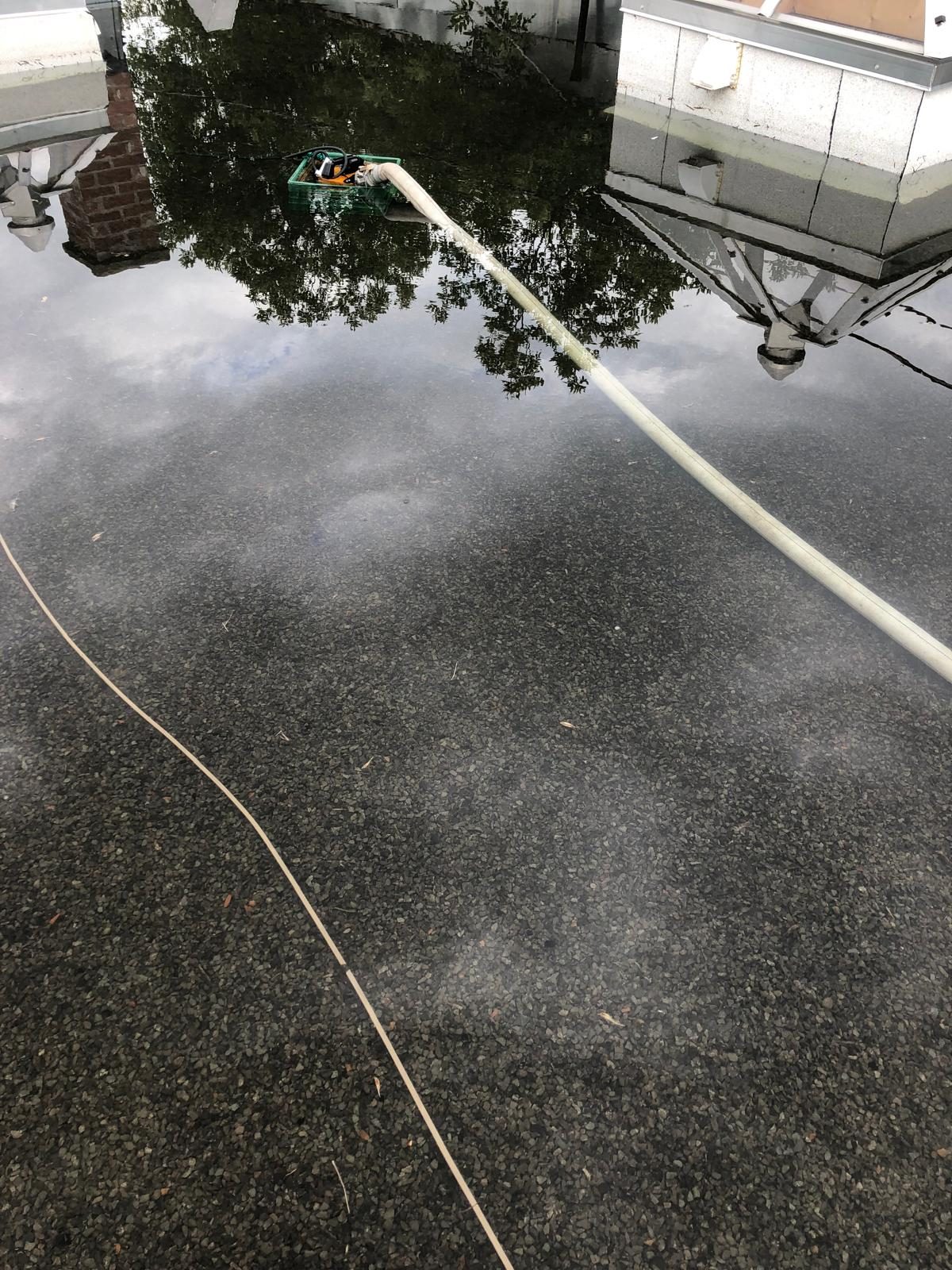
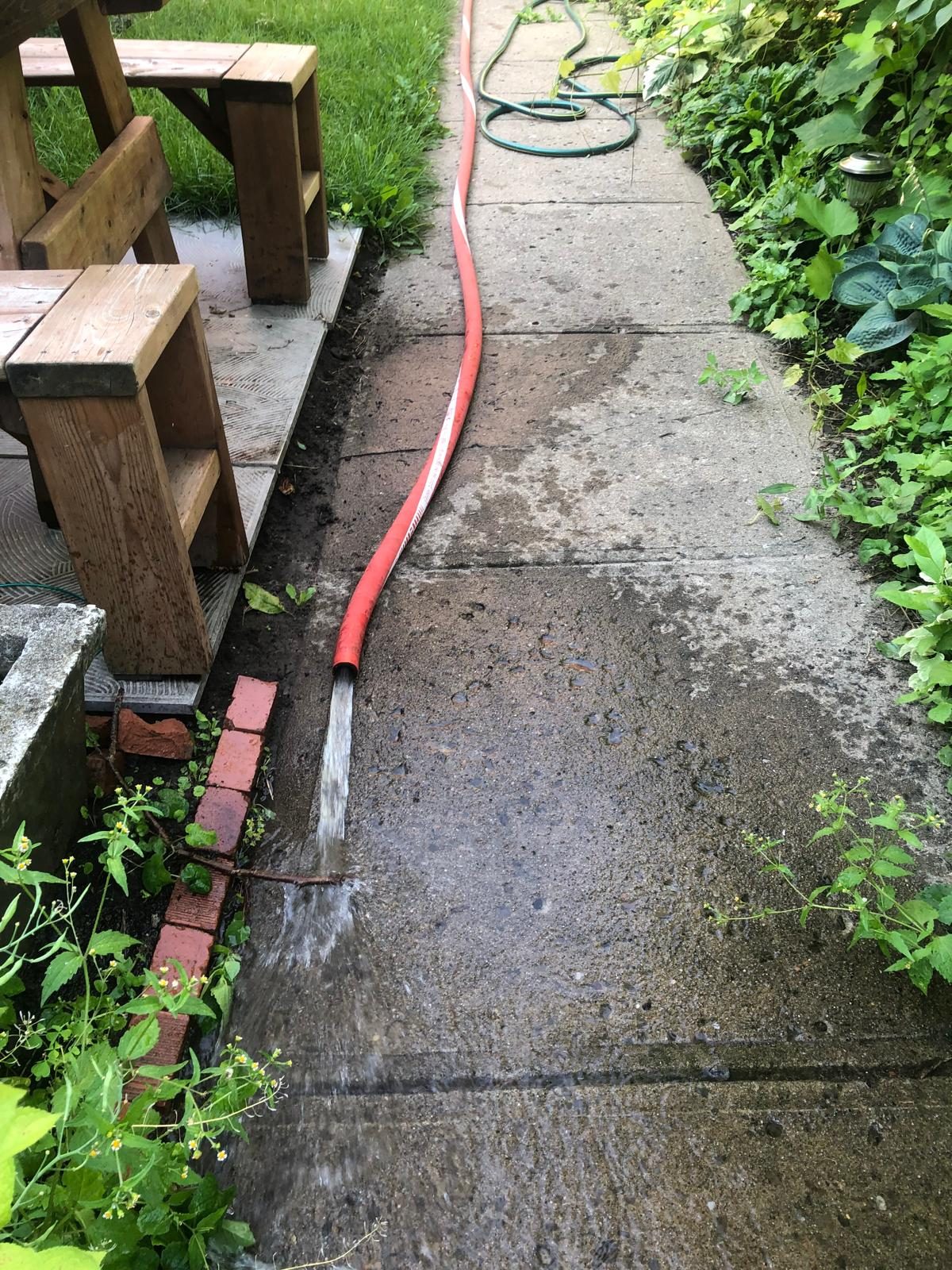
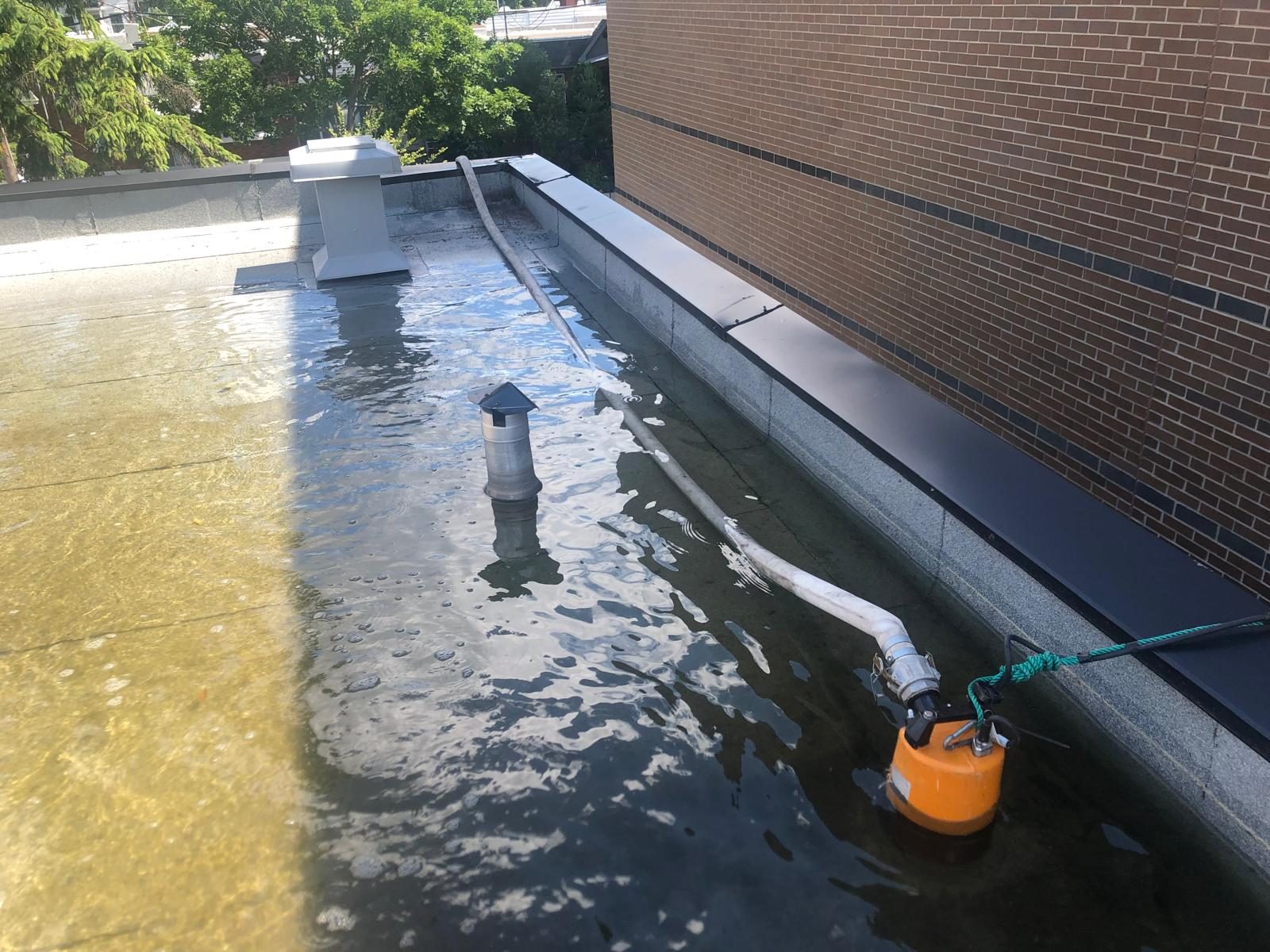
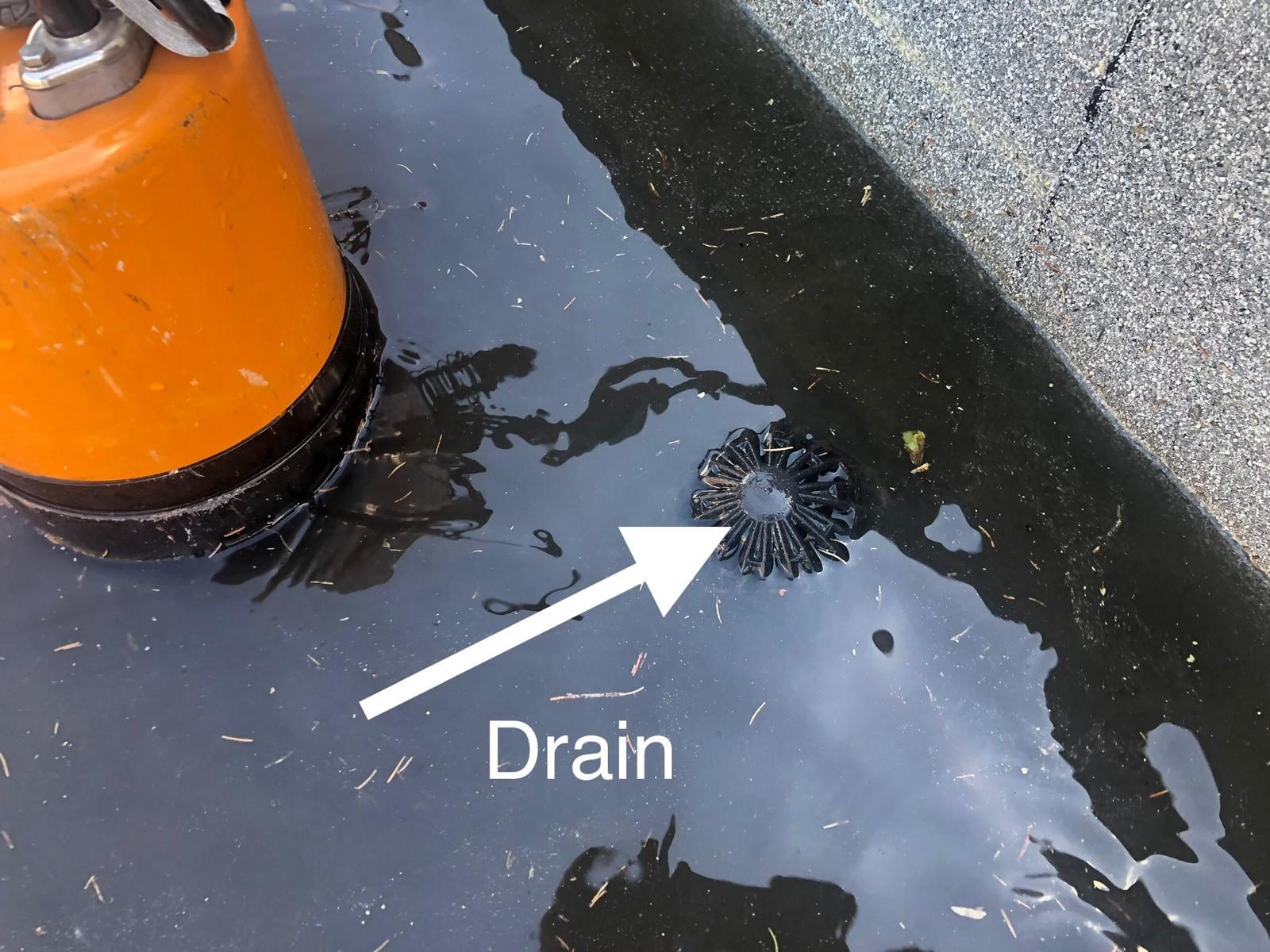
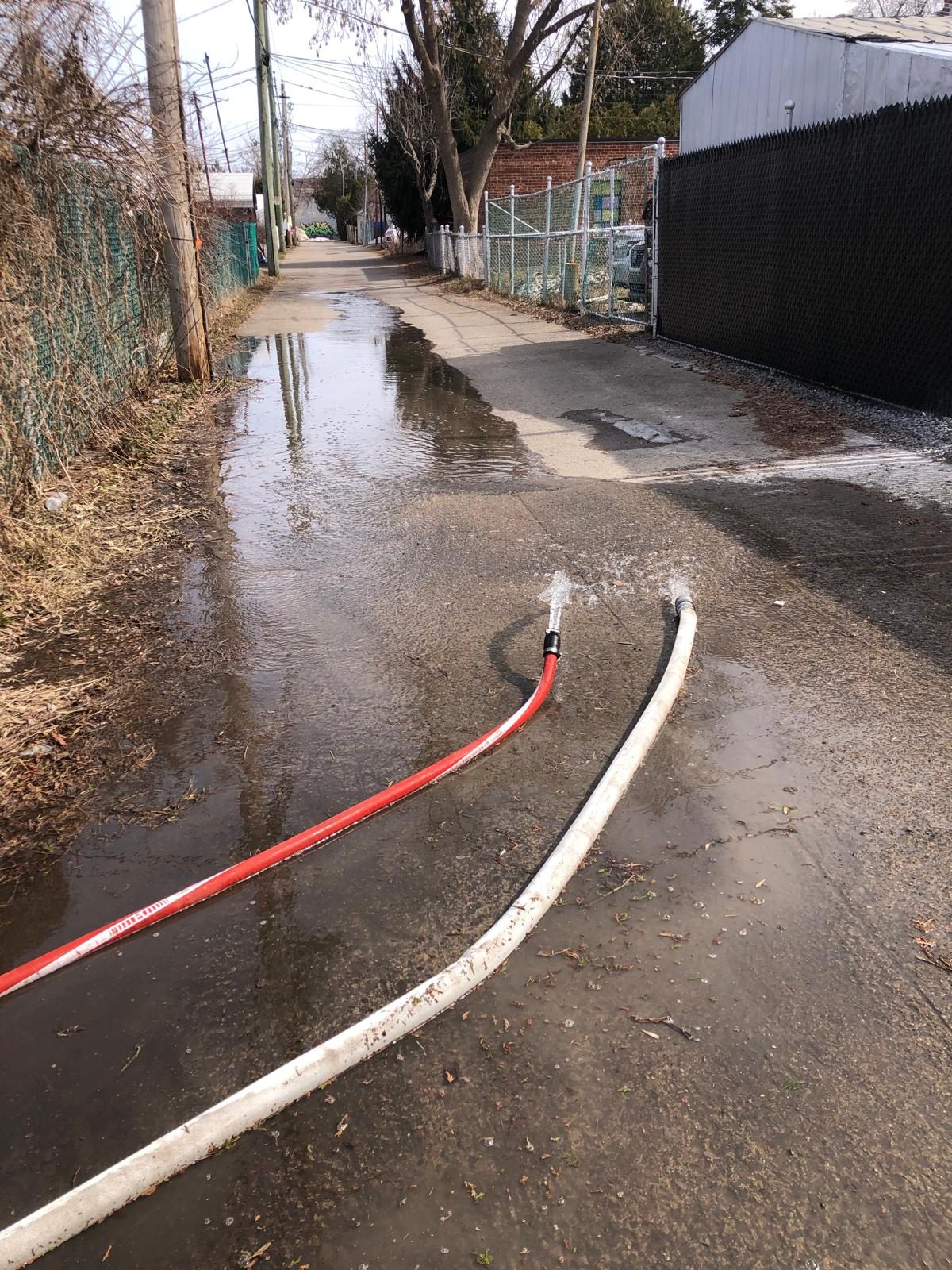
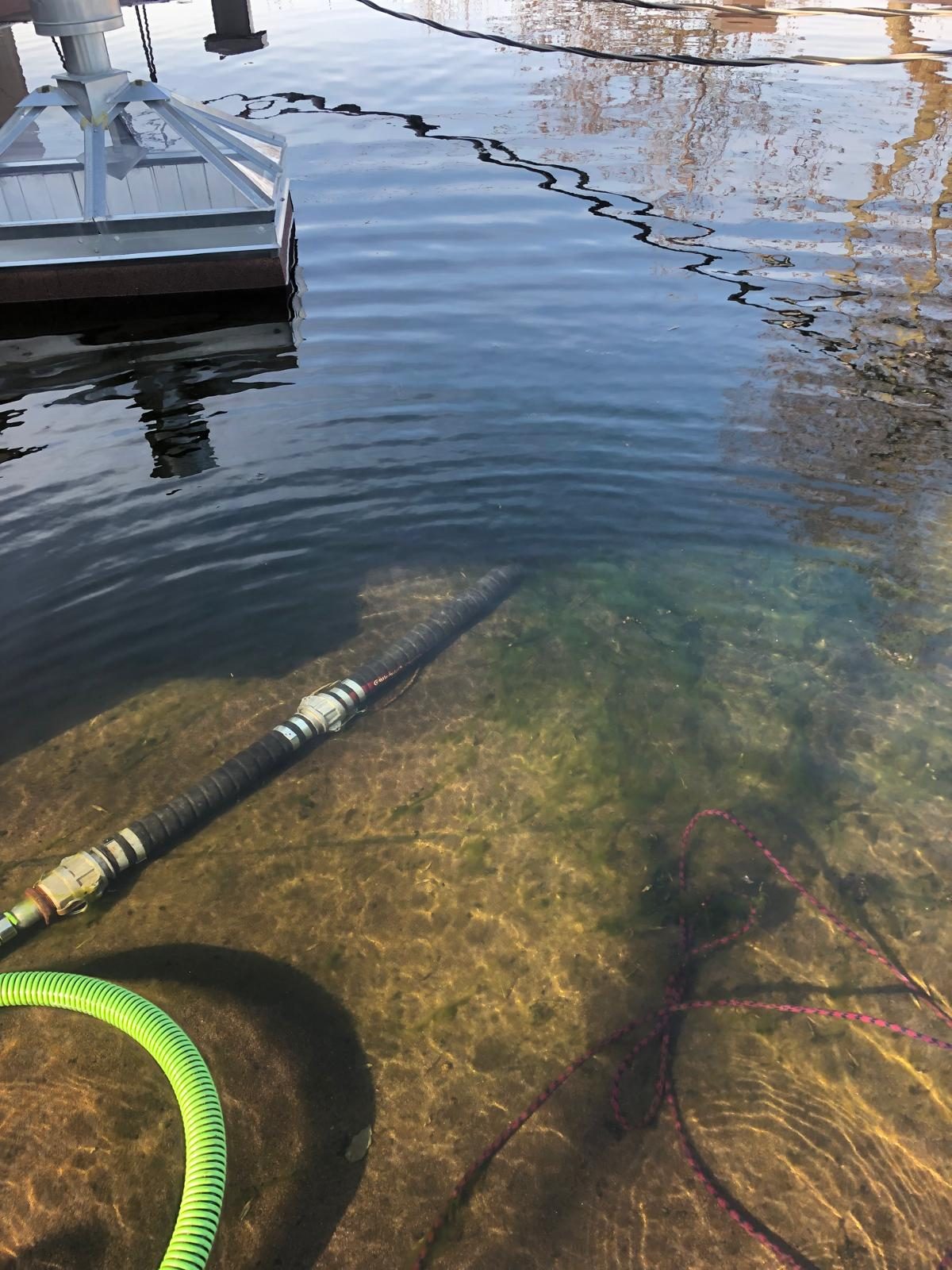
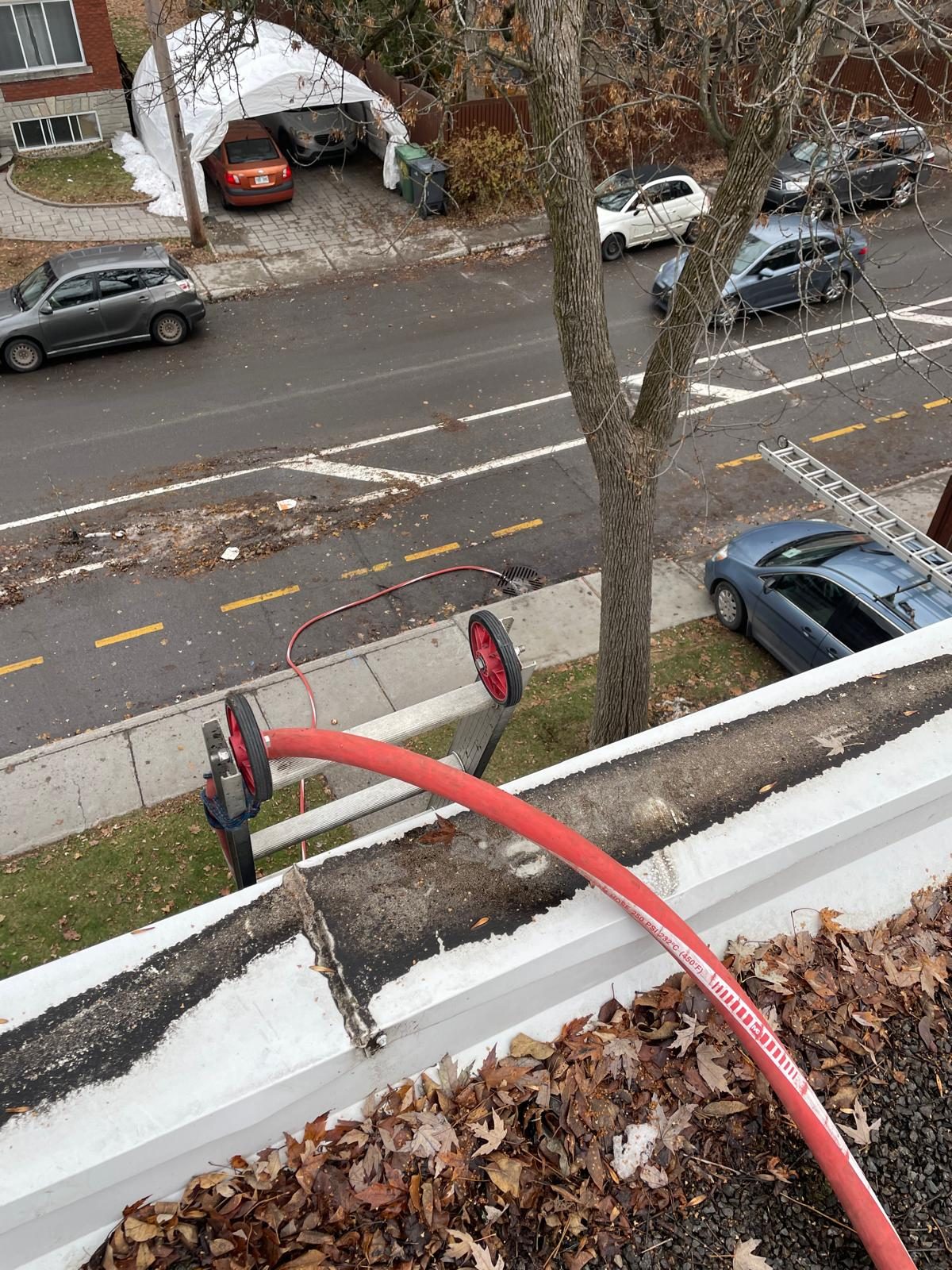
Water pumped off the roof is sent through a hose away from the building's foundation.The pumping hose set in the standing water.A flooded roof before pumping.On the ground, the hose sends the roof water onto the sidewalk, away from the building.The pumping hose runs through the water to the lowest point of the roof.Pumping in progress.The vent is still sitting in water: pumping continues.The water level drops around the vent.A submersible pump set in the corner of the roof where the water collects.The pump placed right next to the drain.In the back lane, the hoses carry away the water pumped off the roof.The pumping hose in the water.In the fall: a flooded roof covered with leaves, during pumping.The hose runs over the parapet to send the water down to the street.Pumping in progress on a large flat roof.The pumping hose in water stained brown by leaves.We push the rest of the water toward the cleared drain.
Cleaning and debris removed
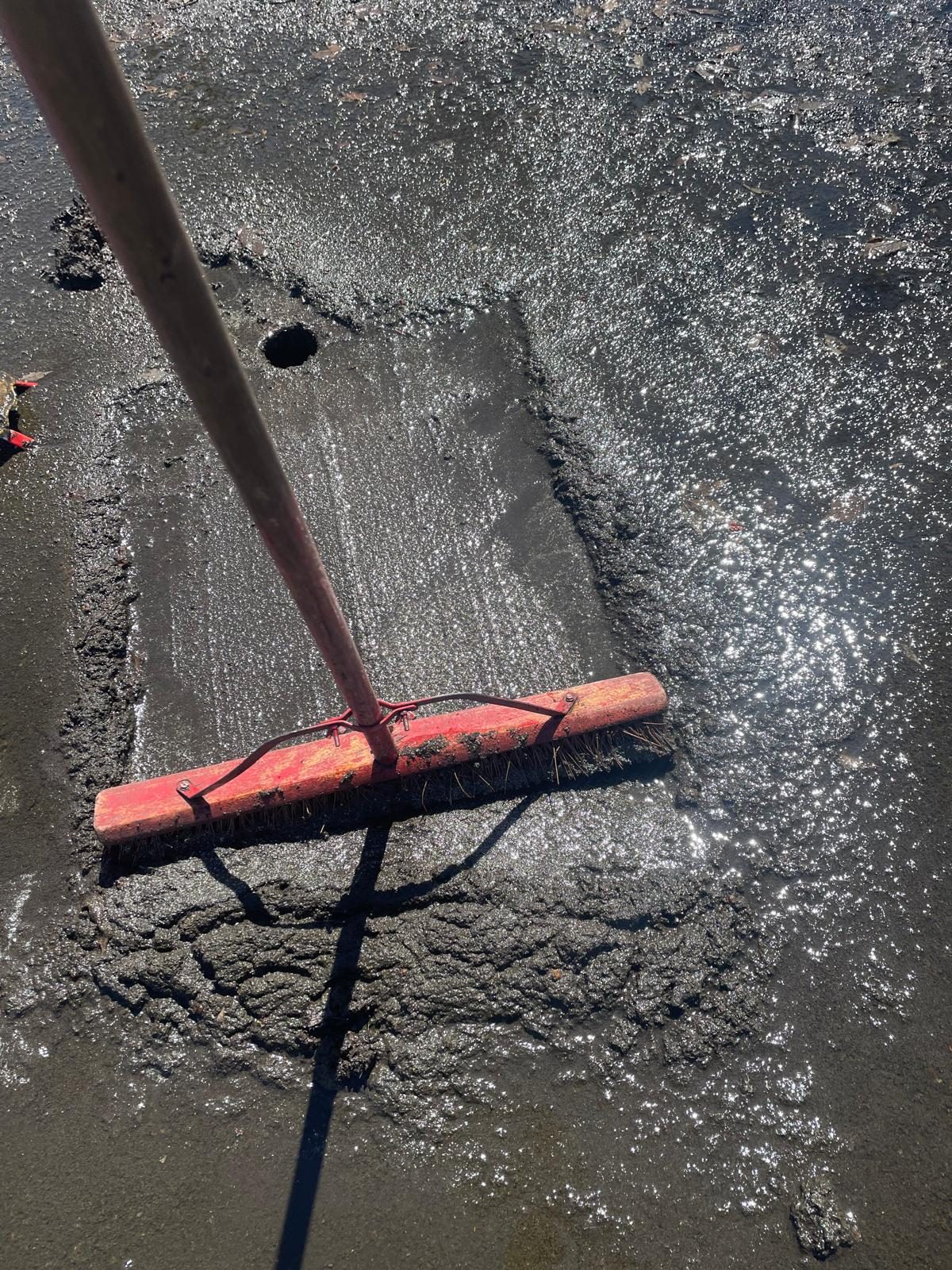
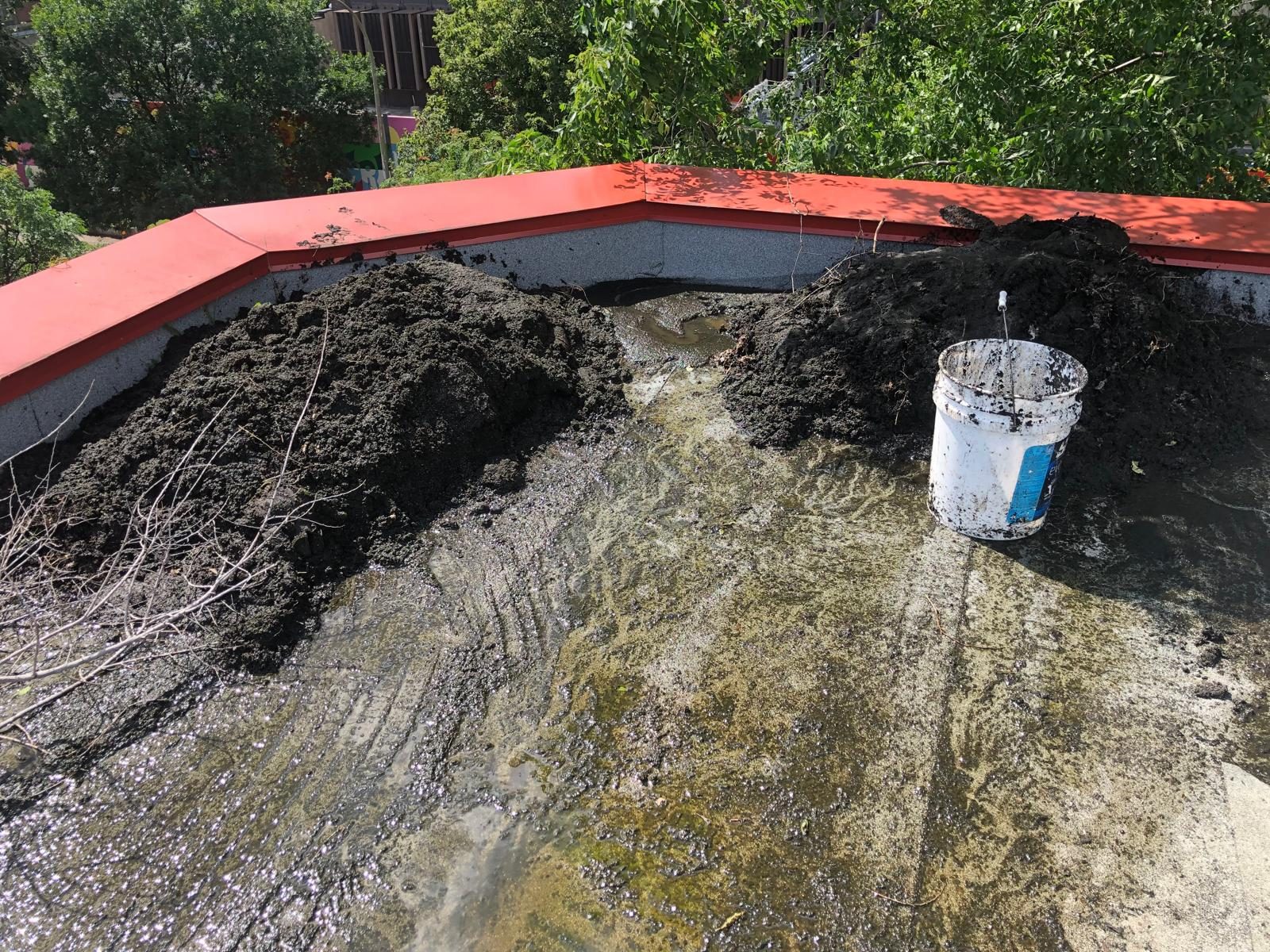
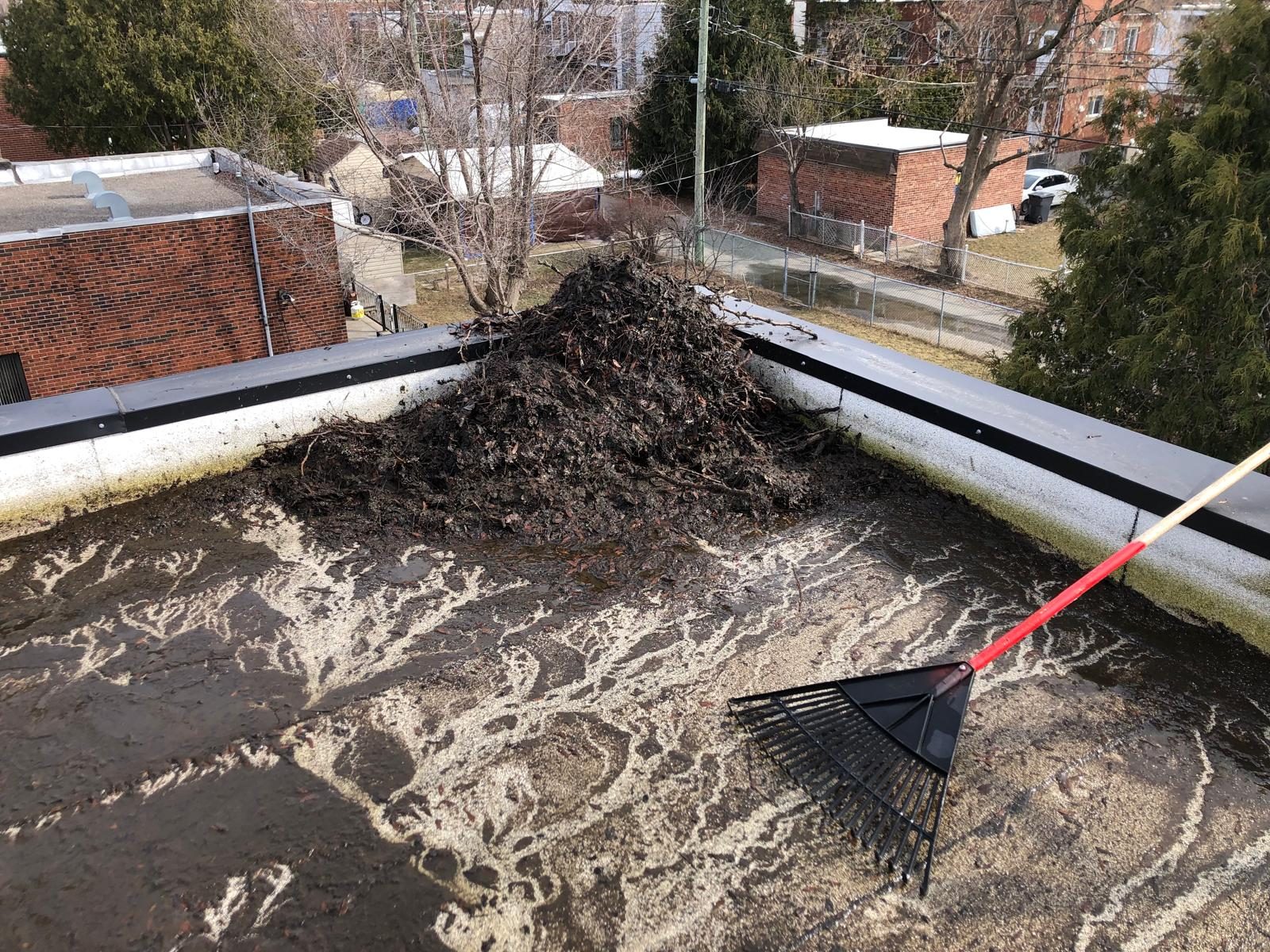
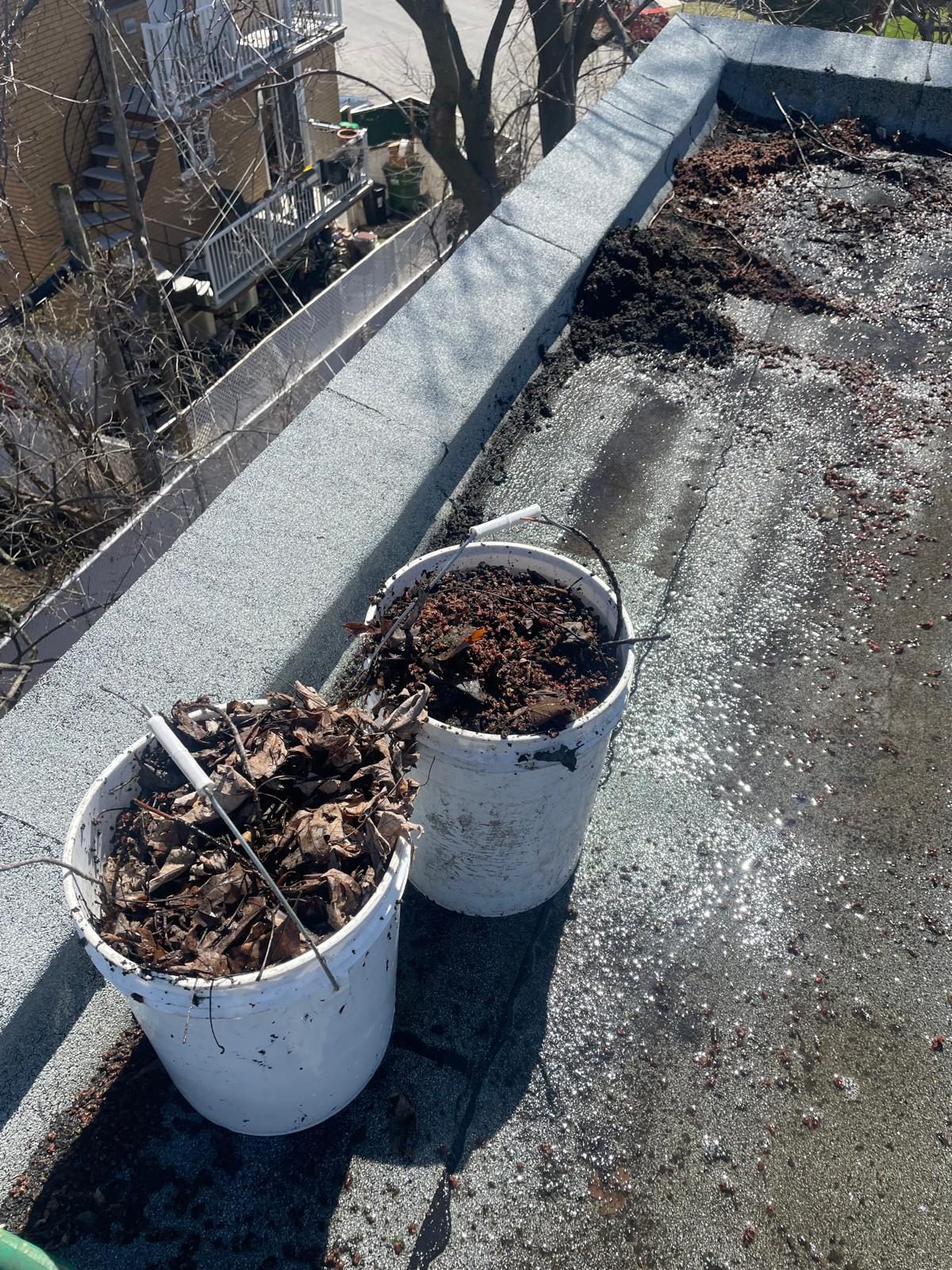
Once the water is gone, we pick up everything that clogged the drain and everything left on the membrane.
Piles of soil and debris removed from the roof, ready to be taken down.After pumping: vegetation and debris raked into a pile before being taken down.Two buckets of leaves and debris collected from the roof.Once the water is gone: the layer of leaves and deposits still to be picked up.
In winter too
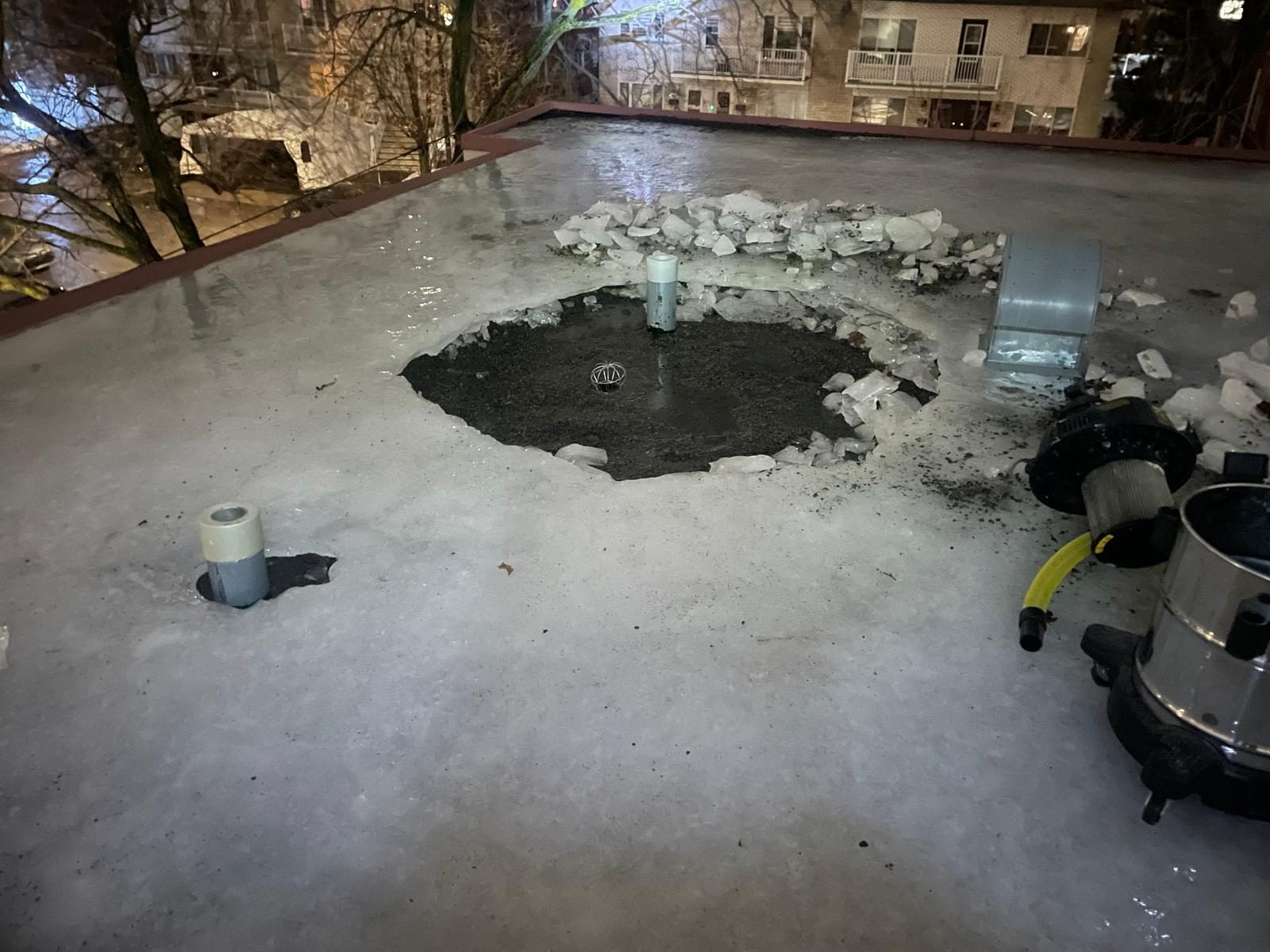
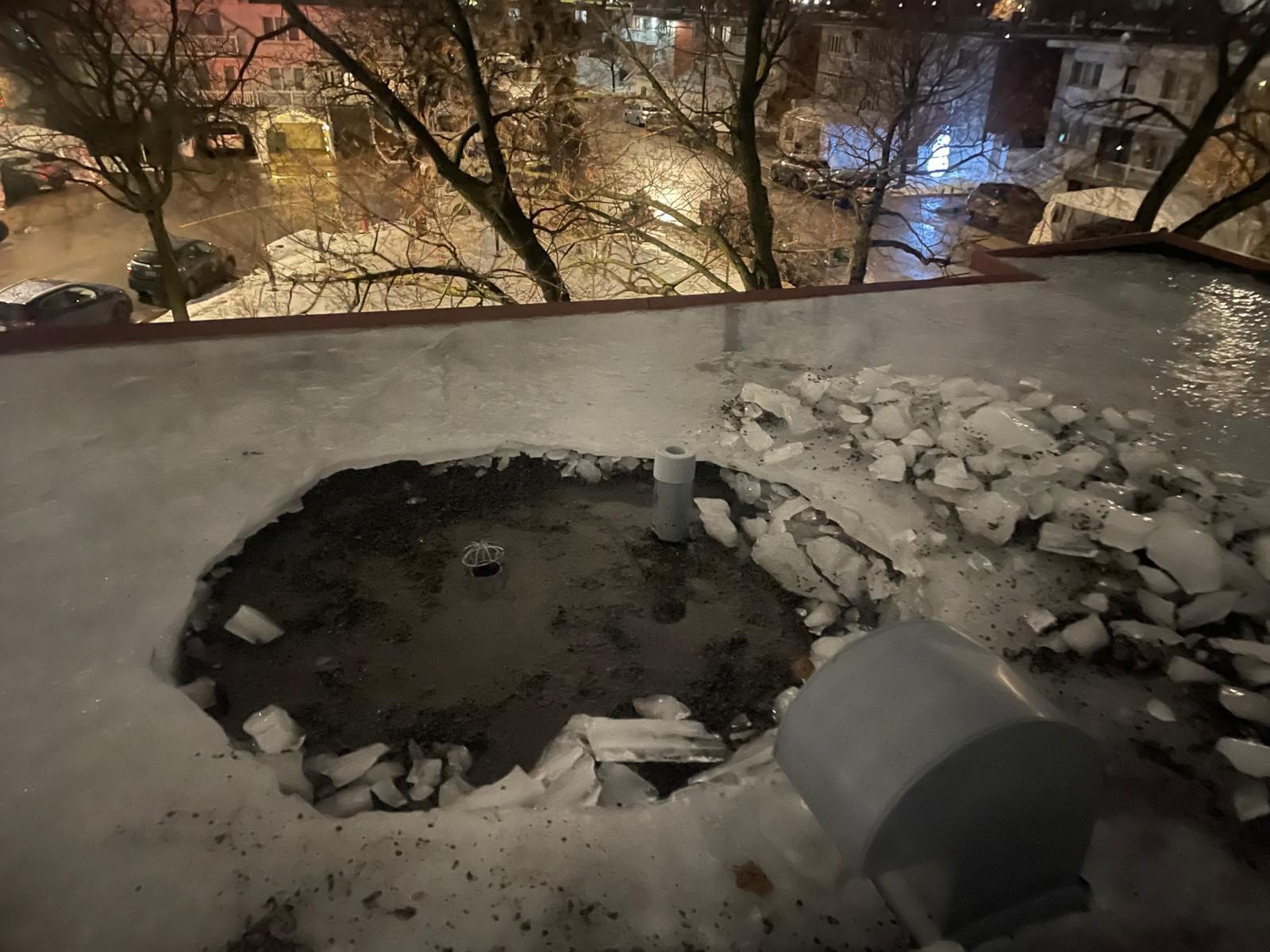
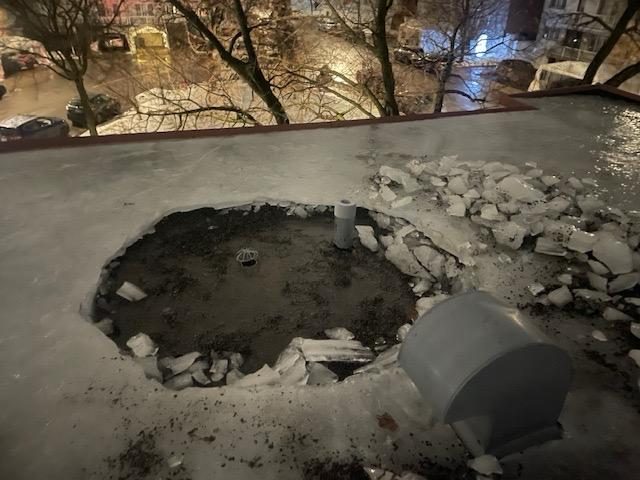
Ice can block a drain and trap water on the roof. We break the ice, unclog the drain and remove the water so meltwater can drain away.
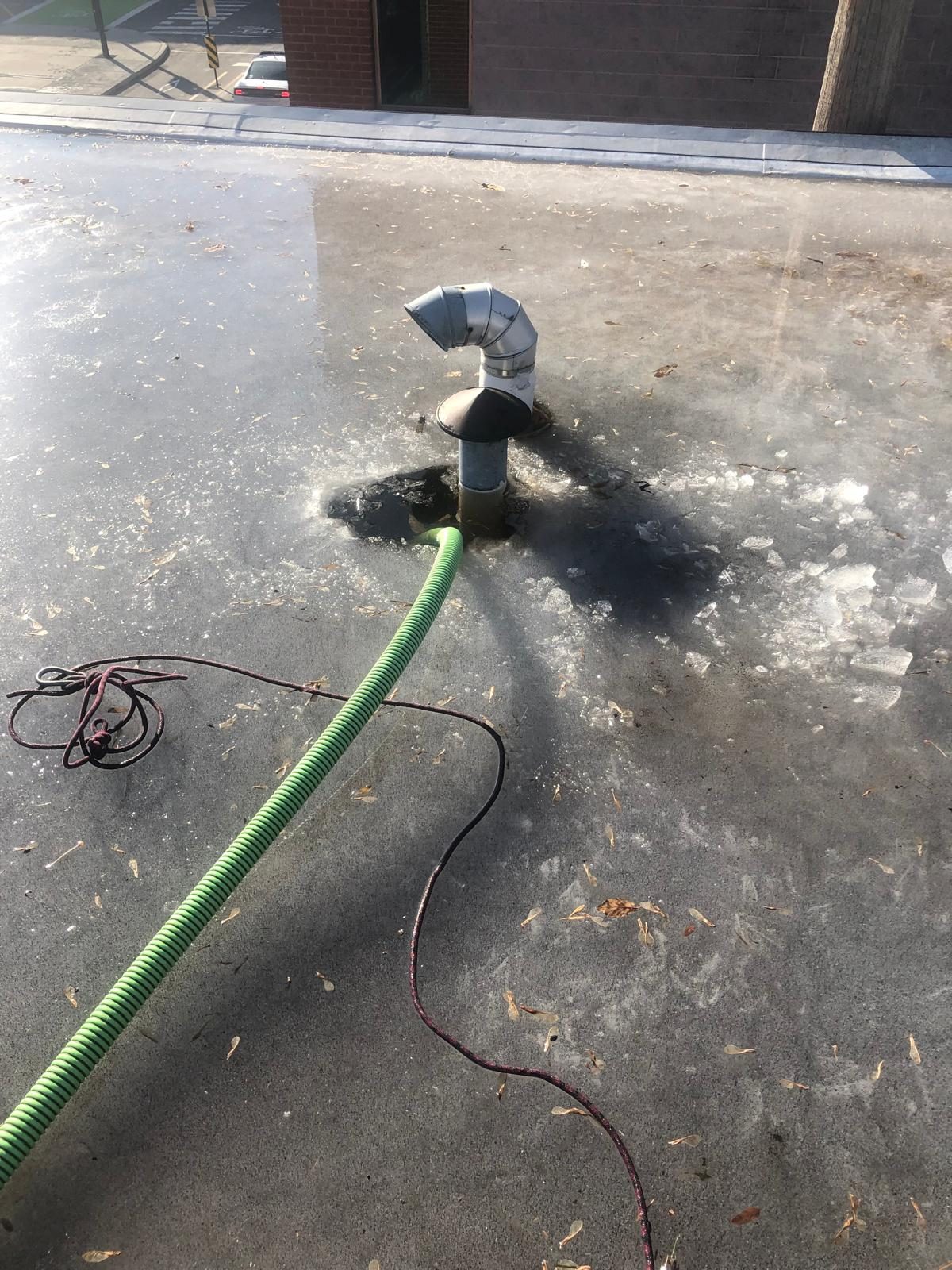
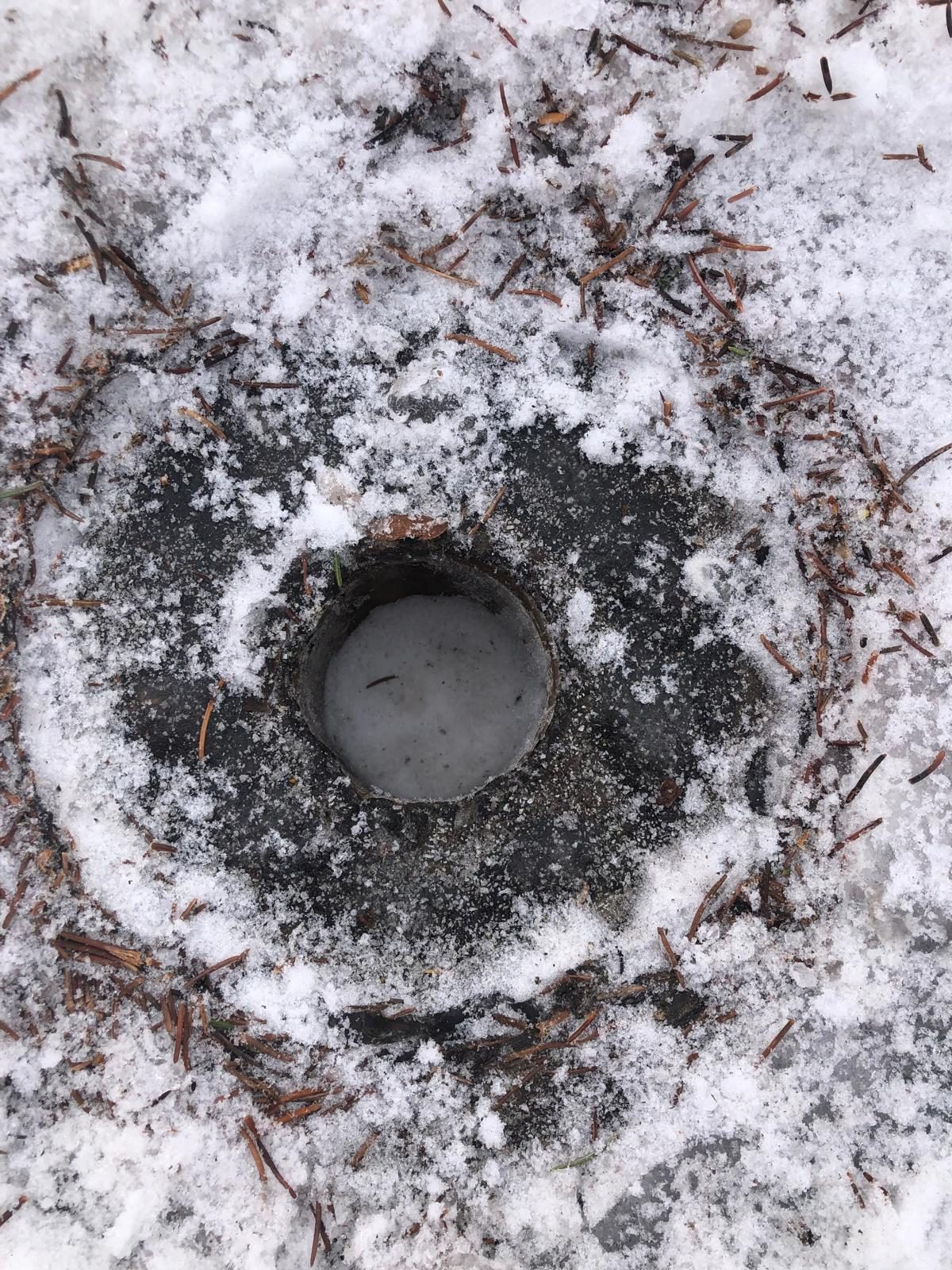
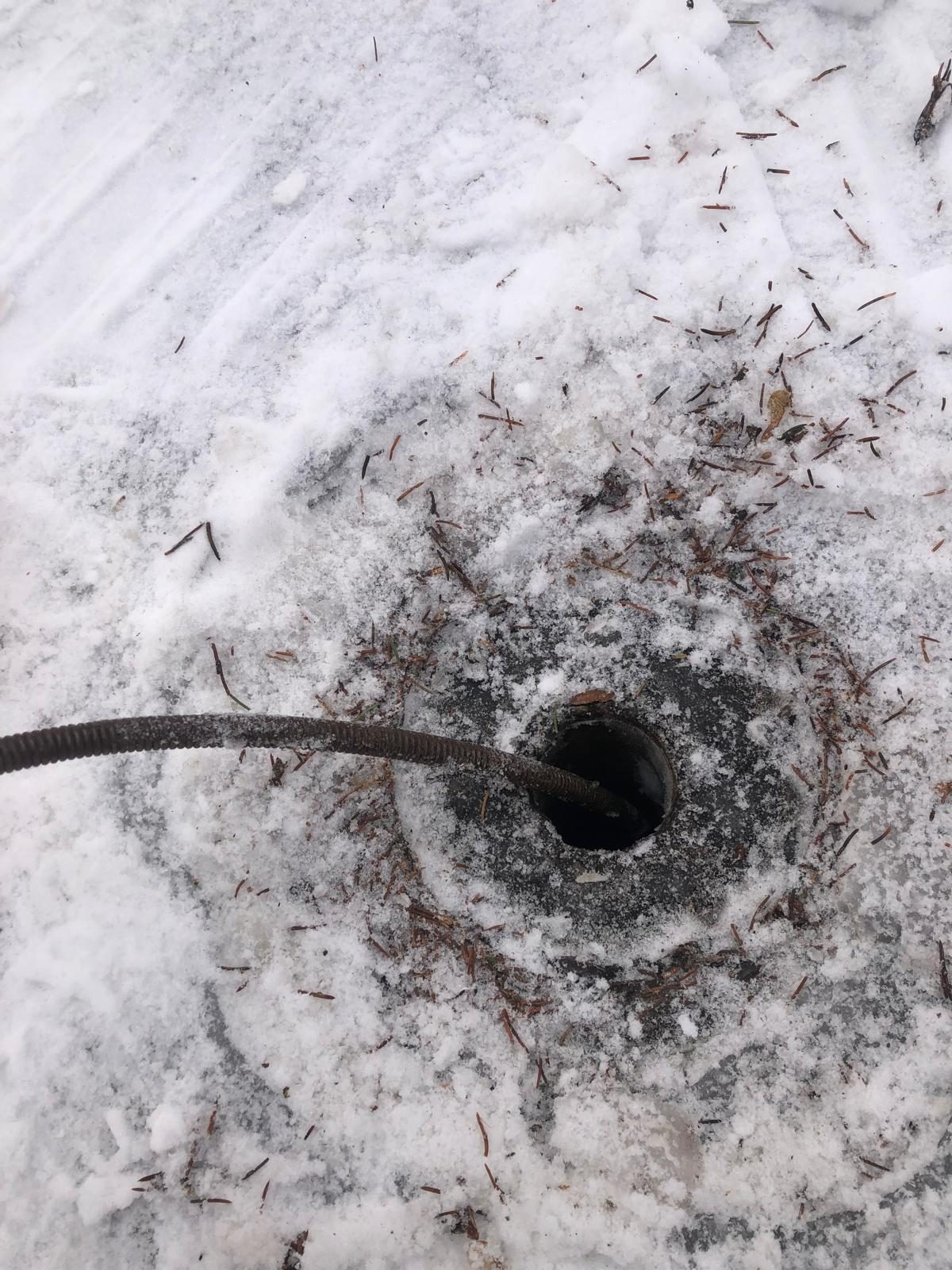
A frozen roof: we break the ice around the vent and pump out the water trapped underneath.In winter: a drain cleared in the middle of snow and ice.We run a drain snake into the ice-bound drain to unclog it and let meltwater drain away.In winter, ice formed over the pooled water: we break it up around the drain and vacuum out the water.The ice broken up and cleared away from the drain, which is finally accessible.There is still a little water left to vacuum out around the cleared drain.